

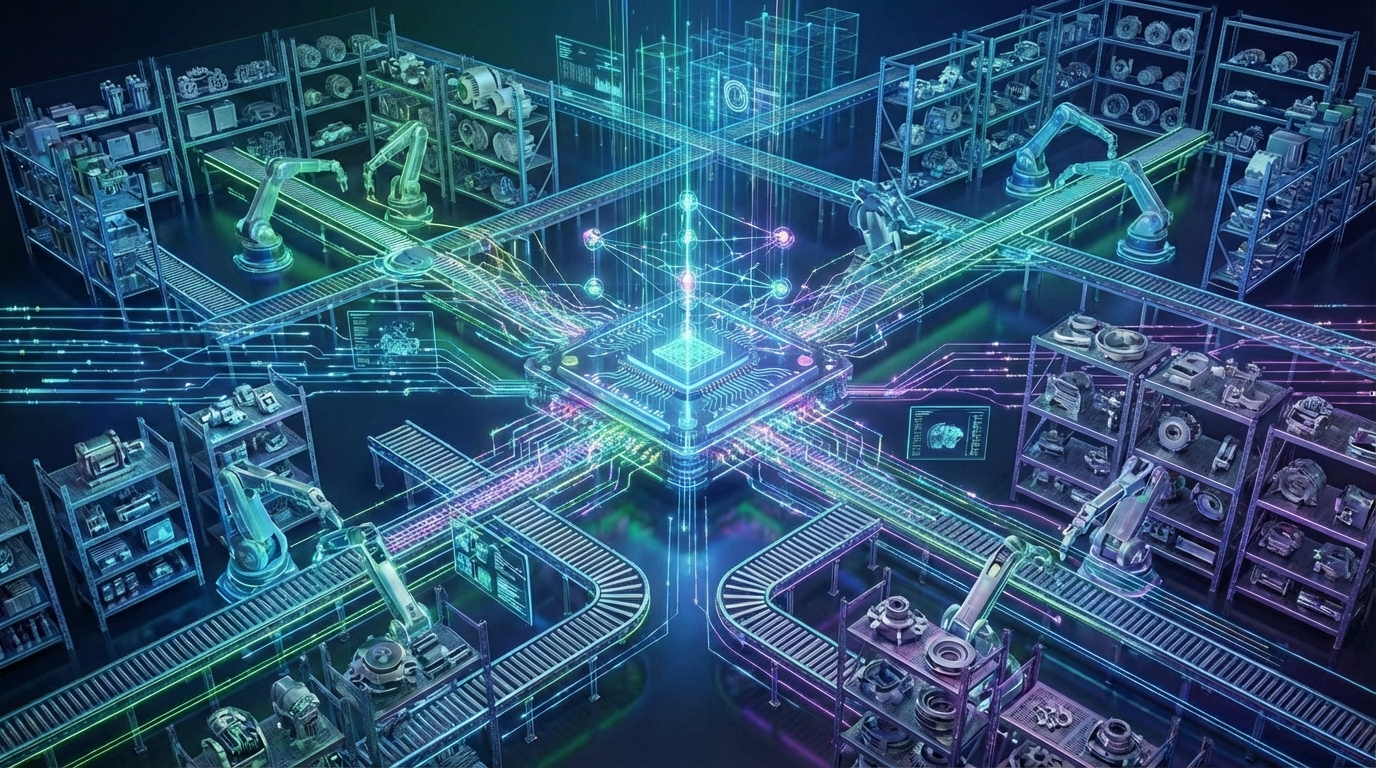

Production AI for Mission-Critical Service
Bruviti builds and deploys production AI for the mission-critical service operations of global equipment manufacturers.





Production AI for the hardest problems in service.
Specialized AI deployed around the equipment, data, decisions and operational constraints unique to each service use case.
AI built around the service mission.
Bruviti AI changes the unit of optimization from the service function to the service outcome, breaking out of silos with a single AI Operating Layer across service teams, data, systems and decisions.
Designed for mission-critical environments.
Production AI built for environments where downtime directly affects output, capacity, revenue or business continuity, and where security and connectivity requirements are most demanding.

Lithography, etch, deposition, CMP and metrology equipment, including chamber, recipe, wafer and SECS/GEM data.
Explore Semiconductor Equipment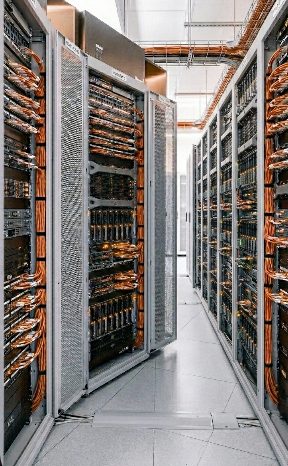
& Networking
Servers, memory, storage arrays and rack systems, including firmware, telemetry, diagnostics and field replaceable unit data.
Explore Compute/Memory & Networking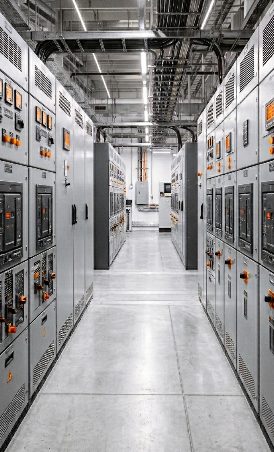
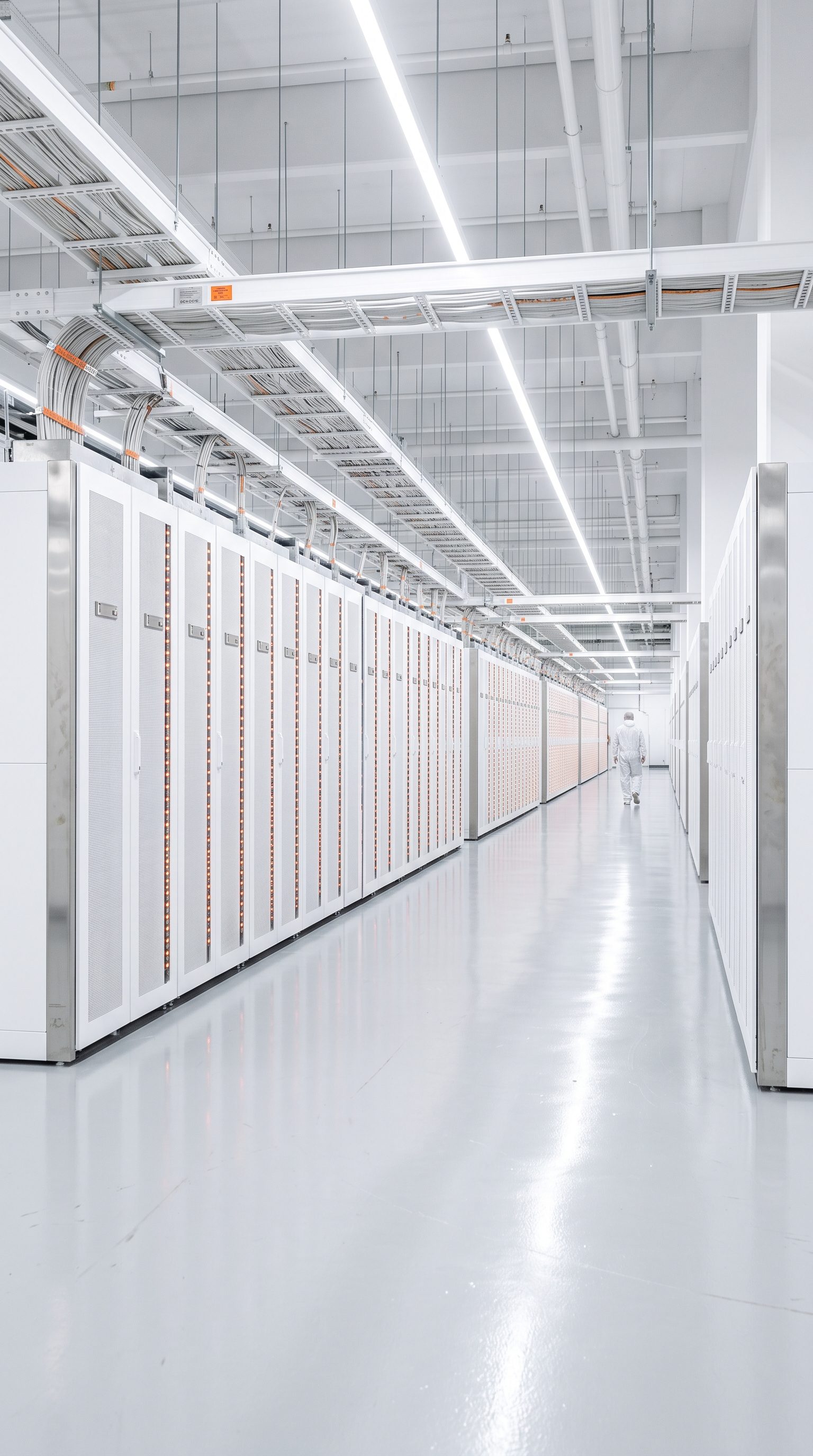
Servers, storage, power and cooling infrastructure, including BMC, IPMI, Redfish and fleet telemetry.
Explore Data Center Infrastructure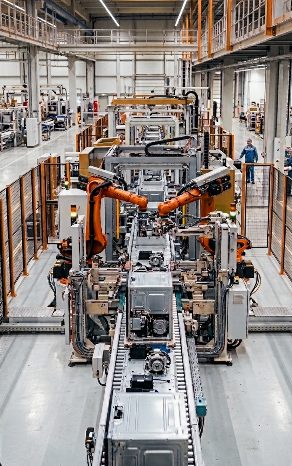
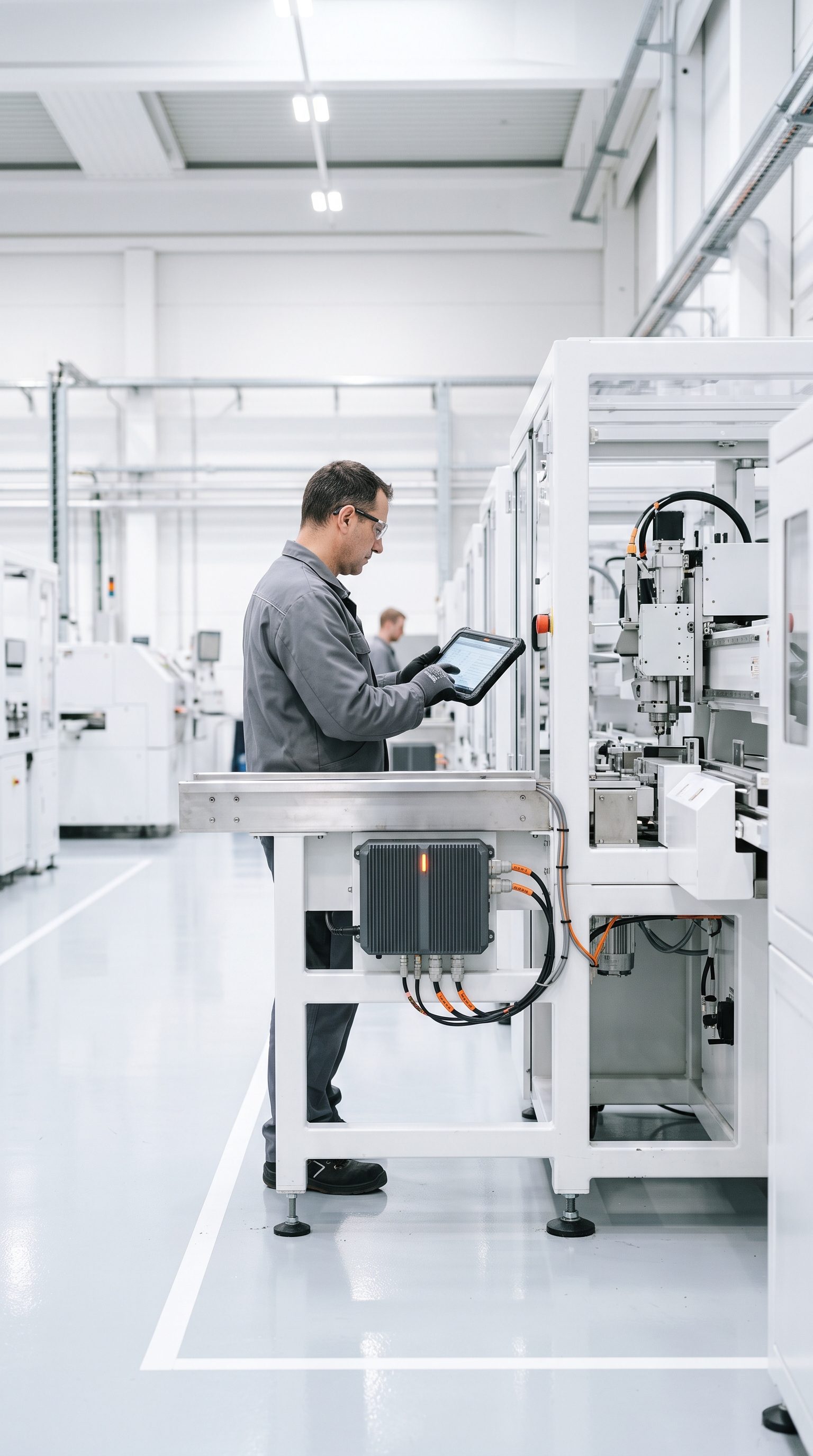
CNC machines, turbines, compressors and other long-lived industrial equipment, including PLC, SCADA and service history data.
Explore Industrial Manufacturing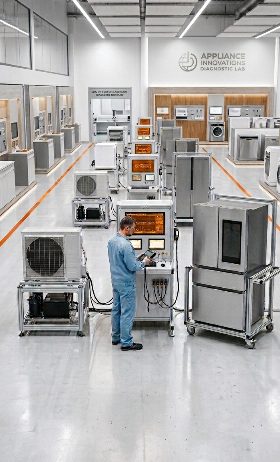
Refrigeration, cooking, laundry, HVAC and water heating equipment, across installed base, parts, warranty and connected product data.
Explore Appliance ManufacturingDesigned for mission-critical environments.
Production AI built for environments where downtime directly affects output, capacity, revenue or business continuity, and where security and connectivity requirements are most demanding.
Semiconductor Equipment
Lithography, etch, deposition, CMP and metrology equipment, including chamber, recipe, wafer and SECS/GEM data.
Explore industryCompute/Memory & Networking
Servers, memory, storage arrays and rack systems, including firmware, telemetry, diagnostics and field replaceable unit data.
Explore industryData Center Infrastructure
Servers, storage, power and cooling infrastructure, including BMC, IPMI, Redfish and fleet telemetry.
Explore industryIndustrial Manufacturing
CNC machines, turbines, compressors and other long-lived industrial equipment, including PLC, SCADA and service history data.
Explore industryAppliance Manufacturing
Refrigeration, cooking, laundry, HVAC and water heating equipment, across installed base, parts, warranty and connected product data.
Explore industryBuild AI around your service outcome.
Forward-deployed AI engineers work only in service. They architect each use case around the outcome, build it alongside your team, connect your data and systems, and take it into production.

Ground AI in your service knowledge.
Bruviti’s service ontology encodes equipment hierarchies, parts and procedures, policies, failure modes, tickets and service history as entities and relationships, creating a unified service knowledge graph that gives AI the context to reason precisely rather than guess.
AI model knows
Bruviti’s parts ontology knows
Bring AI to your data.
Deploy AI into the environment where your data and operations already live, from private cloud and on-premise infrastructure to edge and fully air-gapped environments.
- +AI deployed in the customer’s cloud tenancy
- +Frontier or open-weight models via managed model service
- +Inference scales with demand
- +Enterprise data and applications stay in the same environment

- +AI deployed on customer servers
- +Frontier models via private connection, or self-hosted open-weight models
- +Inference within fixed capacity
- +Direct access to enterprise applications and operational data
- +Purpose-built small models
- +Real-time inference, online or offline
- +Direct connection to equipment and operational systems
- +No round trip to a central cloud

- +Compact models on standard servers, no GPU required
- +Inference built for constrained compute, fully offline
- +Context and learned knowledge stay inside the boundary
- +Direct integration with equipment and local operational systems
Bring AI to your data.
Deploy AI into the environment where your data and operations already live, from private cloud and on-premise infrastructure to edge and fully air-gapped environments.
Private Cloud
- +
AI deployed in the customer’s cloud tenancy
- +
Frontier or open-weight models via managed model service
- +
Inference scales with demand
- +
Enterprise data and applications stay in the same environment
On-Premise
- +
AI deployed on customer servers
- +
Frontier models via private connection, or self-hosted open-weight models
- +
Inference within fixed capacity
- +
Direct access to enterprise applications and operational data
Edge
- +
Purpose-built small models
- +
Real-time inference, online or offline
- +
Direct connection to equipment and operational systems
- +
No round trip to a central cloud
Air-Gapped
- +
Compact models on standard servers, no GPU required
- +
Inference built for constrained compute, fully offline
- +
Context and learned knowledge stay inside the boundary
- +
Direct integration with equipment and local operational systems
Keep AI inside the boundaries you set.
Control is built into your deployment from the start. Where models, data and inference run, what the AI can access and act on, and how updates reach production are all defined by the boundaries you set.
Sovereignty
What stays yours
- Customer-owned data
- Customer-controlled models
- Customer-owned context
- Learned IP stays with the customer
Model Control
What runs
- Frontier, open-weight and specialized
- Model registry
- Version lineage
- Swap / upgrade
- Rollback
Action Control
What the AI can do
- Defined workflows
- Defined tasks
- Registered tools
- Security and access controls
Production Assurance
What reaches production and how it is monitored
- Customer-specific evaluations
- Security and adversarial testing
- Release gates
- Human review where required
- Production monitoring
- Audit trail
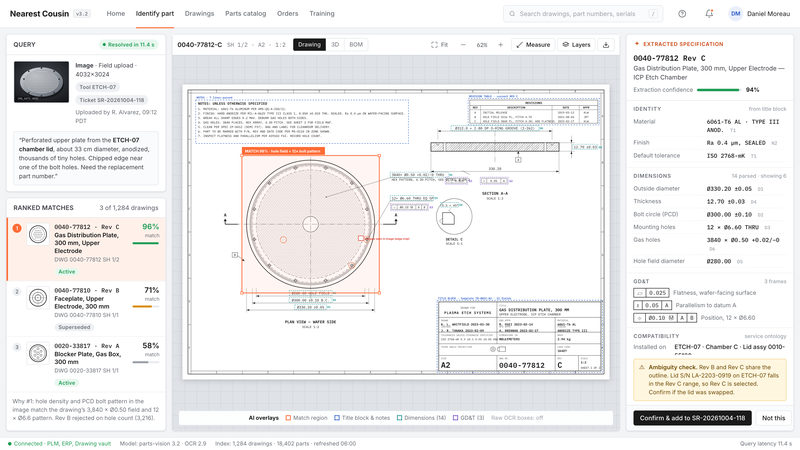
Parts Identification from Blueprints
Find the right part from an image or description in under 30 seconds.
Engineers review hundreds of drawings a day across CAD viewers, PLM, PDM and ERP. Each takes 15 to 20 minutes, and manual entry leaves inconsistent metadata, missed tolerances and duplicate parts.
- Reads each new drawing, detects the template and parses title blocks, tables and views.
- Extracts dimensions, tolerances, GD&T symbols and materials, then identifies mechanical parts.
- Matches a part image and description against drawings, returning ranked results with the match highlighted.
- Flags ambiguous matches with alternatives and learns from each user selection.
Connected Data Fault Detection
Discover root causes faster and forecast critical equipment drift 7 to 14 days ahead.
Engineers investigate vibration, temperature, pressure, controller logs and process data across separate historians, MES, SCADA and log files. Clocks, units and naming do not align, and cross-domain failures can take days to trace manually.
- Aligns timestamps and units across historians, MES, SCADA, CMMS, ERP and the data lake.
- Detects multivariate anomalies, correlations and causal drivers across incoming equipment and process signals.
- Forecasts drift and maps signal patterns to known failure modes with explainable recommendations.
- Updates dashboards and work orders, routing low-confidence or data-quality exceptions to engineers.
Predictive Maintenance Scheduling
Automatically schedule maintenance around production risk, parts, labor and policy constraints.
Semiconductor fabs schedule maintenance manually across MES, CMMS/EAM, ERP and workforce systems. Planners must balance failure risk, lot priorities, technician skills, cleanroom rules and parts availability, while predictive fault signals remain separate from production plans.
- Reads telemetry and production calendars, then identifies failure risk, lot priorities, parts, skills and scheduling constraints.
- Generates candidate maintenance windows and scores each for production impact, failure risk, parts and labor availability.
- Applies cleanroom, certification, SLA and policy rules, requesting approval only when defined thresholds are affected.
- Books approved windows, creates work orders, reserves parts, assigns technicians and updates service records.
Repair vs. Replace Determination
Recommend repair or replacement in under five minutes using cost, availability and policy.
Agents jump between CRM, ERP, parts portals and ecommerce sites to check repair costs, lead times and policies. Each decision takes 20 to 45 minutes, varies by agent, and can trigger follow-up visits when parts are back-ordered or travel constraints apply.
- Reads the CRM case, identifies the product and serial, then retrieves service history, warranty and policy context.
- Checks parts pricing, stock and lead times, then predicts repair cost and turnaround.
- Compares repair scenarios with compatible replacements using age, warranty, travel, availability and customer context.
- Presents the recommendation and rationale, then creates the service job or replacement order and updates records.