
Legacy equipment means decades of warranty data—but your team still processes claims manually.
Choose AI tools that automate claims processing while preserving workflow simplicity. Effective strategies balance fast claim validation, NFF reduction, and fraud detection without adding complexity to daily operations for warranty processors.
Every claim requires lookup across multiple systems. Equipment with 20-year lifecycles means searching legacy databases and paper records for warranty status and service history.
Returned pumps, compressors, and PLCs arrive with no defect identified during inspection. Processing these returns consumes time and erodes warranty reserves without clear failure patterns.
Identifying invalid warranty claims requires cross-referencing run hours, maintenance logs, and failure codes. Without automated pattern detection, fraudulent returns slip through manual review.
The right warranty AI strategy delivers instant claim validation without disrupting existing workflows. Bruviti integrates with legacy warranty systems to automate entitlement verification, detect NFF patterns from equipment telemetry, and flag fraudulent claims based on historical failure analysis—all within your current processing interface.
The platform handles the analysis: run hour validation, failure code correlation, and parts history lookup. Warranty processors see clear approve/deny recommendations with supporting evidence, eliminating swivel-chair system hopping while maintaining final decision control.
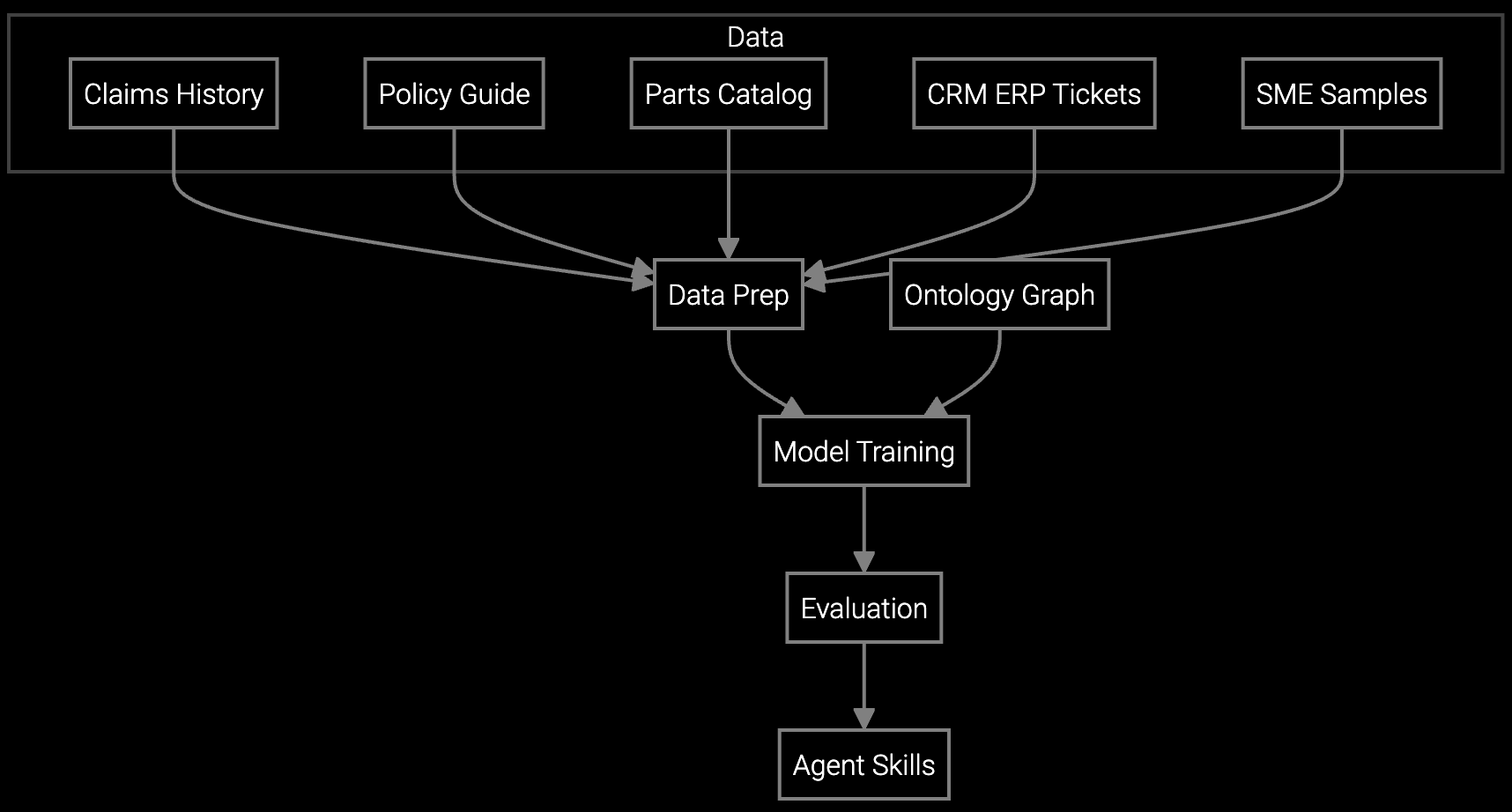
Automatically classify industrial equipment warranty claims by failure mode, assign correct warranty codes, and route to appropriate review queues based on claim complexity.
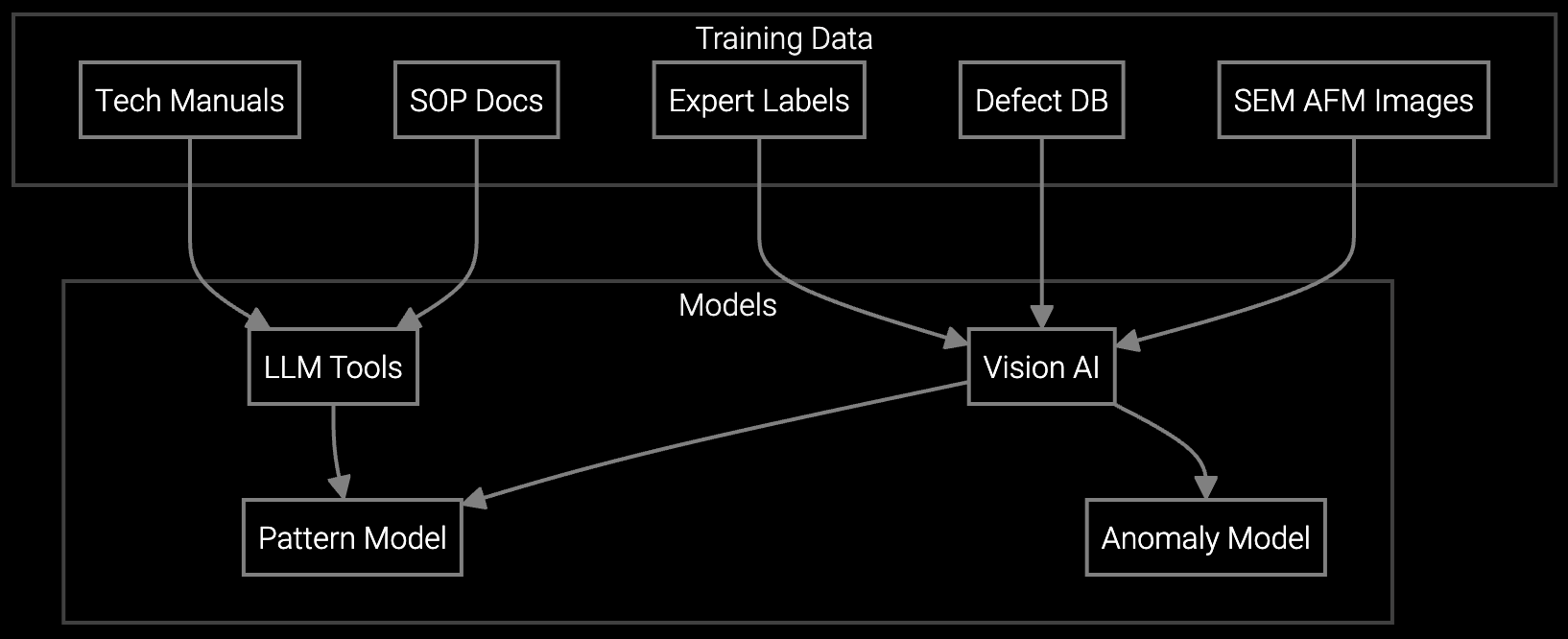
Validate warranty claims for precision industrial components through AI analysis of microscopic failure images, identifying manufacturing defects versus operational wear patterns.
Industrial machinery warranty processing spans decades of equipment generations. A single CNC machine or turbine warranty claim may require validating purchase date, service history, and part replacements across systems implemented in different eras—from paper records to modern SCADA integrations.
Equipment telemetry provides the validation foundation. Run hours from PLC systems, vibration sensor data, and maintenance logs captured over 10-20 years create clear failure baselines. AI cross-references this equipment data against warranty terms to flag claims outside normal operating parameters.
Buy if you need fast claim validation without building data science teams. Custom builds require ML engineers, training data preparation, and ongoing model maintenance. Platforms deliver pre-trained models that adapt to your equipment failure patterns within weeks, not years.
AI platforms integrate with both modern telemetry and historical paper records. Natural language processing extracts warranty terms from scanned documents, while equipment sensors provide real-time validation data. The system learns failure patterns across equipment generations to detect invalid claims regardless of equipment age.
Start with equipment that generates telemetry data. AI analyzes sensor patterns before returns arrive to predict whether failures are reproducible. This approach reduces unnecessary returns by flagging intermittent issues and providing guided diagnostics to validate claims before accepting RMAs.
Yes. Effective platforms present recommendations with supporting evidence, not final decisions. Processors see the AI analysis—run hours, failure codes, maintenance history—and approve or deny claims based on their expertise. The system learns from overrides to improve future recommendations.
Track three metrics: claim processing time reduction, NFF rate decrease, and warranty reserve accuracy improvement. Most industrial OEMs see processing time drop 60%, NFF rates fall 30-40%, and warranty cost predictions stabilize within 90 days of deployment on high-volume equipment lines.
Software stocks lost nearly $1 trillion in value despite strong quarters. AI represents a paradigm shift, not an incremental software improvement.
Function-scoped AI improves local efficiency but workflow-native AI changes cost-to-serve. The P&L impact lives in the workflow itself.
Five key shifts from deploying nearly 100 enterprise AI workflow solutions and the GTM changes required to win in 2026.
Get a demo tailored to your industrial equipment warranty workflows.
Schedule Demo