Start with the Workflow, Not the Agent
The Field Observation
Working with enterprise service organizations, we usually see the same starting point: function-scoped AI. Copilots that help support agents find answers faster. Assistants that surface knowledge for technicians onsite. Smarter search. Automated routing. Handle time improves. Teams move faster inside their own lanes.
But after a few months, a familiar pattern shows up. The gains plateau. Repeat dispatches persist. Warranty leakage continues. Functions become more efficient, but the end-to-end economics of the service event don't materially change.
What We Learned: The Cost Lives in the Handoffs
This pattern isn't a failure of AI. It reflects how the AI was imagined. In our experience, cost accumulates in the spaces between functions, not inside them. It's in the handoffs: support to triage, triage to parts, parts to field, and back again.
Each handoff introduces investigation and judgment. Context drops. Work gets repeated. A case escalates, but the reasoning doesn't travel with it, so the next team starts over. A technician shows up without the part because inventory wasn't checked upstream. A warranty analyst re-reviews failure data that engineering already looked at.
Here's the question we lead with: Are you building AI to optimize a function, or to change the economics of the entire service event?
Think Different: Workflow-Native AI
Instead of starting with 'how do we assist a support agent?' or 'how do we deliver knowledge to a field tech?' (even though we'll get there eventually), we start with: 'what does it take to resolve the case end-to-end, without rework?'
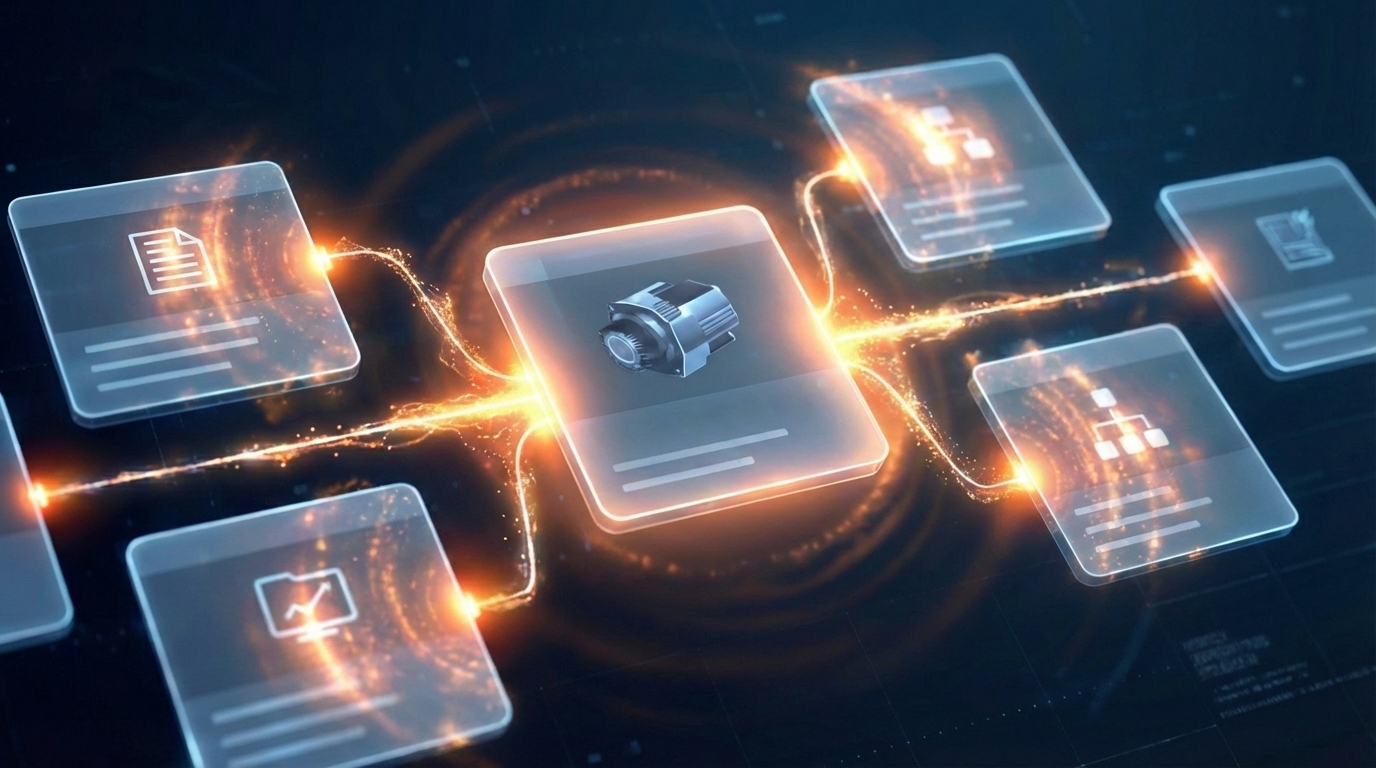
That reframe changes what you build. The AI is designed around the workflow, to decide and execute, not just recommend. It interprets the case in context, reasons across systems and constraints, determines the resolution path, and executes across CRM, ERP, parts, logistics, and field systems.
This requires three layers working together:
- An ontology that links assets, parts, customers, and warranties to live operational data, so the AI knows what is actually true
- Specialized models tuned to service domains, triage, damage detection, parts prediction
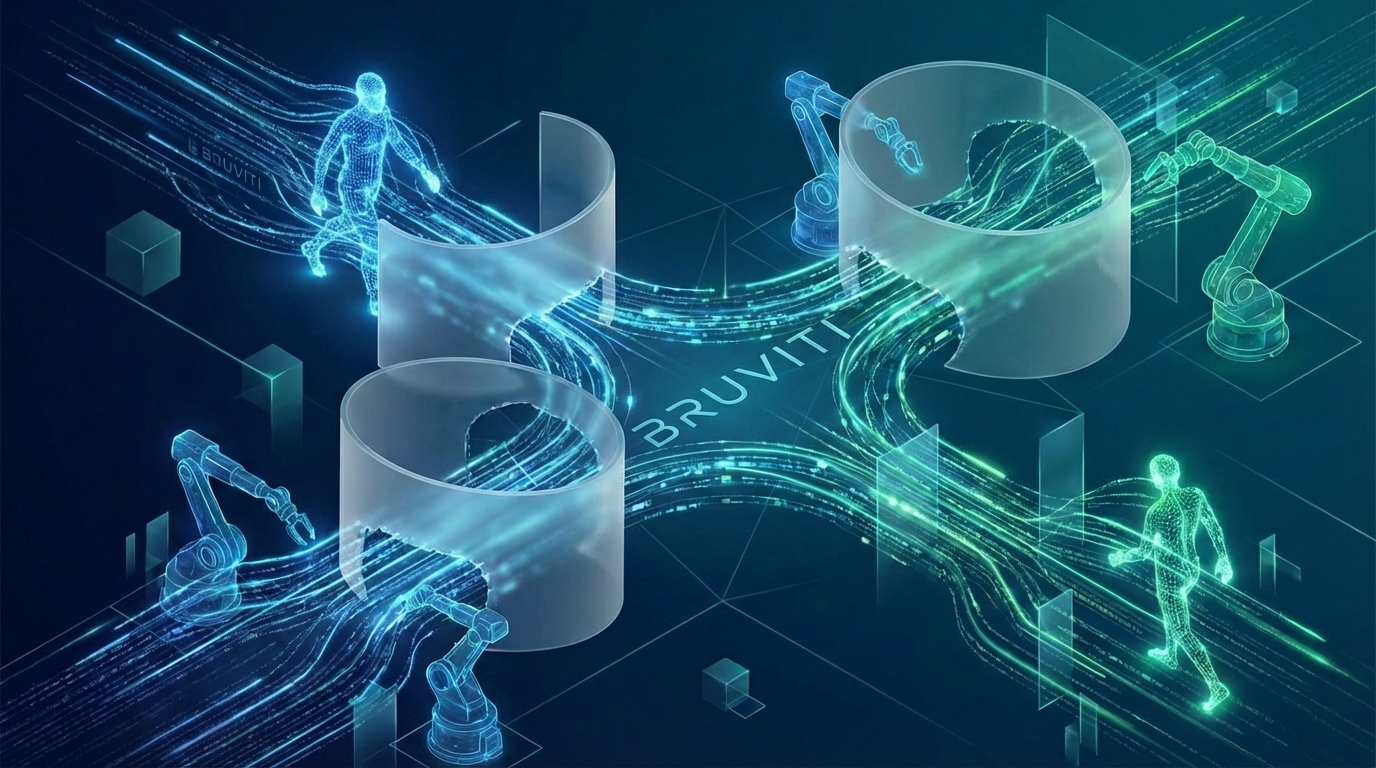
- An interoperability layer that translates decisions into actions across systems and hands work off across the service supply chain
Results compound when AI operates around the actual flow of work.
A Real-World Example: The AI Operating Model Shift
In one enterprise data center service operation, critical failure cases averaged over 24 hours to close. When we analyzed how AI could be applied within the workflow, we found that roughly 70% of case time was spent reviewing microscopy images to classify failure type and determine disposition: return, scrap, or repair. That same review was repeated as cases moved between engineering, warranty, and procurement teams.
Applying specialized AI models to automate image ingestion and classification in the first workflow step allowed cases to be routed once, with context, directly to downstream teams. Procurement for manufacturing defects. Engineering for novel failure patterns.
Resolution time dropped from 24 hours to 3 hours. Same teams. Same systems. Different AI operating model.
The Takeaway
- Function-scoped AI improves local efficiency. Workflow-native AI changes the cost-to-serve
- The P&L impact lives in the workflow