Your pumps and CNC machines don't need new sensors—just faster answers when they break down remotely.
Connect via existing remote access tools, point to equipment telemetry feeds, and get AI-driven root cause analysis in your current workflow. No special training needed—setup takes hours, not weeks.
Remote sessions require jumping between screen sharing, SCADA viewers, log parsers, and equipment manuals. Every tool switch adds minutes to resolution time and increases the chance of missing critical context.
PLC and SCADA logs contain thousands of events. Support engineers spend hours manually correlating timestamps and error codes to find root cause, often missing patterns that span multiple systems.
Factory firewalls and network restrictions block remote access to critical equipment. When you can't see telemetry in real-time, remote diagnosis becomes guesswork and simple issues become unnecessary site visits.
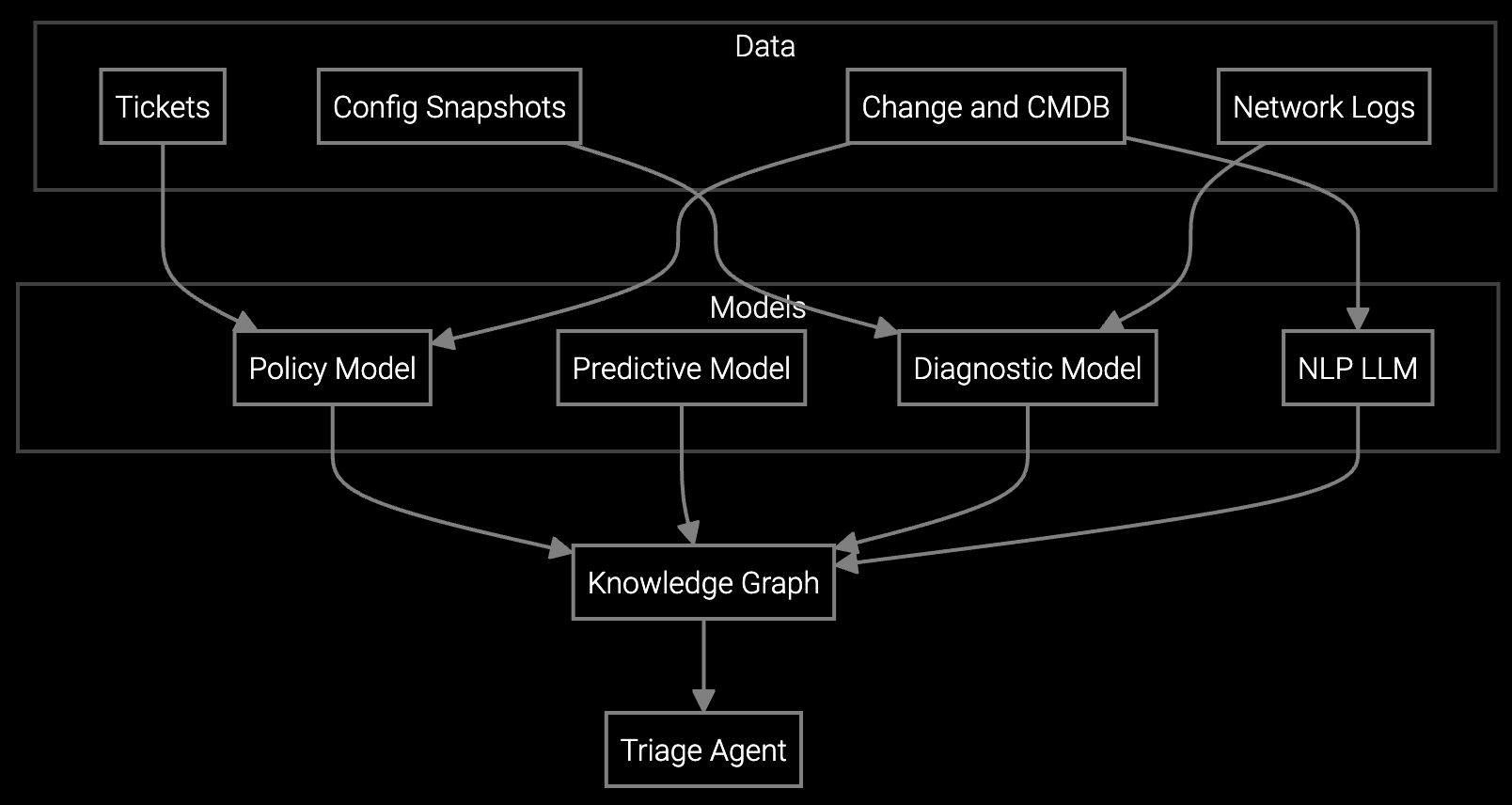
Bruviti's platform overlays AI diagnostics directly into your existing remote support workflow. When you connect to industrial equipment, the system automatically pulls PLC data, SCADA logs, and vibration telemetry—then surfaces the most likely failure mode and recommended actions in a sidebar. No new interfaces to learn.
The platform handles connectivity automatically. It authenticates through existing VPN tunnels, adapts to firewall restrictions, and collects telemetry in the background while you troubleshoot. Every remote session auto-documents findings and populates case notes, eliminating post-session paperwork and capturing solutions for the next support engineer who faces the same issue.
Remote diagnosis of pumps, compressors, CNC machines, and robotic systems requires correlating vibration sensors, pressure gauges, motor current data, and PLC alarm sequences. A single bearing failure might trigger 30+ related alarms across multiple systems, and sorting through them manually wastes critical uptime.
Legacy equipment adds complexity—20-year-old machines may lack modern connectivity, forcing support engineers to rely on phone descriptions from facility staff. Even when telemetry exists, it's scattered across proprietary SCADA systems, equipment-specific monitoring tools, and disconnected log files. The platform unifies these data sources and applies pattern recognition trained on decades of failure modes specific to industrial machinery.
No. The platform works alongside TeamViewer, LogMeIn, or whatever remote desktop tool you already use. It adds an AI diagnostics layer without requiring you to change how you connect to equipment.
The system adapts to whatever data is available. For legacy machinery without real-time telemetry, it guides troubleshooting through symptom-based decision trees built from historical cases. As you document findings, it learns the patterns specific to older equipment models.
Most support engineers notice improvement within the first week as the platform surfaces relevant past cases and automates log analysis. Full diagnostic accuracy improves over 30-60 days as it learns your specific equipment failure patterns and integrates more telemetry sources.
Yes. The platform authenticates through existing VPN connections and adapts to firewall restrictions by using the same ports and protocols as your current remote access tools. IT teams don't need to open new network pathways.
The system flags uncertainty and presents the closest matching historical cases with confidence scores. You make the final decision—it's decision support, not autopilot. Every case you resolve (whether the AI helped or not) trains the model for future sessions.
Software stocks lost nearly $1 trillion in value despite strong quarters. AI represents a paradigm shift, not an incremental software improvement.
Function-scoped AI improves local efficiency but workflow-native AI changes cost-to-serve. The P&L impact lives in the workflow itself.
Five key shifts from deploying nearly 100 enterprise AI workflow solutions and the GTM changes required to win in 2026.
See how Bruviti integrates with your current tools to deliver faster remote diagnostics.
Schedule Demo