
Chamber kit stockouts cost $1M per hour in lost fab throughput. Manual parts lookup across systems delays every service call.
Automated parts inventory workflows eliminate manual lookups and reduce stockouts by connecting demand forecasts to real-time availability across fab warehouses. AI-driven ordering and substitute matching remove swivel-chair tasks, delivering parts availability in a single interface.
Finding chamber parts requires checking three separate inventory systems, then cross-referencing with supplier portals for availability. Each lookup takes 8-12 minutes while equipment waits.
Critical consumables run out without warning because demand forecasts don't account for recipe changes or process drift. Emergency shipments cost 3x standard rates and add 24-48 hour delays.
When chamber kits are obsolete or unavailable, finding compatible substitutes requires calling senior engineers or digging through outdated cross-reference spreadsheets.
Bruviti's platform consolidates parts availability, demand forecasting, and ordering into a single interface embedded in the service workflow. When a service case opens, the system automatically surfaces relevant chamber consumables and their current stock levels across all fab warehouses.
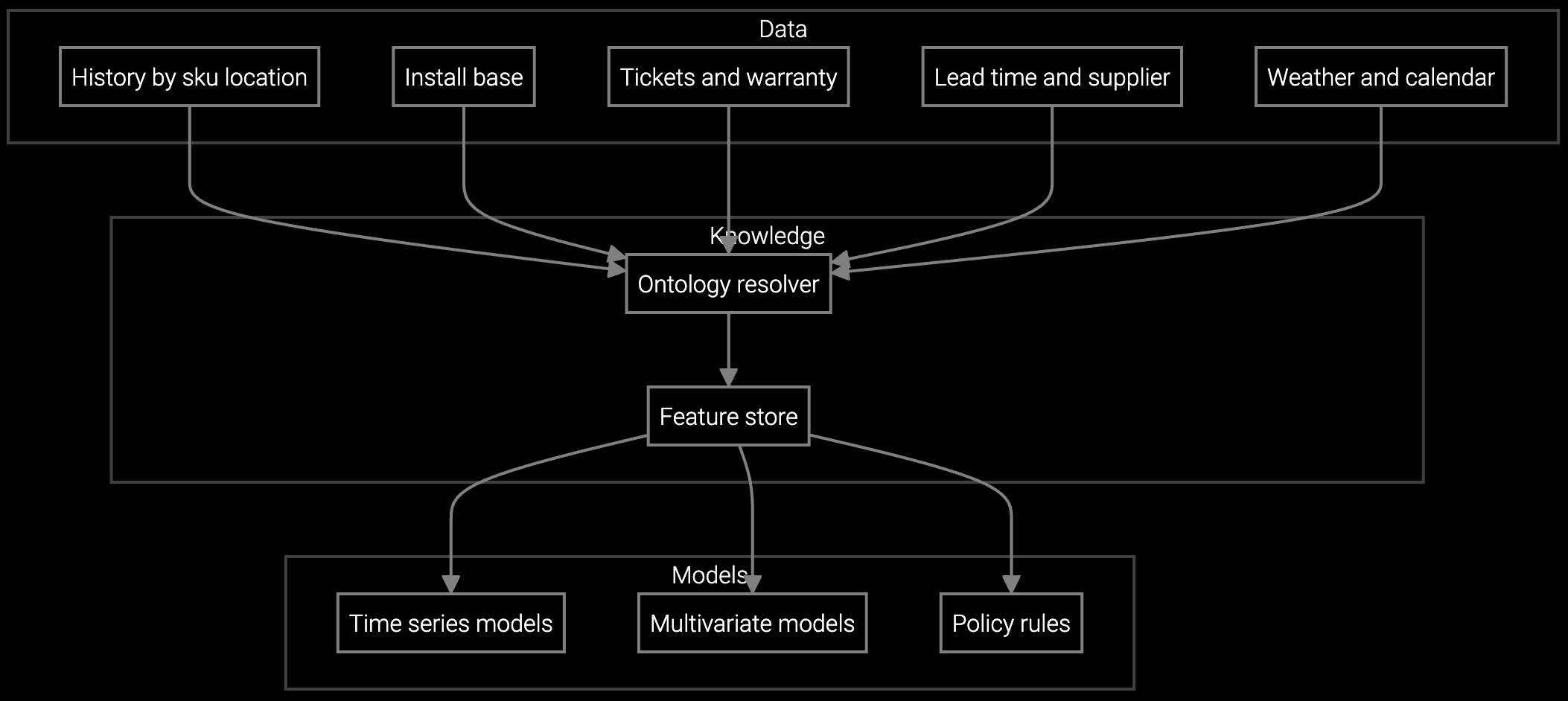
AI-driven demand forecasting predicts when critical parts will run low based on equipment usage patterns, recipe parameters, and preventive maintenance schedules. Automatic reorder triggers eliminate manual monitoring. When parts reach obsolescence, the platform suggests compatible substitutes with cross-reference validation against engineering specs and service history.

Forecasts chamber consumable demand by fab location and process recipe, optimizing stock levels while reducing $50M+ carrying costs.

Snap a photo of a worn chamber component and instantly get part number, availability across warehouses, and compatible substitutes.
Projects consumable consumption based on tool uptime, recipe complexity, and PM schedules to prevent stockouts before they impact yield.
Semiconductor tool chambers consume hundreds of precision components with lifecycles tied to wafer throughput and process recipes. A single lithography system may have 300+ unique consumable SKUs ranging from O-rings to optical filters, each with different replacement intervals.
Traditional inventory systems track parts by quantity but not by usage context. A 5nm EUV recipe may consume pellicles 40% faster than a 7nm process, yet standard reorder points don't account for this variability. Automated workflows integrate tool telemetry and recipe parameters to predict actual consumption rates, adjusting stock levels dynamically as fabs shift production mixes.
When a service case opens, the platform analyzes the tool model, error code, and maintenance history to automatically surface relevant chamber consumables and their current stock levels across all fab warehouses. Parts availability appears in the same screen as the service case, eliminating manual system switching.
Forecasts combine tool telemetry data, process recipe parameters, preventive maintenance schedules, and historical consumption rates. The model learns that certain recipes consume consumables faster and adjusts reorder triggers based on actual fab production plans rather than static safety stock rules.
AI cross-references engineering specifications, service history, and supplier compatibility data to suggest validated substitutes. It prioritizes alternatives that have been successfully used in similar tools and checks against material compatibility requirements for the specific process environment.
Yes. The platform connects to SAP, Oracle, and other ERP systems via APIs to pull real-time inventory data and push automated reorder requests. Warehouse management system integration ensures stock level accuracy across multiple fab locations without manual data entry.
Most semiconductor manufacturers see measurable stockout reduction within 60-90 days as the demand forecasting model learns consumption patterns. The fastest gains come from high-volume consumables with predictable usage tied to wafer throughput, where automated reordering prevents the manual oversight gaps that cause shortages.

SPM systems optimize supply response but miss demand signals outside their inputs. An AI operating layer makes the full picture visible and actionable.

Advanced techniques for accurate parts forecasting.

AI-driven spare parts optimization for field service.
See how automated workflows deliver parts availability in a single screen.
Schedule Demo