
Hyperscale operations can't afford 30%+ no-fault-found returns eroding margins when server refresh cycles compress.
AI-driven entitlement verification and failure pattern analysis reduce no fault found rates by identifying valid claims faster, preventing invalid returns through automated defect classification, and enabling custom fraud detection rules without vendor lock-in.
High-volume RMA processing without automated fraud detection allows invalid claims to drain warranty reserves. Manual entitlement verification can't keep pace with hyperscale deployment rates.
Server components returned under warranty often show no defect after refurbishment testing. Root cause analysis requires correlating telemetry data that legacy systems can't parse at scale.
Validating warranty coverage across mixed hardware generations and multi-vendor configurations creates manual lookup delays. Each unverified claim holds up RMA generation and replacement shipment.
Bruviti's warranty intelligence platform exposes RESTful APIs for entitlement verification, failure classification, and fraud detection that integrate with existing ERP and CRM systems. Python SDKs parse BMC telemetry, IPMI logs, and RAID controller data to identify failure signatures before RMA approval. Developers train custom NFF prediction models on historical return data without vendor lock-in.
The platform correlates warranty claims against installed base configuration data, thermal event logs, and power anomaly patterns. Custom business rules trigger when claims lack supporting telemetry evidence or match known fraud patterns. Open integration architecture connects to SAP, Oracle, and custom data lakes through standard REST endpoints with webhook support for real-time claim validation.
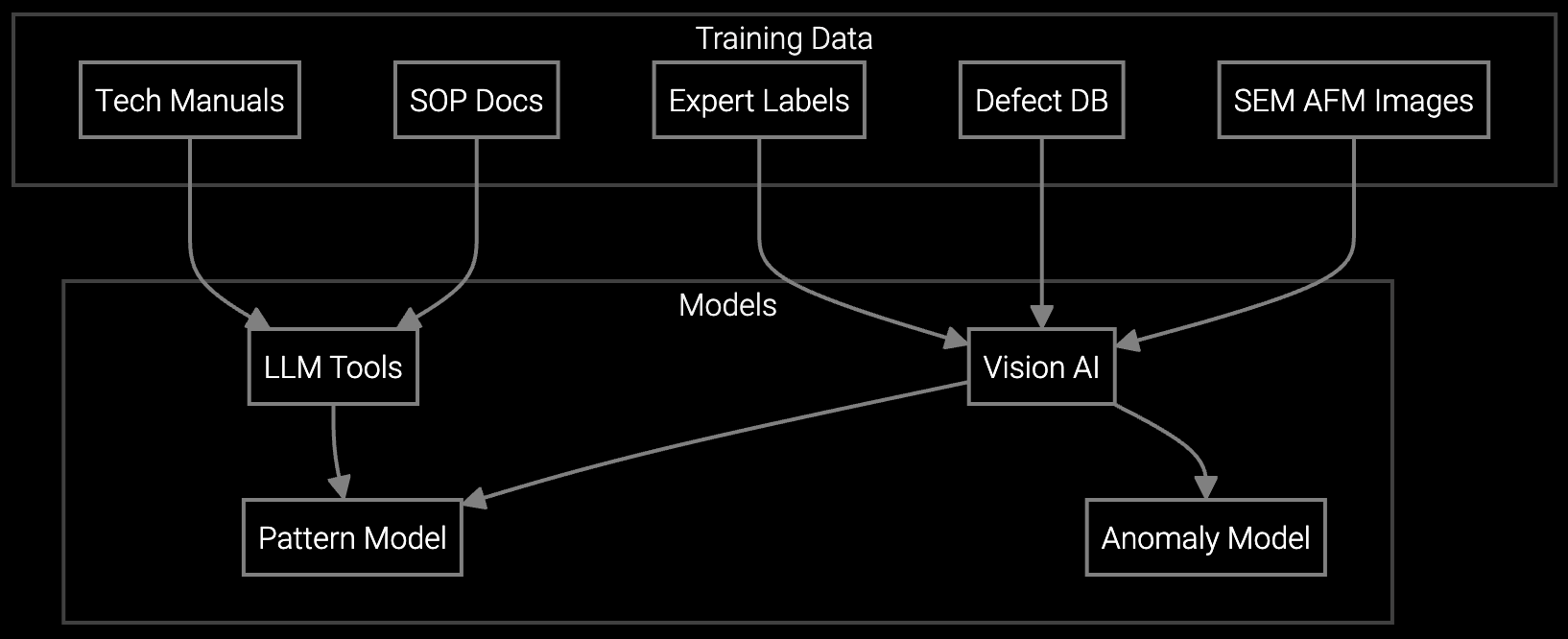
AI analyzes microscopic component images to validate physical defects in returned server memory and storage modules, reducing NFF rates by confirming legitimate warranty claims.
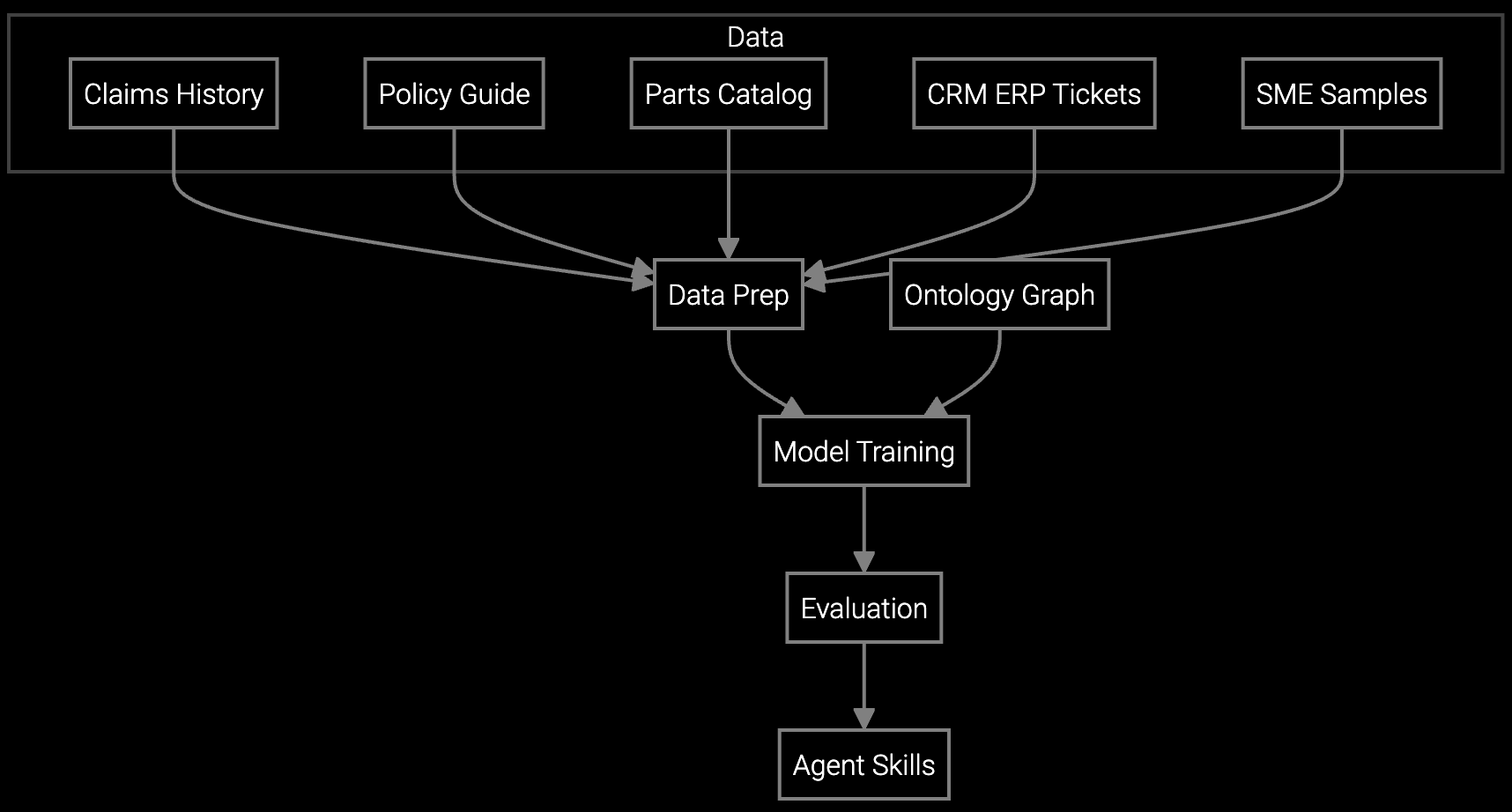
Automatically classifies data center hardware warranty claims by failure mode and assigns correct disposition codes, enabling custom rule logic for hyperscale warranty operations.
Data center equipment OEMs face warranty complexity across server, storage, and cooling infrastructure deployed in multi-megawatt facilities. BMC and IPMI telemetry generate failure signals buried in log noise. Mixed hardware generations and rapid refresh cycles create entitlement verification challenges when customers return components after upgrades.
High-volume RMA processing for drives, memory DIMMs, and power supplies requires automated fraud detection to prevent margin erosion. NFF returns spike when customers misdiagnose thermal or power issues as component failures. Warranty reserve accuracy depends on predicting claim rates across product lines serving hyperscale and colocation deployments.
Machine learning models analyze historical return data, correlating warranty claims against BMC telemetry, thermal logs, and power anomaly records. When a new claim lacks supporting failure signatures, the system flags it for manual review before approving the RMA, preventing unnecessary returns.
Yes. The platform exposes RESTful APIs and Python SDKs that let developers define custom fraud detection logic based on claim patterns, customer history, and product-specific failure modes. Rules execute in your environment without relying on vendor-controlled black boxes.
Integration with installed base management systems, ERP entitlement records, and configuration management databases provides multi-source validation. The system cross-references serial numbers, purchase dates, and warranty terms across vendors to eliminate manual lookup delays.
Automated parsing of IPMI logs, RAID controller alerts, and BMC sensor data identifies failure signatures that validate or invalidate warranty claims. Claims with clear telemetry evidence route directly to RMA generation, while ambiguous cases flag for human review, accelerating processing by 3-5x.
The platform uses standard REST APIs with webhook callbacks, allowing integration with SAP, Oracle, Salesforce, or custom ERP systems. Data remains in your environment. Python and TypeScript SDKs enable custom workflow orchestration without proprietary middleware dependencies.
Software stocks lost nearly $1 trillion in value despite strong quarters. AI represents a paradigm shift, not an incremental software improvement.
Function-scoped AI improves local efficiency but workflow-native AI changes cost-to-serve. The P&L impact lives in the workflow itself.
Five key shifts from deploying nearly 100 enterprise AI workflow solutions and the GTM changes required to win in 2026.
Explore API documentation and integration patterns for NFF reduction at scale.
View Technical Docs