When CNC machines fail at 2 AM, your support engineers can't wait hours parsing PLC codes and SCADA logs while your customer's production line sits idle.
Bruviti deployment data shows AI surfaces top-three cause suggestions on at least 70% of incidents at 85% precision for industrial equipment remote support. Operators stop reading raw logs line by line, because the system reads telemetry and history and hands the support desk a ranked, accurate shortlist of likely failure causes.
Support engineers manually correlate PLC codes, pressure sensor readings, and vibration patterns across thousands of log entries. For legacy equipment with sparse documentation, this detective work can take an entire shift while the customer's production line waits.
Only senior engineers recognize subtle patterns in SCADA signals or know which serial number ranges have unique failure modes. When they're unavailable, complex remote sessions escalate unnecessarily or drag on for hours.
Without clear root cause from remote diagnostics, support engineers escalate to field service based on guesses. This creates unnecessary dispatches when the issue could have been resolved remotely with better diagnostic visibility.
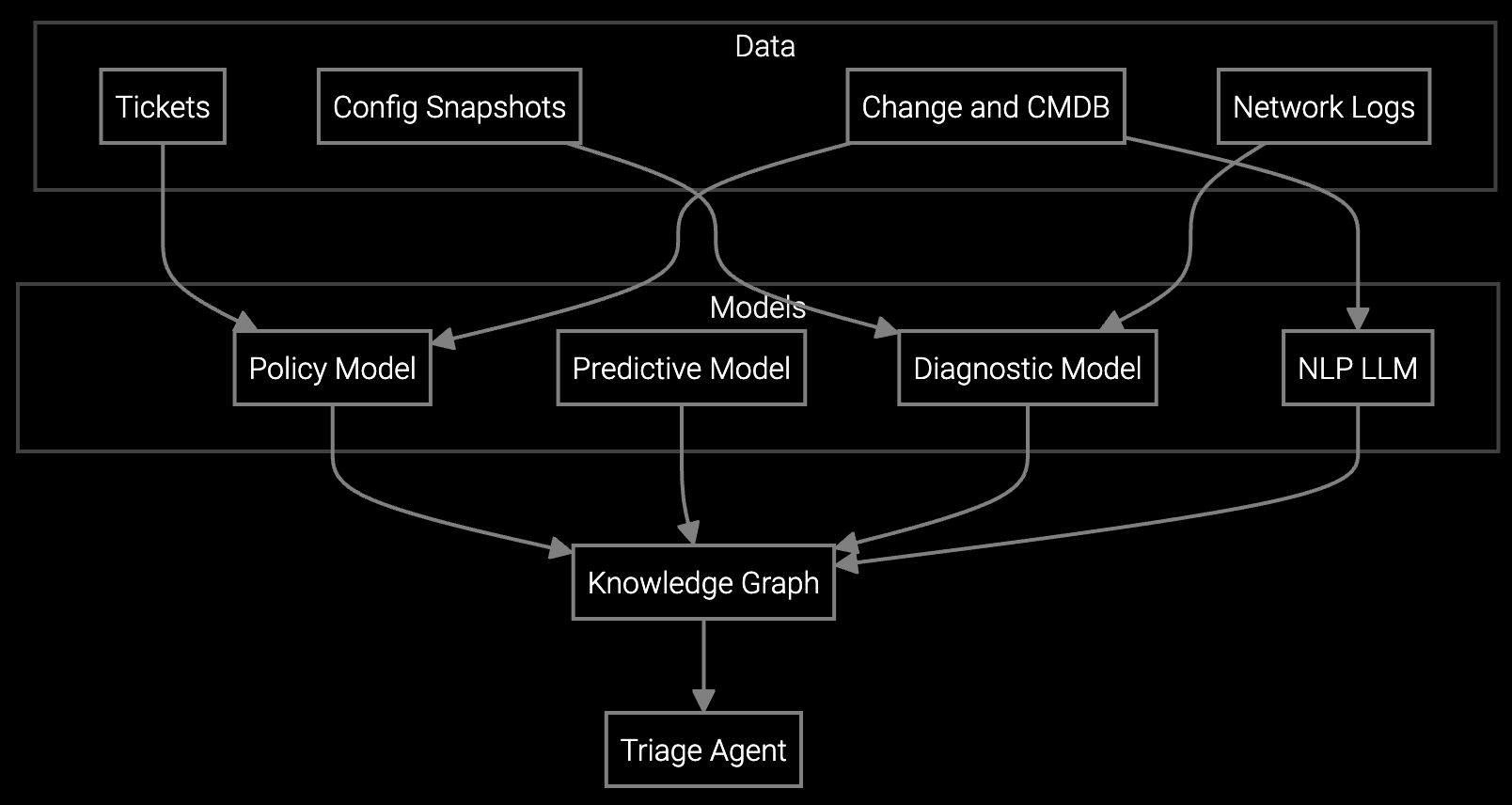
Bruviti's platform automates the log analysis work that bogs down remote support sessions. When a support engineer connects remotely to troubleshoot industrial equipment, AI instantly parses PLC codes, SCADA signals, vibration data, and temperature readings across the equipment's complete service history.
The system presents root cause analysis with supporting evidence from similar failures across your installed base. Support engineers see the diagnosis, recommended resolution steps, and required parts in seconds. This eliminates hours of manual correlation and democratizes senior engineer expertise across your entire remote support team.
Industrial equipment with 10-30 year lifecycles presents unique remote support challenges. Documentation for decades-old CNC machines, compressors, or material handling systems is often incomplete. PLC codes and SCADA signals vary by serial number range. Vibration signatures that indicate bearing wear in one production run behave differently in another.
AI trained on your complete service history recognizes these patterns automatically. When a support engineer connects remotely to a 15-year-old press brake, the platform immediately surfaces relevant failures from similar equipment, known firmware quirks for that serial range, and successful resolution patterns. This makes every remote session feel like your most experienced engineer is guiding the diagnosis.
Support engineers must manually correlate data from multiple sources—PLC codes, SCADA alarms, vibration sensors, temperature readings, pressure patterns—across thousands of log entries. For complex industrial equipment, they're also cross-referencing incomplete documentation, searching for similar historical failures, and consulting senior engineers who recognize subtle patterns. This process typically takes 3-6 hours for non-obvious failures.
When log analysis doesn't reveal a definitive diagnosis within the customer's downtime window, support engineers escalate to field service as a safety measure. Without automated correlation across equipment history and similar failures, engineers lack the visibility to confidently resolve issues remotely. This results in unnecessary dispatches for problems that could have been fixed with better diagnostic tools.
The AI is trained on your complete service history—case records, field reports, parts replacements, and resolved failures—mapped to telemetry signatures from the same equipment. It learns which PLC code combinations predict bearing failures, how vibration patterns differ across serial number ranges, and which SCADA alarm sequences indicate specific root causes. During a live remote session, it instantly matches current telemetry against this learned history.
AI trained on service history becomes more valuable for legacy equipment precisely because documentation is incomplete. The platform learns from actual failure patterns and successful resolutions accumulated over years of service. It captures tribal knowledge from senior engineers who've worked on that equipment for decades. This makes it particularly effective for the hardest remote support scenarios.
Once telemetry is ingested, AI correlation typically delivers root cause analysis with supporting evidence in 15-30 seconds. The support engineer sees the diagnosis, relevant historical failures from similar equipment, recommended resolution steps, and required parts. This turns a 3-hour diagnostic process into a near-instant answer while the customer's production team is still on the line.
Software stocks lost nearly $1 trillion in value despite strong quarters. AI represents a paradigm shift, not an incremental software improvement.
Function-scoped AI improves local efficiency but workflow-native AI changes cost-to-serve. The P&L impact lives in the workflow itself.
Five key shifts from deploying nearly 100 enterprise AI workflow solutions and the GTM changes required to win in 2026.
Watch how Bruviti accelerates log analysis and eliminates manual correlation during live remote support sessions.
Schedule Demo