Your machinery runs for decades—your AI strategy needs to match that timeline without locking you into obsolete tools.
Bruviti deployment data shows AI remote support cuts mean time to resolution 40 to 60% on industrial equipment. For manufacturers choosing build vs buy, the strategic question is which path actually moves MTTR at scale, and a platform with proven root-cause analysis reaches that outcome faster than an in-house program starting from zero.
Custom AI development for remote diagnostics requires 18-36 months before first production deployment. Your competitors using platforms are live in 90 days, capturing escalation reduction benefits while you're still hiring data scientists.
Proprietary remote support platforms trap your telemetry data and trained models inside closed systems. When equipment lifecycles span 20+ years, switching costs become prohibitive—you're married to a vendor whose technology may not survive a decade.
Every quarter without AI-assisted remote resolution, you bleed margin to competitors offering faster incident response. Service contracts renew based on uptime performance—delay means lost renewals you can't recover.
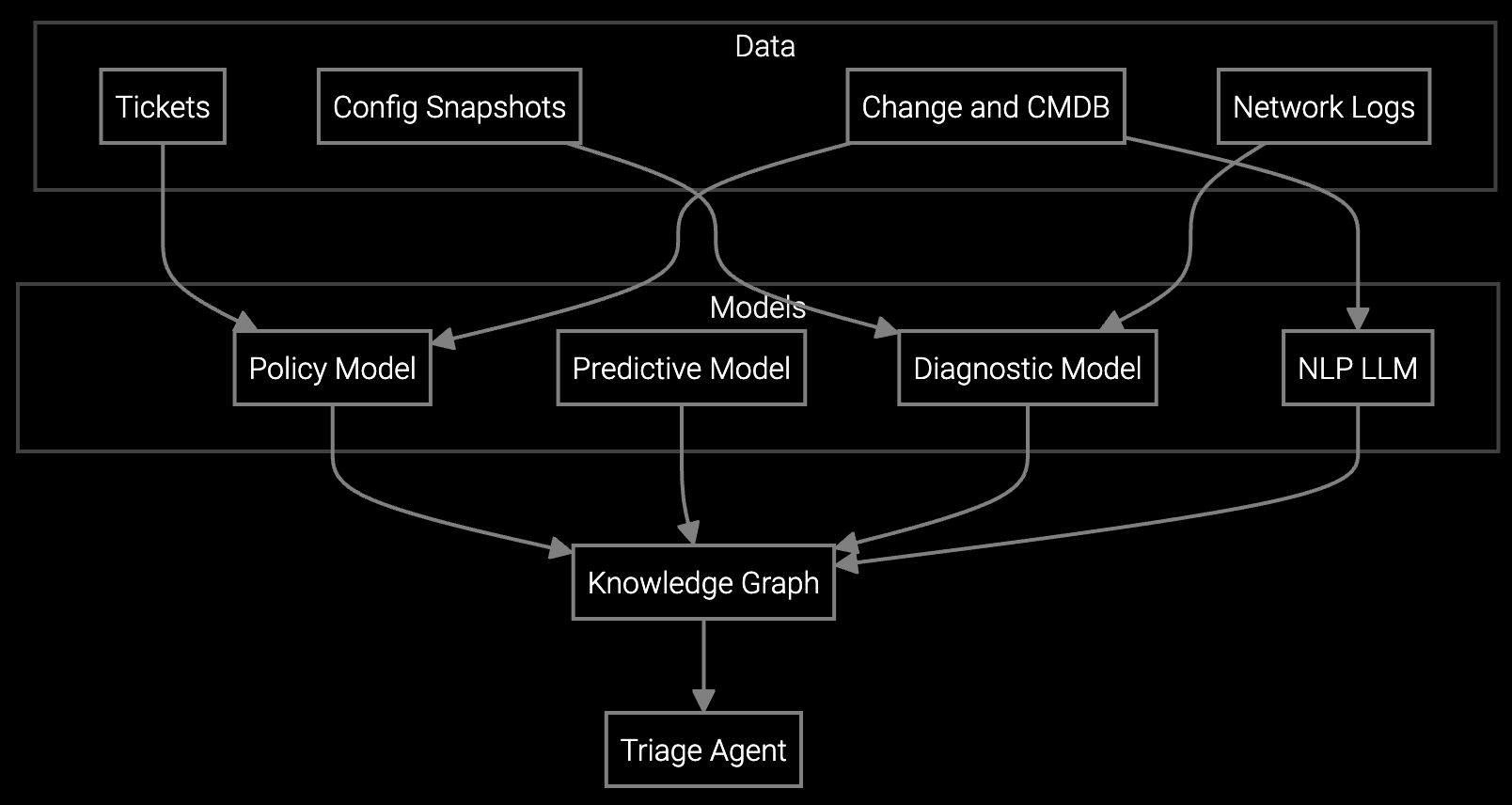
Bruviti's platform architecture splits the difference strategically. Pre-built models for common remote diagnostic patterns—vibration analysis, log parsing, guided troubleshooting—deliver immediate value. Your support engineers start resolving more incidents remotely within weeks, not years. Meanwhile, open APIs let your team extend the platform for equipment-specific edge cases without rebuilding from scratch.
This matters for industrial OEMs because your equipment diversity is massive—CNC machines don't fail like turbines, pumps don't log like robots. A pure "buy" platform treats all machinery as generic. A pure "build" approach means you're coding bespoke diagnostics for 50+ product lines. The hybrid model learns common failure patterns across your installed base while letting you inject domain expertise where it counts—balancing automation with control.
Industrial machinery installed today will still be running in 2045. Your remote support AI must evolve with firmware updates, parts obsolescence, and changing failure modes—without requiring a platform migration every five years. Proprietary systems can't guarantee that longevity. Custom builds saddle you with permanent maintenance costs.
Hybrid platforms solve this by separating the learning layer (your equipment-specific models) from the infrastructure layer (diagnostics engine, session management, escalation routing). As your installed base ages, you retrain models on new failure patterns without rebuilding the platform. When new equipment lines launch, you extend APIs rather than forklift the entire stack.
Initial deployment with pre-built remote diagnostic models takes 8-12 weeks for a single product line. This includes telemetry integration, support engineer training, and workflow configuration. Full rollout across multiple equipment families typically spans 6-9 months, depending on product line complexity and data readiness.
Full access to model training APIs, telemetry ingestion endpoints, and diagnostic workflow orchestration. You can extend pre-built models with equipment-specific logic, integrate proprietary condition monitoring algorithms, and customize escalation routing rules. All extensions remain portable—your custom code isn't locked inside a proprietary runtime.
Three safeguards: your telemetry data stays in your own data lake or warehouse, trained models export in standard formats, and all integrations use open APIs rather than proprietary connectors. If you ever migrate platforms, your historical training data and custom models move with you—no multi-million dollar retraining costs.
Industrial OEMs typically see 15-25% reduction in escalation rates within six months, translating to $300K-$1.2M in annual savings per 100 support engineers. Faster remote resolution also improves customer uptime by 5-10%, strengthening service contract renewals. Full ROI usually lands within 12-18 months depending on installed base size.
Yes, through progressive enhancement. For older machinery with sparse data, the platform uses historical service records and guided troubleshooting workflows to improve remote resolution. As you retrofit sensors or upgrade controllers, telemetry-based diagnostics automatically activate. This phased approach avoids the "all or nothing" trap of pure AI solutions.
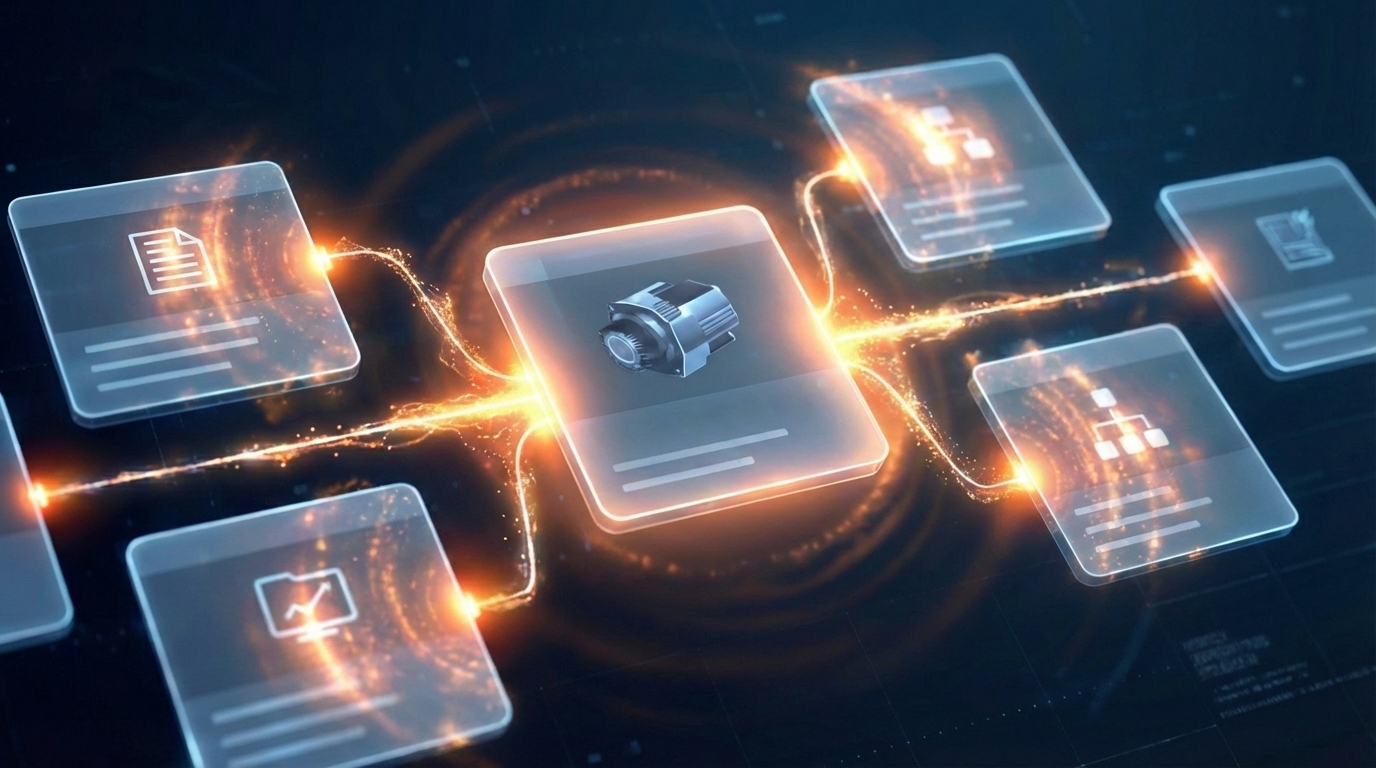
Software stocks lost nearly $1 trillion in value despite strong quarters. AI represents a paradigm shift, not an incremental software improvement.
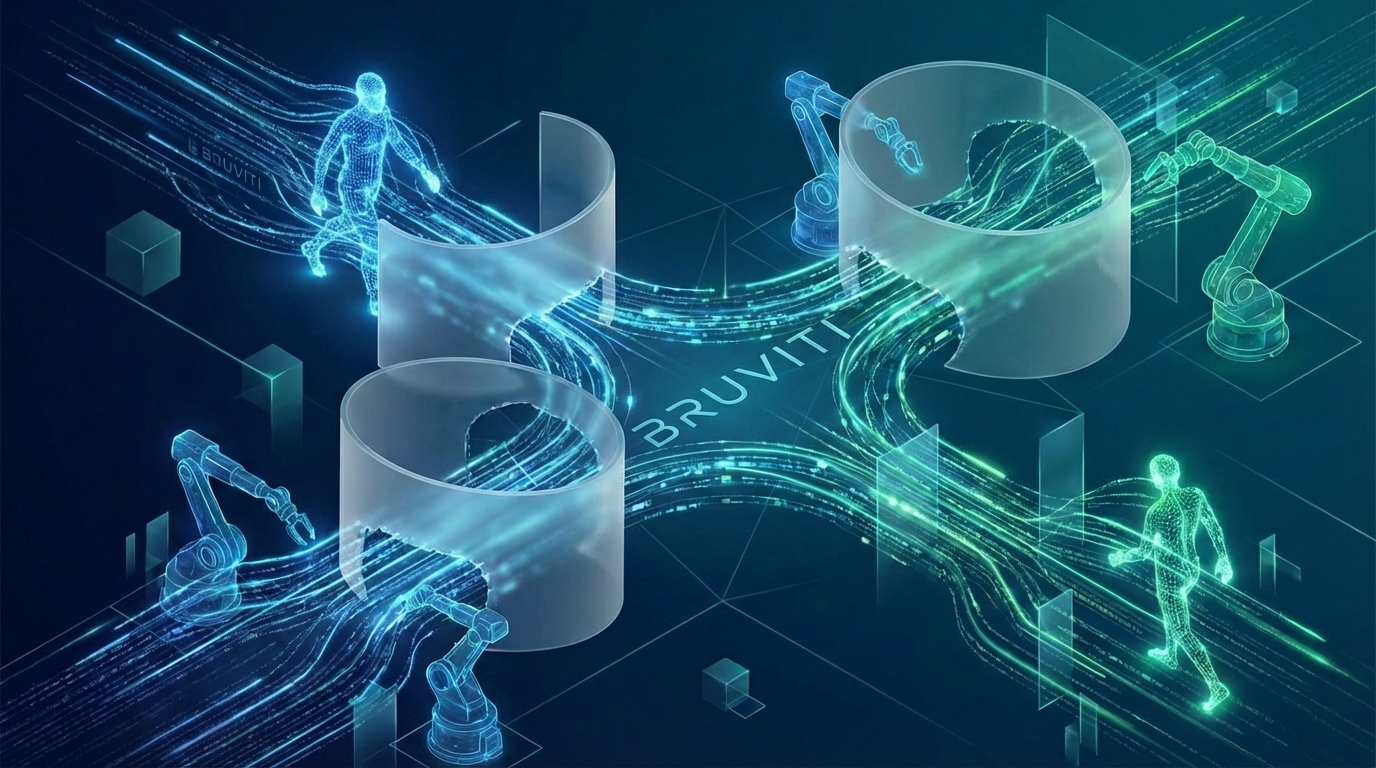
Function-scoped AI improves local efficiency but workflow-native AI changes cost-to-serve. The P&L impact lives in the workflow itself.
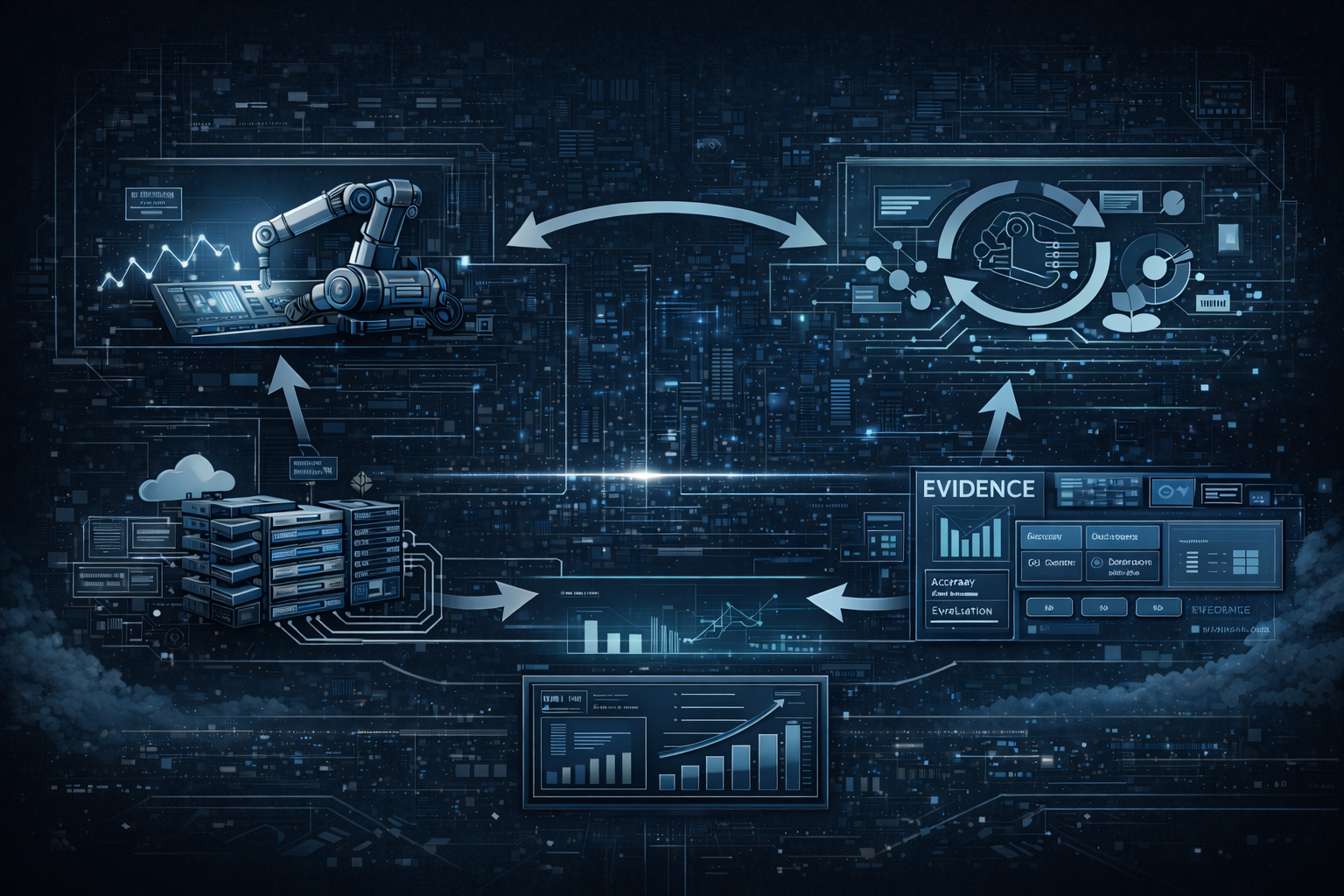
Five key shifts from deploying nearly 100 enterprise AI workflow solutions and the GTM changes required to win in 2026.
See how hybrid platforms deliver speed without lock-in for industrial equipment lifecycles.
Schedule Strategy Discussion