
Decades-long equipment lifecycles demand asset visibility systems that evolve with technology while preserving institutional knowledge.
Bruviti deployment data shows 30 to 50% less unplanned downtime from installed-base management built on connected equipment data. The build-versus-buy call hinges on this: replicating that reliability gain in-house takes years of model work, while a proven platform delivers the downtime reduction as the strategic outcome leadership is actually buying.
Legacy equipment populations lack modern tracking systems, creating blind spots that prevent proactive service and leave renewal opportunities invisible. Manual processes can't scale to support predictive maintenance strategies.
Actual equipment state diverges from system records as field modifications accumulate over years. This gap undermines predictive models and creates service execution risk when outdated data drives decisions.
Without predictive insight into contract expiration and equipment health, service teams react to crises instead of positioning upgrades proactively. This leaves margin on the table and damages customer relationships.
The build-versus-buy decision hinges on three realities unique to industrial equipment: 10-30 year lifecycles demand systems that outlive today's technology choices, geographic distribution requires robust edge capabilities, and declining expertise creates institutional knowledge risk. Pure custom builds deliver control but require maintaining specialized teams over decades. Pure vendor solutions risk lock-in and may not adapt to evolving sensor networks or emerging predictive models.
A hybrid strategy deploys proven asset tracking platforms while preserving integration flexibility through open APIs. Bruviti's approach ingests data from PLCs, SCADA systems, and IoT sensors while exposing configuration management and lifecycle rules through extensible interfaces. This balances immediate deployment with the adaptability required as industrial IoT evolves, enabling executives to protect margin through predictive service without betting organizational capability on a single vendor's roadmap.

Predict component failure windows for CNC machines and heavy equipment, enabling planned maintenance that protects customer uptime instead of reactive emergency service.
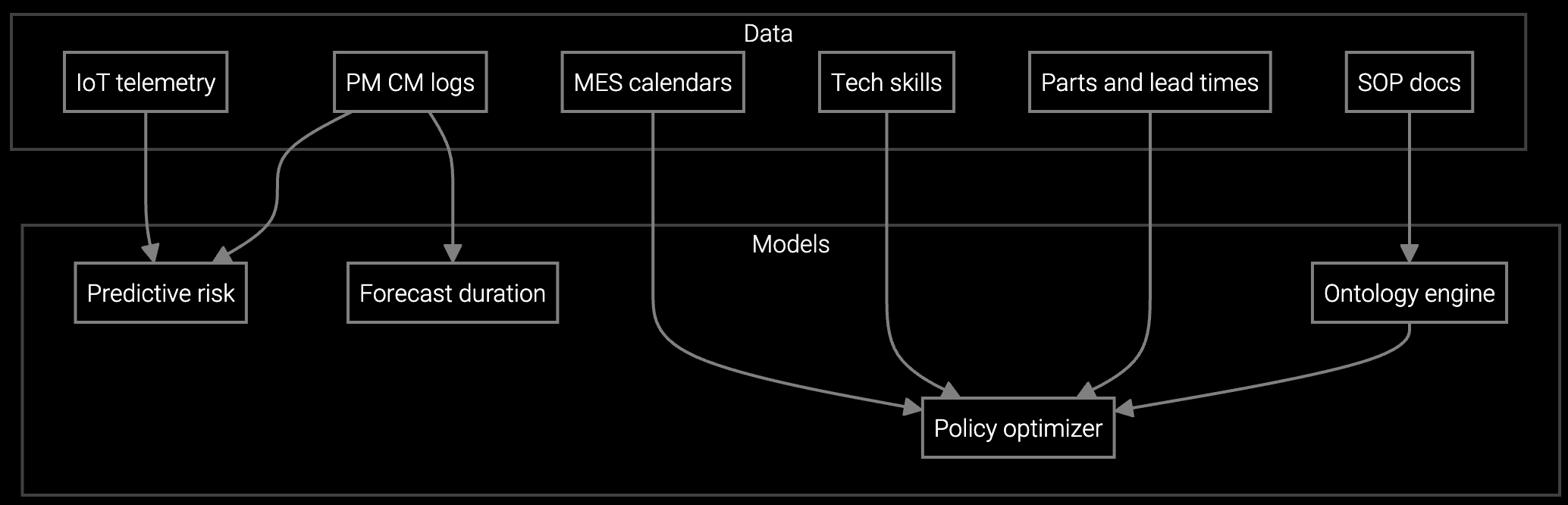
Schedule maintenance based on actual equipment condition across distributed populations, reducing unnecessary interventions while preventing catastrophic failures that damage customer operations.

Identify recurring failure trends across pumps, compressors, and automation systems to drive product improvements that reduce warranty costs and strengthen competitive positioning.
Industrial equipment manufacturers face asset tracking challenges unlike software or consumer products. A CNC machine installed in 1995 still generates service revenue today, but its documentation may exist only in a retiring engineer's notebooks. Condition monitoring sensors added in 2010 use protocols incompatible with today's IoT standards. Meanwhile, customers demand predictive maintenance capabilities that require complete asset visibility across mixed-vintage populations.
The competitive landscape compounds this pressure. Manufacturers who deploy predictive service capabilities first capture recurring revenue streams from installed base management, while laggards watch customers self-maintain equipment or switch to competitors offering proactive support. This creates a strategic imperative to deploy asset tracking systems that work with both legacy and modern equipment while positioning for future sensor technology evolution.
Most industrial OEMs see measurable impact within 12-18 months through improved contract attachment rates and reduced emergency service costs. Predictive maintenance capabilities enabled by better asset visibility typically deliver 15-25% margin improvement on service revenue as reactive crisis work converts to planned maintenance with healthier economics.
Legacy equipment tracking starts with manual data capture during service visits, gradually building asset records that enable basic lifecycle management. As connectivity retrofits occur, these records become foundations for predictive models. The key is establishing asset registries now rather than waiting for full sensor coverage, since even basic configuration data enables proactive contract renewals.
Prioritize platforms that ingest data from SCADA and PLC systems without requiring equipment downtime for integration. API access to configuration management rules and lifecycle workflows prevents vendor lock-in as predictive maintenance strategies evolve. The ability to extend the platform with custom logic for industry-specific equipment types protects long-term flexibility.
Custom builds offer maximum control but require maintaining specialized engineering teams over decades to match equipment lifecycles. Proven platforms deliver faster deployment and benefit from continuous improvement across customer deployments. A hybrid approach deploys platform capabilities while preserving customization through APIs, balancing speed to value with strategic flexibility.
Complete asset tracking enables the shift from reactive break-fix to proactive maintenance. Configuration accuracy feeds predictive models that forecast component failures, while lifecycle visibility identifies upgrade opportunities before contracts expire. This transforms service from a cost center responding to emergencies into a margin-positive revenue stream built on planned interventions and customer success.

Software stocks lost nearly $1 trillion in value despite strong quarters. AI represents a paradigm shift, not an incremental software improvement.

Function-scoped AI improves local efficiency but workflow-native AI changes cost-to-serve. The P&L impact lives in the workflow itself.

Five key shifts from deploying nearly 100 enterprise AI workflow solutions and the GTM changes required to win in 2026.
See how industrial OEMs deploy asset visibility systems that balance control with speed to value.
Schedule Strategy Session