
Legacy machinery deployed over decades creates fragmented data across ERPs, PLCs, and spreadsheets—your service operations need a unified view.
Bruviti deployment data shows an integrated installed-base and equipment AI registry goes live in 5 to 7 weeks, not the multi-quarter timeline most teams budget. The build unifies serial numbers, configuration, and service history into one queryable asset record that downstream diagnostics and parts agents can call directly.
Serial numbers, firmware versions, and configuration histories are scattered across legacy ERPs, spreadsheets, and tribal knowledge. Service teams can't validate entitlements or predict failures without a complete equipment profile.
Actual deployed configurations diverge from records as customers swap modules, update firmware, or replace components without notifying the OEM. Your asset database becomes less accurate over time.
Without visibility into deployed software versions and EOL dates, you can't proactively offer upgrades or renewals. Revenue opportunities slip by because you don't know which customers need attention.
Bruviti's headless architecture connects to existing PLCs, SCADA systems, and ERPs via REST APIs and event streams. Python and TypeScript SDKs let you build custom data pipelines that sync telemetry, detect configuration changes, and maintain lifecycle metadata in real time. You control the data model, transformation logic, and downstream integrations.
Deploy ingestion workers as Docker containers that pull from OPC-UA servers, Modbus gateways, or SQL databases. The platform validates incoming data against your asset schema, deduplicates records, and triggers webhooks when configurations drift or EOL dates approach. Export enriched asset data back to your CRM, ERP, or custom dashboards without proprietary query languages or data silos.
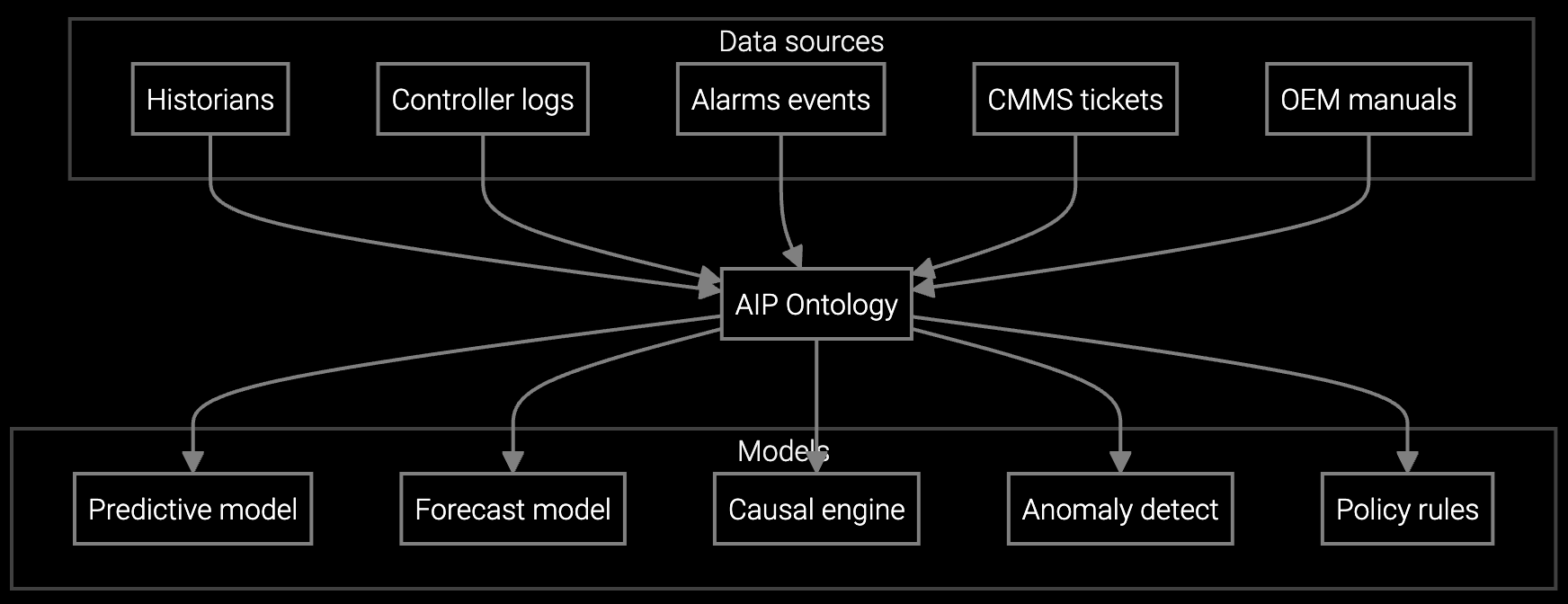
Ingest vibration, temperature, and pressure telemetry from deployed CNC machines to identify bearing failures before they cause downtime.

Estimate component lifespan across your installed base of compressors using run hours and cycle count data streamed from PLCs.
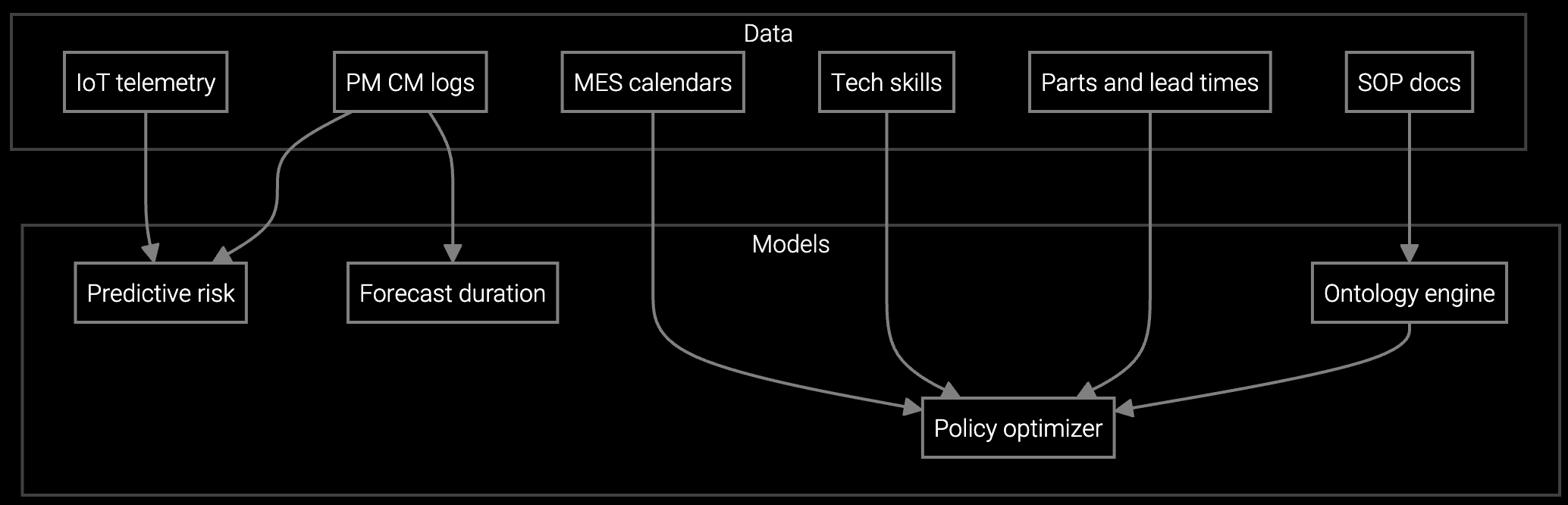
Trigger maintenance windows based on actual equipment condition rather than fixed calendar intervals, reducing unnecessary service visits.
Industrial equipment deployed over 10-30 year lifecycles creates extreme data fragmentation. Early models had no connectivity, mid-generation machines use proprietary protocols, and recent equipment streams JSON over MQTT. Your asset registry must reconcile all three generations without forcing a single data format.
Bruviti's SDK handles OPC-UA, Modbus TCP, and REST endpoints with the same Python interface. Write transformation logic once and apply it across your entire installed base, whether you're ingesting PLC tags from a 1995 turbine or real-time sensor arrays from a 2024 robot cell.
The Python SDK includes native connectors for OPC-UA, Modbus TCP/RTU, MQTT, and REST APIs. You can also write custom adapters using the extensible data source interface if your equipment uses proprietary protocols. All connectors stream data through the same event pipeline.
For legacy equipment, the platform compares service ticket data, warranty claims, and parts shipment records against the asset registry to infer configuration changes. You can also ingest manual updates via CSV upload or web forms when customers report modifications.
Yes. The SDK provides export functions that write to S3, push to REST endpoints, or sync directly to SAP and Oracle via pre-built connectors. You own the data and control where it lives. No proprietary file formats or extraction fees.
The base schema includes serial number, model, firmware version, location, contract ID, and telemetry metadata. You extend it with custom fields for industry-specific attributes like run hours, cycle counts, or hydraulic pressures using JSON schema definitions in your SDK configuration.
The platform uses configurable deduplication rules based on serial number, MAC address, or custom identifiers. When conflicts occur, you define merge logic in Python to choose the authoritative source or combine fields from multiple records into a single master record.
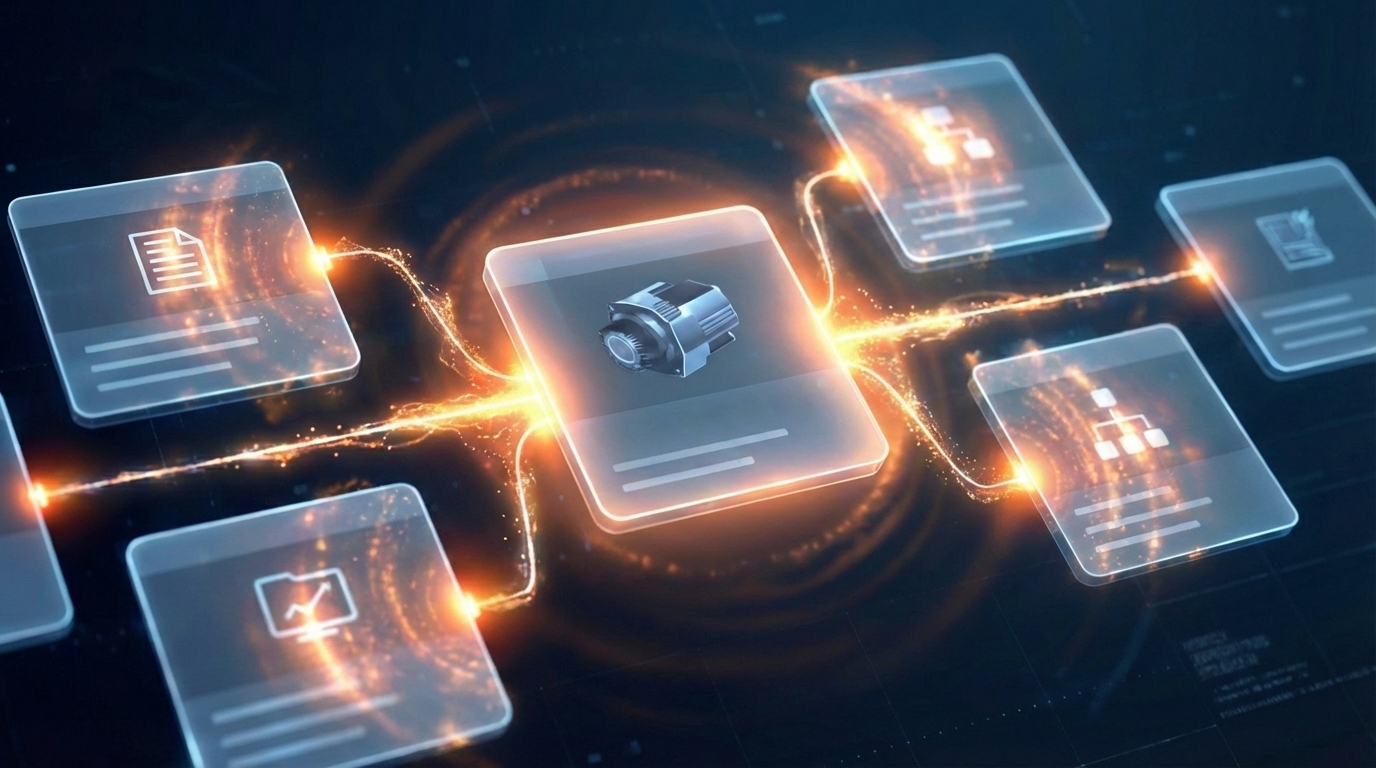
Software stocks lost nearly $1 trillion in value despite strong quarters. AI represents a paradigm shift, not an incremental software improvement.
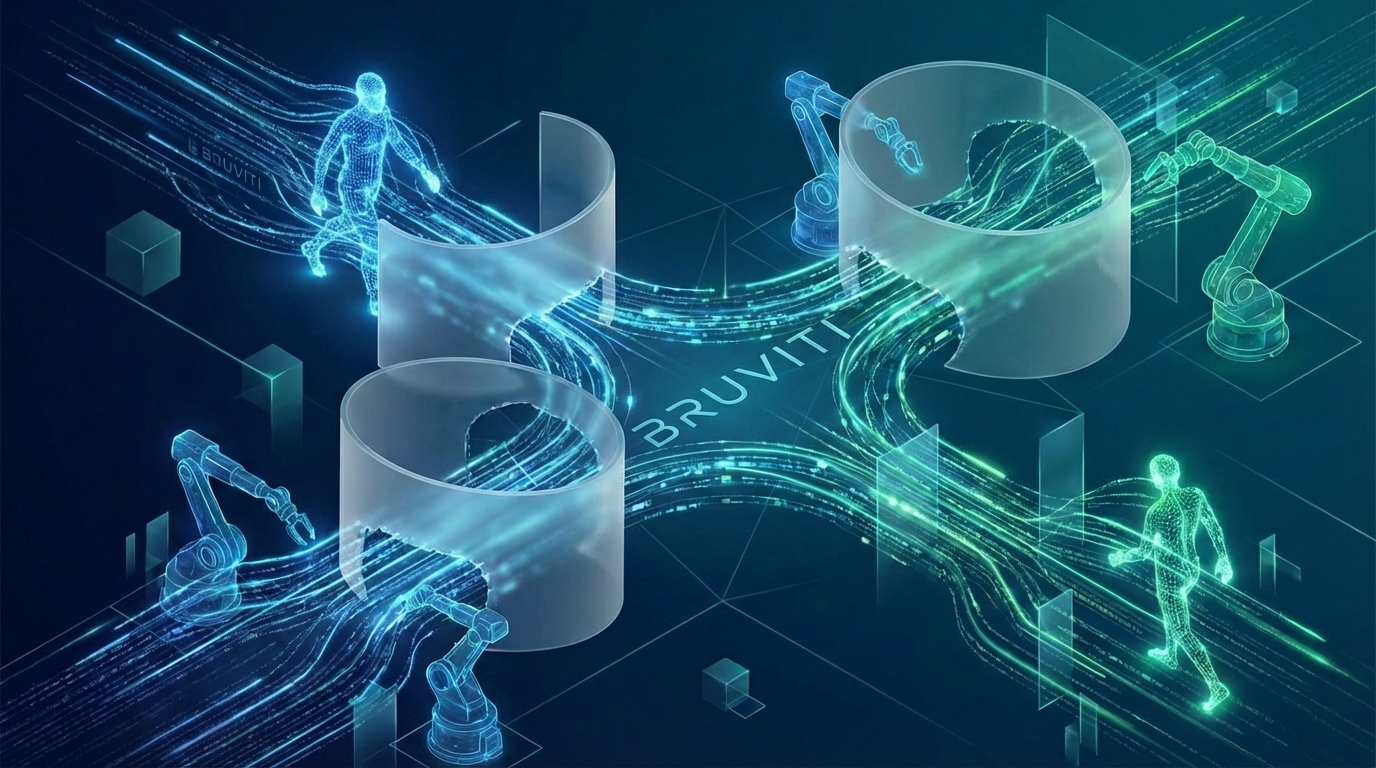
Function-scoped AI improves local efficiency but workflow-native AI changes cost-to-serve. The P&L impact lives in the workflow itself.

Five key shifts from deploying nearly 100 enterprise AI workflow solutions and the GTM changes required to win in 2026.
Review API endpoints, Python code examples, and architecture diagrams for asset registry integration.
Access Developer Docs