
Manual handoffs between warranty systems, imaging tools, and ERP cost hours per claim when fab customers expect same-day RMA decisions.
Warranty claims processing automation connects entitlement verification, defect image analysis, and claims coding through API-driven workflows. Python SDKs handle SEM/AFM images, standardize failure codes, and trigger RMA generation without manual handoffs between systems.
SEM and AFM images from returned lithography components require manual transfer between imaging systems and warranty databases. Engineers screenshot images, attach to email, and wait for claims processors to manually document findings in separate systems.
Warranty status lookups require checking multiple systems—install base records, service contracts, and product registration databases. No single API returns complete entitlement history, forcing sequential queries and manual reconciliation.
Failure mode classification varies by processor. Chamber contamination may be coded as "environmental," "consumable," or "maintenance" depending on who handles the claim. Inconsistent codes corrupt warranty analytics and inflate reserves.
Bruviti's platform automates warranty workflows through API-first integration points. When a fab submits a return request, the system triggers parallel processes: entitlement verification pulls warranty status from your ERP, the Python SDK analyzes uploaded SEM images for defect classification, and the claims coding API standardizes failure modes against your product taxonomy. Each step publishes events your systems can consume.
Developers define custom workflow rules in TypeScript or Python—route high-value claims for manual review, auto-approve NFF returns below threshold, or escalate contamination findings to engineering. The headless architecture means you control business logic while the platform handles AI model inference, image processing, and data orchestration. No vendor lock-in: your code owns the workflow, APIs remain accessible if you change platforms.
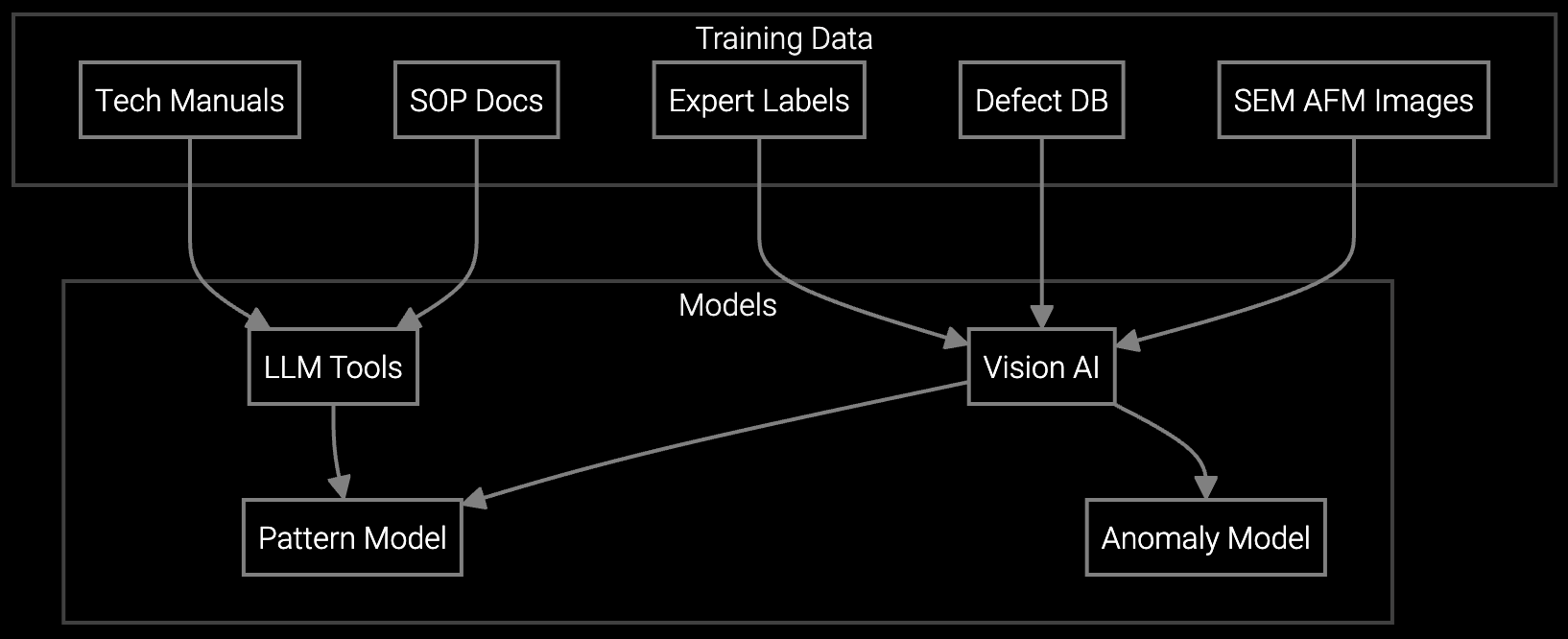
Automated analysis of microscopic images from returned lithography components identifies contamination sources, classifies defect types, and validates warranty claims without manual inspection.
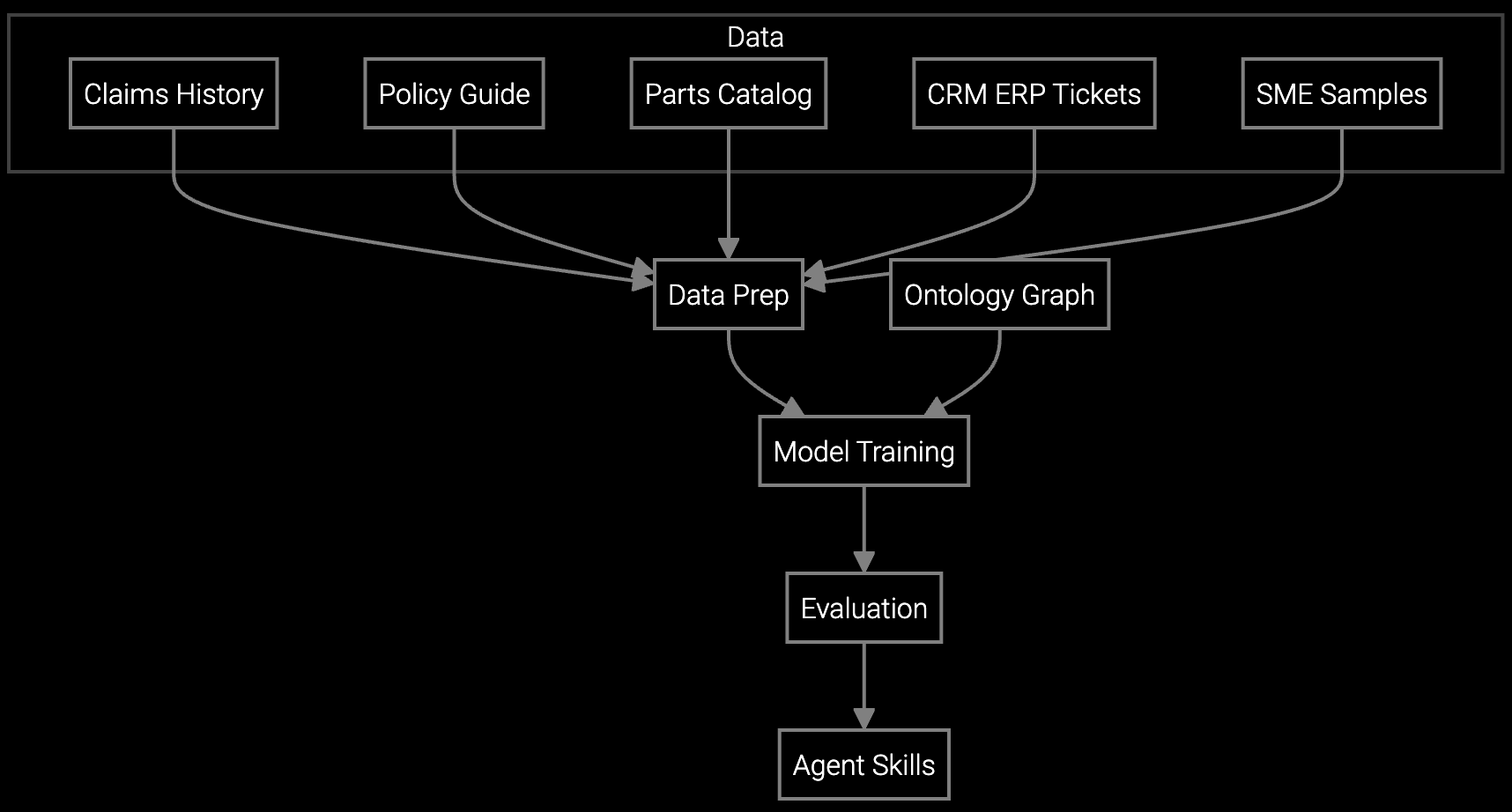
Standardized failure mode classification for chamber components, etch tools, and deposition systems ensures consistent coding across all claims processors and regions.
Semiconductor equipment returns carry extreme financial stakes. A single EUV lithography component failure can trigger $500K+ warranty claims, making manual processing delays unacceptable. Fab customers expect same-day RMA decisions to minimize production line downtime. Automated workflows must handle the full complexity: parse equipment telemetry logs, analyze nanometer-scale defect images, cross-reference maintenance records, and validate entitlement against multi-year service contracts.
Integration requirements are equally demanding. Your warranty system must connect to fab MES systems for failure context, pull process parameter logs from tool controllers, and sync with your field service database to confirm recent PM cycles. API-driven workflows eliminate the manual data gathering that currently stretches claims processing to 5+ days for complex returns.
Core integrations include entitlement verification endpoints connecting to your ERP, image upload APIs for SEM/AFM files, claims coding APIs that standardize failure modes, and webhook triggers for RMA generation. Most semiconductor OEMs also connect to field service systems for maintenance history and MES systems for equipment telemetry context.
Python or TypeScript SDKs let you define conditional logic per product family. Set auto-approval thresholds for low-value returns, route contamination defects to engineering review, or trigger expedited processing for critical fab accounts. All rules run in your environment with full access to your data—no black-box decision making.
Yes. The image analysis SDK accepts standard formats (TIFF, PNG) and provides hooks for custom parsers. Semiconductor OEMs typically write adapters for tool-specific outputs like Hitachi SEM files or Bruker AFM data, then pass normalized images to the defect classification model. Your preprocessing code remains portable if you change platforms.
Event-driven architecture means each step publishes status updates your systems consume. If entitlement lookup times out or returns ambiguous results, you define the fallback behavior—pause for manual review, query backup data sources, or auto-escalate to warranty management. The platform handles retry logic and error logging, but business rules stay in your code.
Claims data, image analysis results, and workflow audit logs remain in your infrastructure. The platform processes data through APIs but does not retain sensitive warranty information. Query endpoints provide real-time access to classification results, defect annotations, and processing timestamps for integration with your analytics or compliance systems.
Software stocks lost nearly $1 trillion in value despite strong quarters. AI represents a paradigm shift, not an incremental software improvement.
Function-scoped AI improves local efficiency but workflow-native AI changes cost-to-serve. The P&L impact lives in the workflow itself.

Five key shifts from deploying nearly 100 enterprise AI workflow solutions and the GTM changes required to win in 2026.
Explore API documentation and SDK examples for semiconductor claims automation.
Access Developer Resources