
Semiconductor OEMs face warranty claims complexity at fab scale—build flexible validation without proprietary lock-in.
AI warranty claims systems auto-code 75-85% of semiconductor equipment claims with 95% consistency, per Bruviti deployment data. Builders wire the model to claim intake, route the 15-25% needing human judgment, and clear the rest automatically. The result is faster, consistent claims handling without expanding the returns team.
Warranty entitlement data sits in SAP or Oracle systems that require custom connectors. Off-the-shelf warranty platforms force migration to their database schemas, breaking existing integrations with fab MES and supply chain systems.
Semiconductor warranty logic varies by tool type, process node, and customer contract terms. Black-box AI systems cannot adapt to recipe-specific failure modes or consumable lifecycle rules unique to lithography versus etch equipment.
Proprietary fraud detection algorithms cannot incorporate fab-specific telemetry patterns or be retrained as new failure modes emerge. When the vendor's model fails, you have no recourse to tune parameters or add custom features.
Bruviti provides API-first warranty intelligence that integrates with your existing ERP, MES, and analytics stack. The platform exposes RESTful endpoints for entitlement verification, claim coding, and fraud scoring—allowing you to keep warranty data in SAP while adding AI validation on top. Python and TypeScript SDKs let you build custom workflows that call pre-trained models for defect classification from SEM images or NFF prediction based on tool telemetry.
The architecture separates data storage from intelligence layer. You control where warranty records, customer contracts, and equipment history reside. Bruviti APIs consume JSON payloads with claim details and return structured validation results, confidence scores, and suggested disposition codes. For fraud detection, you can configure rule thresholds, whitelist known failure modes, and retrain models using your proprietary fab data without exposing sensitive process parameters to external systems.
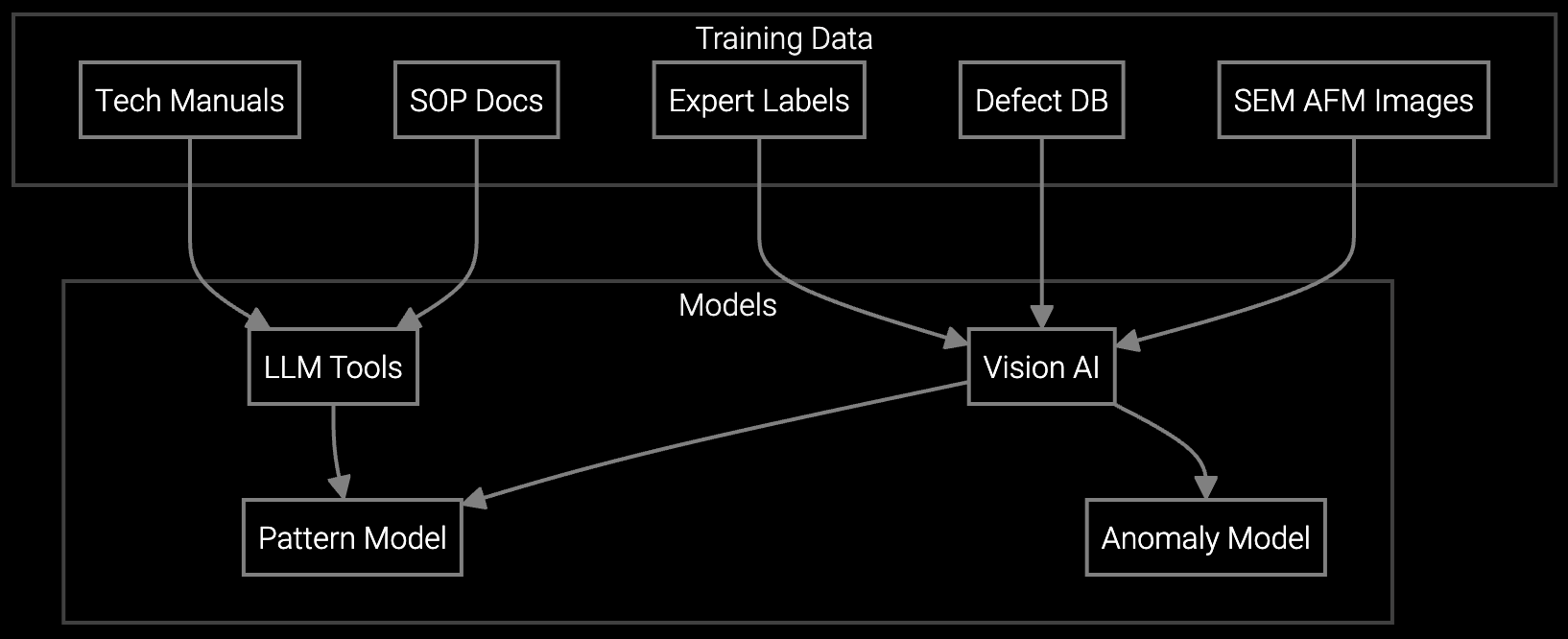
Integrate image analysis APIs to validate warranty claims for lithography and etch tools. AI classifies defect types from microscopy images without requiring proprietary metrology software.
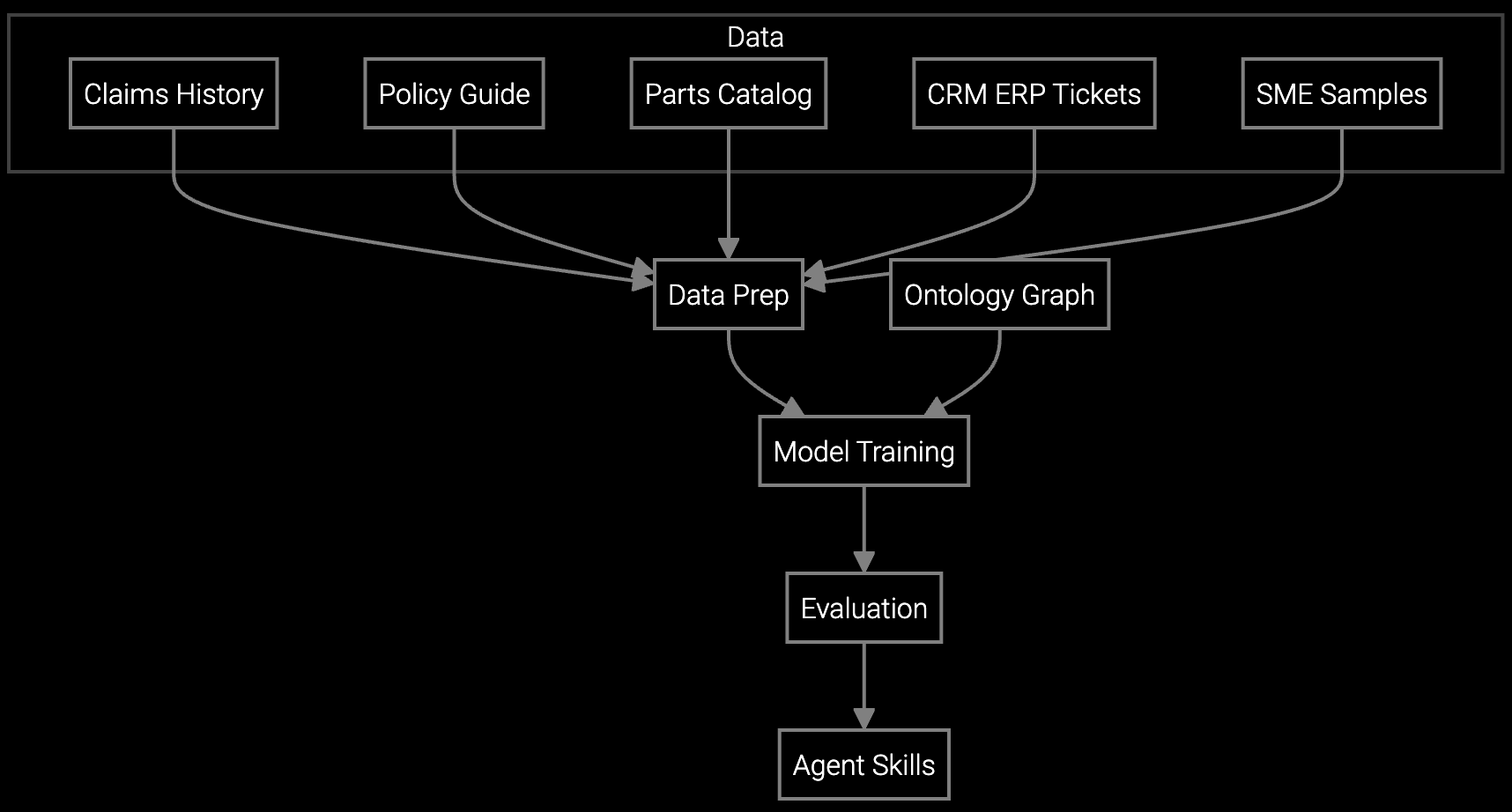
Automate claim categorization for chamber components, RF generators, and consumables. Python SDK lets you map failure descriptions to warranty codes using custom taxonomy for your product portfolio.
Semiconductor warranty systems must connect to SAP ECC or S/4HANA for equipment install base, Oracle EBS for customer contracts, and fab MES for tool performance history. Bruviti's REST APIs consume warranty claim payloads with serial numbers, failure codes, and telemetry snapshots—then return entitlement status, suggested disposition, and fraud risk scores in milliseconds.
For defect validation, SEM or AFM images are uploaded via multipart POST requests to the image analysis endpoint. The API returns defect classification, confidence intervals, and whether the failure mode is covered under warranty terms. Python SDK examples show how to batch-process returned tool images overnight and flag claims requiring human review based on confidence thresholds you define.
The API accepts JSON payloads containing claim ID, equipment serial number, failure description, customer ID, and warranty contract reference. Optional fields include telemetry snapshots, SEM image URLs, and repair history. Response includes entitlement boolean, confidence score, suggested disposition code, and fraud risk level.
Yes. Bruviti provides model retraining APIs where you submit labeled training data containing historical claims with fraud/valid flags. The platform fine-tunes the base model on your data and returns a custom model endpoint. You control the training data and model weights remain in your deployment environment.
Use SAP OData services to expose install base and contract tables as REST endpoints. Bruviti SDKs include helper functions to query SAP, cache entitlement data in Redis, and pass relevant fields to the warranty validation API. Sample code shows SAP ECC and S/4HANA integration patterns with error handling.
The image analysis API accepts TIFF, PNG, and JPEG formats common in SEM and AFM output. Maximum resolution is 4096x4096 pixels. API returns defect bounding boxes, classification labels, and confidence scores. Batch processing endpoints allow uploading up to 100 images per request for overnight analysis.
Initial API integration typically takes 2-4 weeks including ERP connector setup, claim payload mapping, and testing with historical data. Pilot programs start with one product line to validate accuracy before scaling. SDKs include unit tests and mock endpoints to accelerate development without production data dependencies.

Software stocks lost nearly $1 trillion in value despite strong quarters. AI represents a paradigm shift, not an incremental software improvement.

Function-scoped AI improves local efficiency but workflow-native AI changes cost-to-serve. The P&L impact lives in the workflow itself.

Five key shifts from deploying nearly 100 enterprise AI workflow solutions and the GTM changes required to win in 2026.
Get API documentation, Python SDK, and sandbox environment access to test warranty validation with your data.
Access Developer Resources