Manual incident triage costs network OEMs millions annually while customers demand five-nines uptime—automation is now a margin imperative.
Network OEMs automate remote support by deploying AI to execute end-to-end incident workflows—from telemetry ingestion and root cause correlation to resolution routing—eliminating manual triage and reducing escalation rates by 40-60% while cutting mean time to resolution.
Support engineers manually parse SNMP traps, syslog streams, and customer reports to determine incident severity. This labor-intensive triage creates delays, misrouted cases, and unnecessary escalations that inflate operating costs and frustrate customers awaiting resolution.
Resolution workflows depend on individual engineers remembering past incidents, searching fragmented knowledge bases, and manually documenting outcomes. When experts leave or move teams, their troubleshooting logic disappears—forcing re-learning and increasing resolution times.
Support engineers toggle between remote access platforms, log analysis tools, ticketing systems, and configuration databases to diagnose network issues. This context-switching burns time, introduces errors, and prevents efficient handoffs when escalations become necessary.
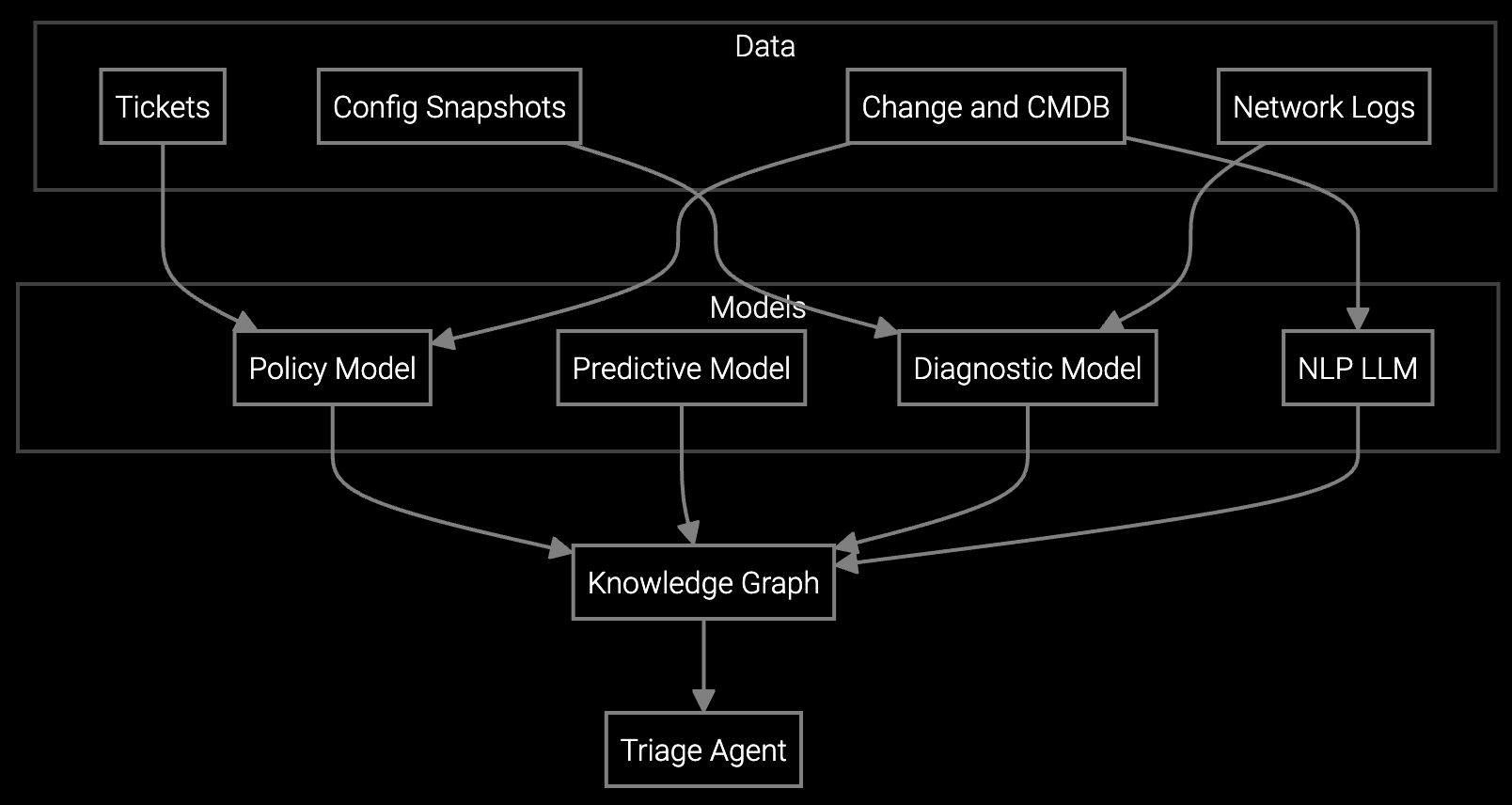
Bruviti deploys AI to execute the entire remote support workflow autonomously. The platform ingests telemetry streams (SNMP, syslog, firmware logs), correlates anomalies across distributed network devices, identifies root cause, and routes incidents to the appropriate resolution path—all without human intervention for Tier 1 cases.
Support engineers receive context-rich incident packages with pre-executed diagnostics, relevant historical resolutions, and recommended next steps. This transforms their role from manual log parsing to strategic validation, slashing mean time to resolution while improving remote resolution rates and reducing costly escalations.
Network equipment OEMs face unique workflow demands: customers expect five-nines availability (99.999%), incidents escalate rapidly when firewalls or core routers fail, and support engineers must diagnose issues across carrier-grade systems deployed in NOCs worldwide. Manual triage can't meet these SLAs at scale.
Automating the remote support workflow means ingesting SNMP traps and syslog streams in real-time, correlating anomalies across device populations, and auto-routing incidents based on firmware version, configuration state, and historical failure patterns. This orchestration ensures high-severity incidents reach experts immediately while routine cases resolve without escalation.
Tier 1 incident triage, log correlation, root cause identification for known failure patterns, and resolution routing can be fully automated. Complex multi-vendor incidents, firmware vulnerability assessment, and configuration change approvals still require support engineer validation to ensure network security and compliance.
The platform ingests telemetry from SNMP management systems, syslog servers, and ticketing platforms via API integration. Pre-executed diagnostics and resolution recommendations appear directly in your existing case management system, so support engineers continue using familiar tools while benefiting from automated workflows.
Network OEMs typically see 35-50% improvement in remote resolution rates, 40-55% reduction in mean time to resolution, and 40-60% fewer escalations within six months. This translates to millions in avoided dispatch costs and improved service margins when deployed across global support operations.
The platform normalizes telemetry formats across vendors—parsing proprietary syslog schemas, SNMP MIBs, and firmware logs into unified incident data. Root cause correlation works across multi-vendor topologies, identifying whether failures originate in routers, switches, firewalls, or upstream connectivity regardless of manufacturer.
When the AI cannot confidently correlate an incident to known patterns, it escalates immediately to a support engineer with all collected telemetry, attempted diagnostic steps, and similar historical cases. The engineer's resolution then trains the model, expanding automated coverage for future incidents.
Software stocks lost nearly $1 trillion in value despite strong quarters. AI represents a paradigm shift, not an incremental software improvement.
Function-scoped AI improves local efficiency but workflow-native AI changes cost-to-serve. The P&L impact lives in the workflow itself.
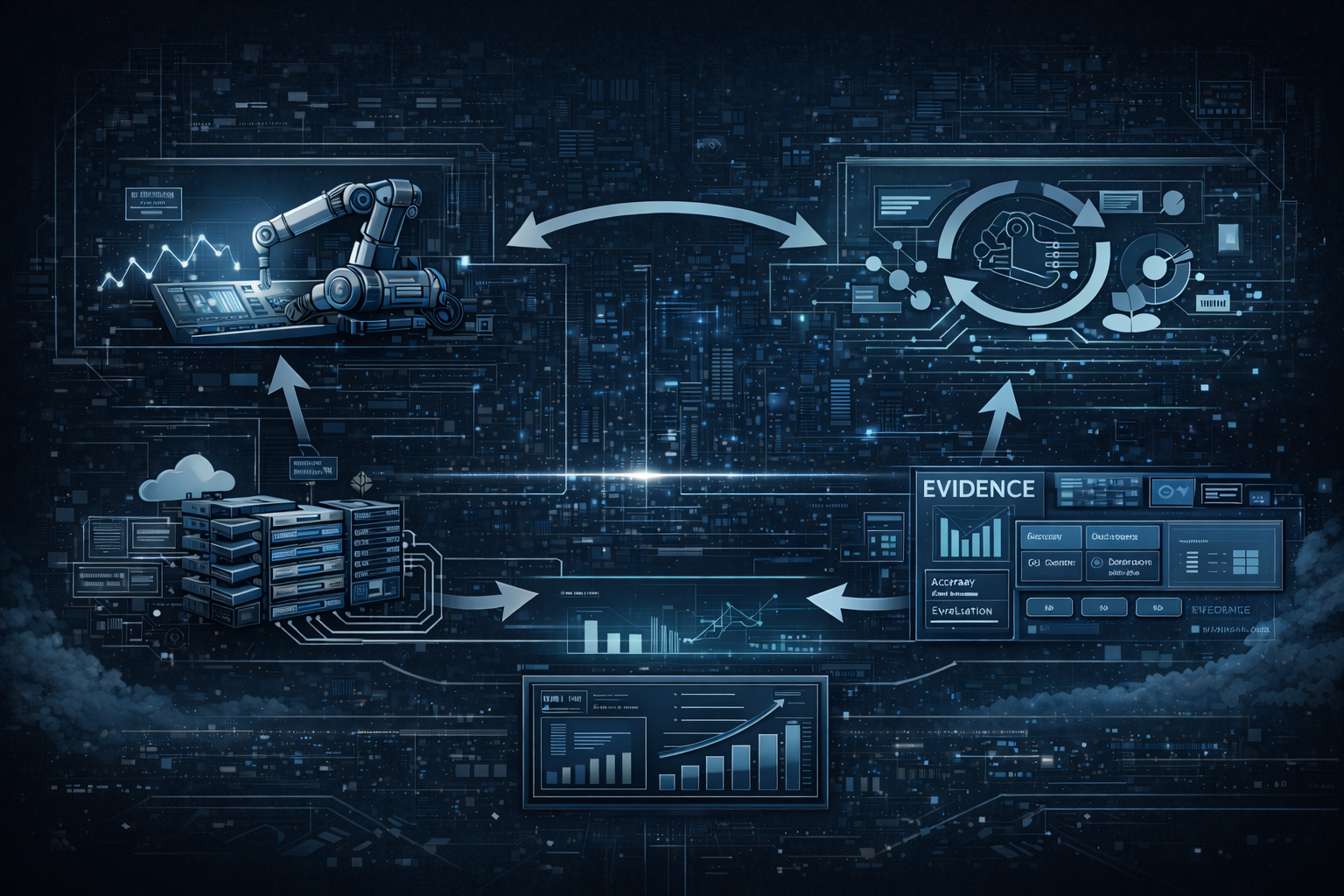
Five key shifts from deploying nearly 100 enterprise AI workflow solutions and the GTM changes required to win in 2026.
See how Bruviti deploys AI to execute end-to-end incident workflows and reduce escalation costs by millions annually.
Schedule Executive Briefing