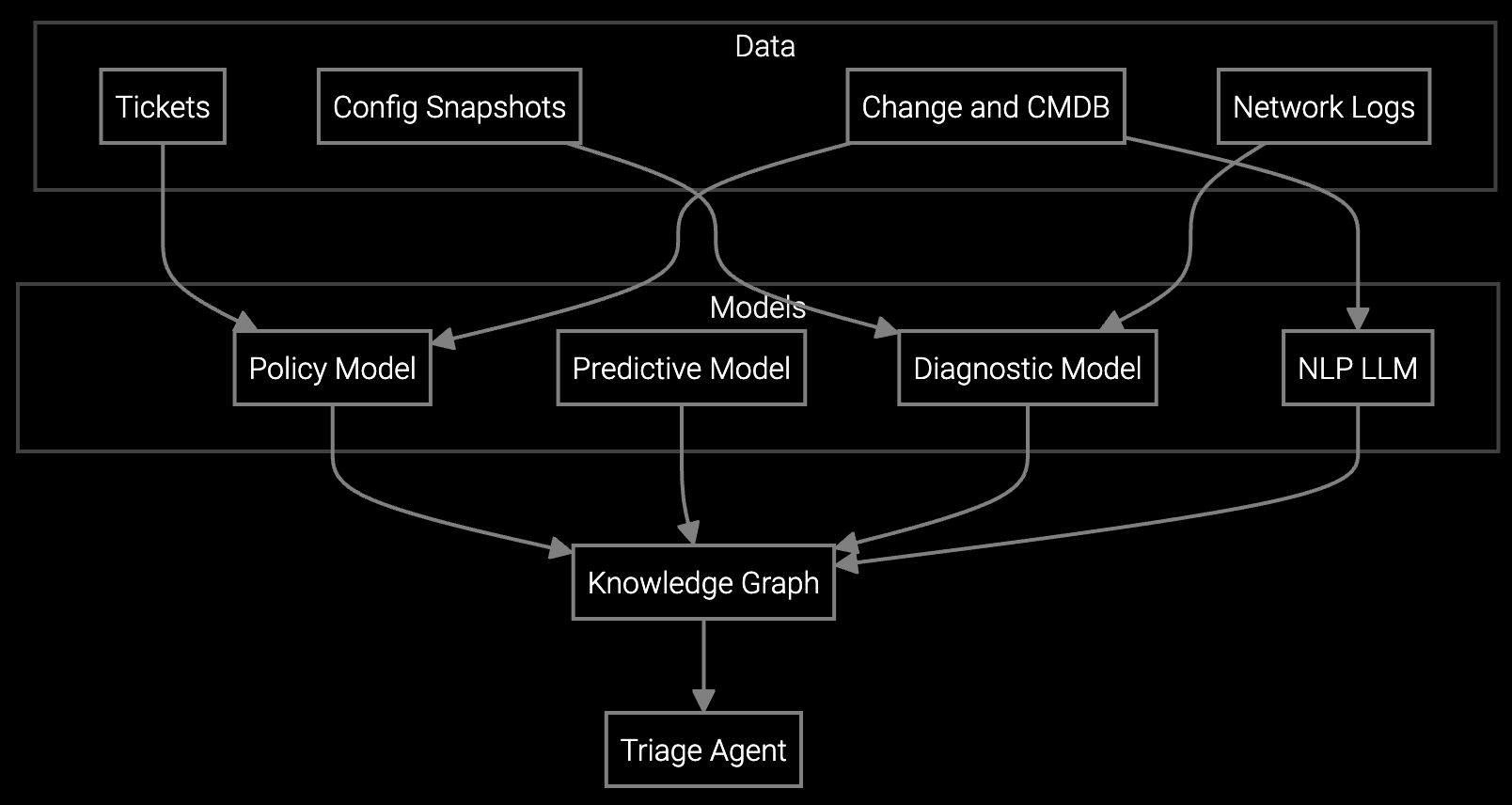
Hyperscale operators demand 99.99% uptime—manual escalation workflows can't keep pace with failure rates across thousands of nodes.
Remote support workflow automation routes server, storage, and cooling issues through AI-driven diagnostics and guided troubleshooting, resolving 60-70% remotely without escalation. Support engineers access telemetry-based root cause analysis, automated session documentation, and context-rich escalation handoffs that eliminate manual log parsing and reduce mean time to resolution.
Support engineers spend hours parsing IPMI logs, BMC telemetry, and RAID controller alerts across heterogeneous hardware generations. Manual correlation across thousands of servers delays root cause identification and extends mean time to resolution.
Handoffs between remote support tiers lack context. Each escalation requires session notes, log re-analysis, and redundant diagnostics. Data center operators wait while support teams rebuild the diagnostic timeline from scratch.
Remote access platforms, ticketing systems, log aggregators, and knowledge bases operate independently. Support engineers toggle between six systems per session, manually transferring diagnostic findings and resolution steps across disconnected tools.
Bruviti orchestrates the entire remote support workflow from initial triage through escalation handoff. The platform ingests BMC telemetry, IPMI events, and RAID diagnostics in real-time, executing root cause analysis automatically before a support engineer joins the session. Pattern recognition across your installed base identifies recurring thermal anomalies, predictable drive failures, and power distribution issues—presenting prioritized diagnostic findings instead of raw log files.
Guided troubleshooting workflows adapt based on equipment type, failure signature, and customer SLA tier. The platform auto-populates session documentation, suggests validated resolution steps from your knowledge base, and pre-stages parts orders when hardware replacement becomes necessary. When escalation is required, the next-tier engineer receives a complete diagnostic case with telemetry correlations, attempted resolutions, and recommended next steps—eliminating redundant analysis and accelerating time to resolution.
Data center equipment manufacturers serve operators managing thousands to millions of compute nodes where manual remote support processes cannot scale. The platform ingests IPMI telemetry from baseboard management controllers, RAID health metrics from storage arrays, and thermal sensor data from cooling systems—executing automated diagnostics across heterogeneous hardware generations before human intervention.
Workflow automation routes server failures, storage degradation, and thermal anomalies through function-specific diagnostic pathways. Each equipment category triggers tailored troubleshooting workflows: memory failures invoke DIMM slot analysis and replacement prediction, power supply alerts correlate with PDU load patterns, and drive failures cross-reference predictive S.M.A.R.T. data against your RMA history. The platform orchestrates parts procurement, generates customer-facing status updates, and escalates with full diagnostic context when remote resolution reaches limits.
The platform executes first-tier diagnostics automatically by analyzing BMC telemetry, IPMI events, and component health metrics before a support engineer joins the session. Pattern recognition against your installed base identifies known failure signatures and presents validated resolution steps, enabling support engineers to resolve issues remotely that previously required escalation. Only novel failures or complex multi-system interactions reach senior tiers, reducing escalation rates by 40-50%.
Telemetry collection, log parsing, root cause correlation, and diagnostic case assembly execute autonomously. Knowledge base search, resolution step recommendations, and parts order staging occur automatically but support engineers validate before customer-facing action. Escalation handoffs trigger automatically when diagnostic confidence thresholds aren't met, with complete session context transferred to the next tier. Human expertise focuses on validation, customer communication, and resolution execution rather than data gathering and analysis.
The platform maintains equipment-specific diagnostic models for each server generation, storage platform, and cooling system in your product portfolio. Telemetry parsing adapts based on BMC firmware version, RAID controller type, and sensor configurations. Workflow routing logic accounts for hardware vintage, installed firmware, and customer SLA tier to ensure diagnostic steps match equipment capabilities and contractual obligations. As new hardware generations deploy, the platform learns failure patterns and expands workflow coverage automatically.
Track remote resolution rate (target 60-70% for automated workflows), mean time to resolution (expect 40-50% reduction), escalation rate (target 30-35% of incidents), and support engineer capacity utilization (effective span increases 2-3x per engineer). Secondary metrics include session documentation quality, knowledge base contribution rate from automated case analysis, and parts order accuracy when hardware replacement becomes necessary. ROI typically materializes within 6-9 months as workflow automation absorbs Tier 1 diagnostic labor and accelerates resolution cycles.
The platform connects to remote session platforms (screen sharing, remote desktop), ticketing systems, knowledge bases, and parts ordering systems through standard APIs. Diagnostic findings auto-populate ticket fields, resolution steps link to validated knowledge articles, and escalation triggers update ticket ownership and priority automatically. Support engineers work within existing tools while the platform orchestrates data flow, context transfer, and workflow progression in the background. No workflow disruption occurs during implementation—automation layers onto current processes incrementally.
Software stocks lost nearly $1 trillion in value despite strong quarters. AI represents a paradigm shift, not an incremental software improvement.
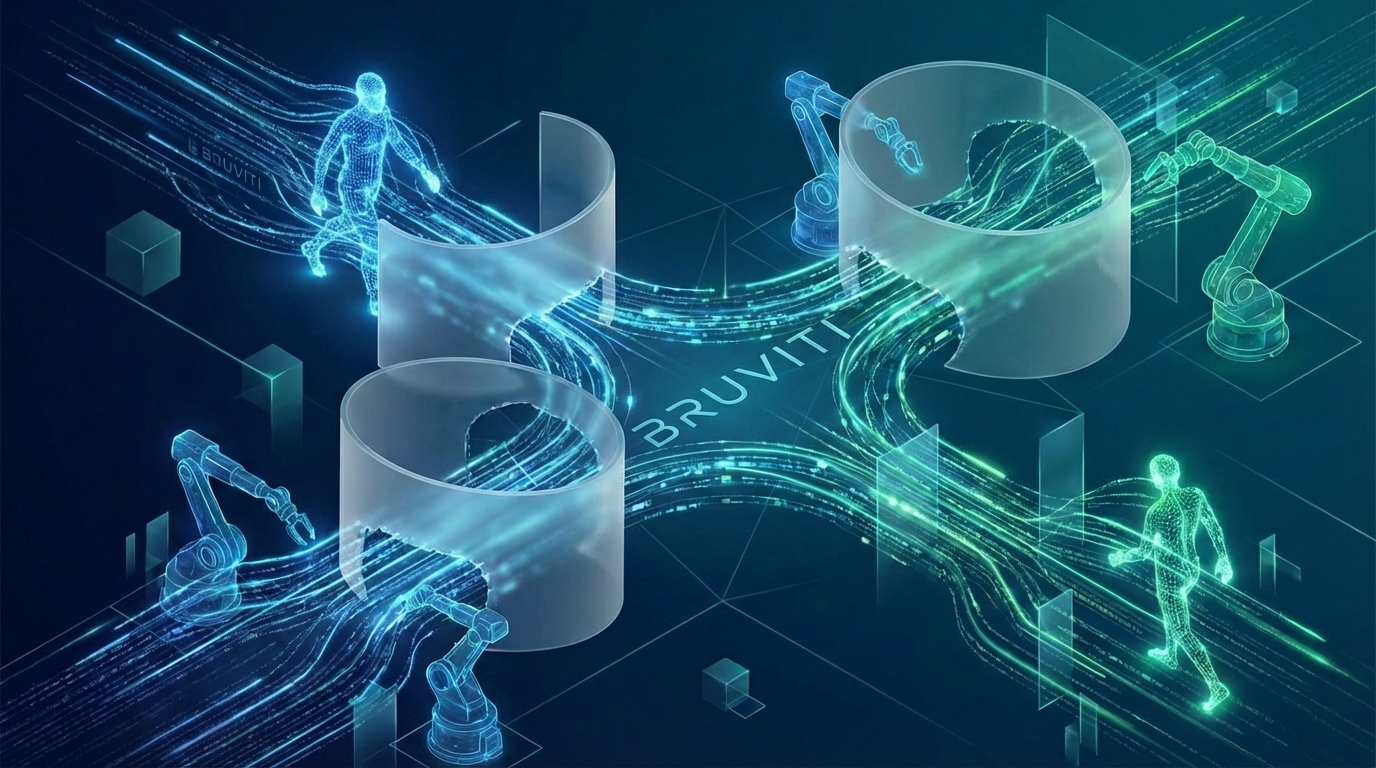
Function-scoped AI improves local efficiency but workflow-native AI changes cost-to-serve. The P&L impact lives in the workflow itself.
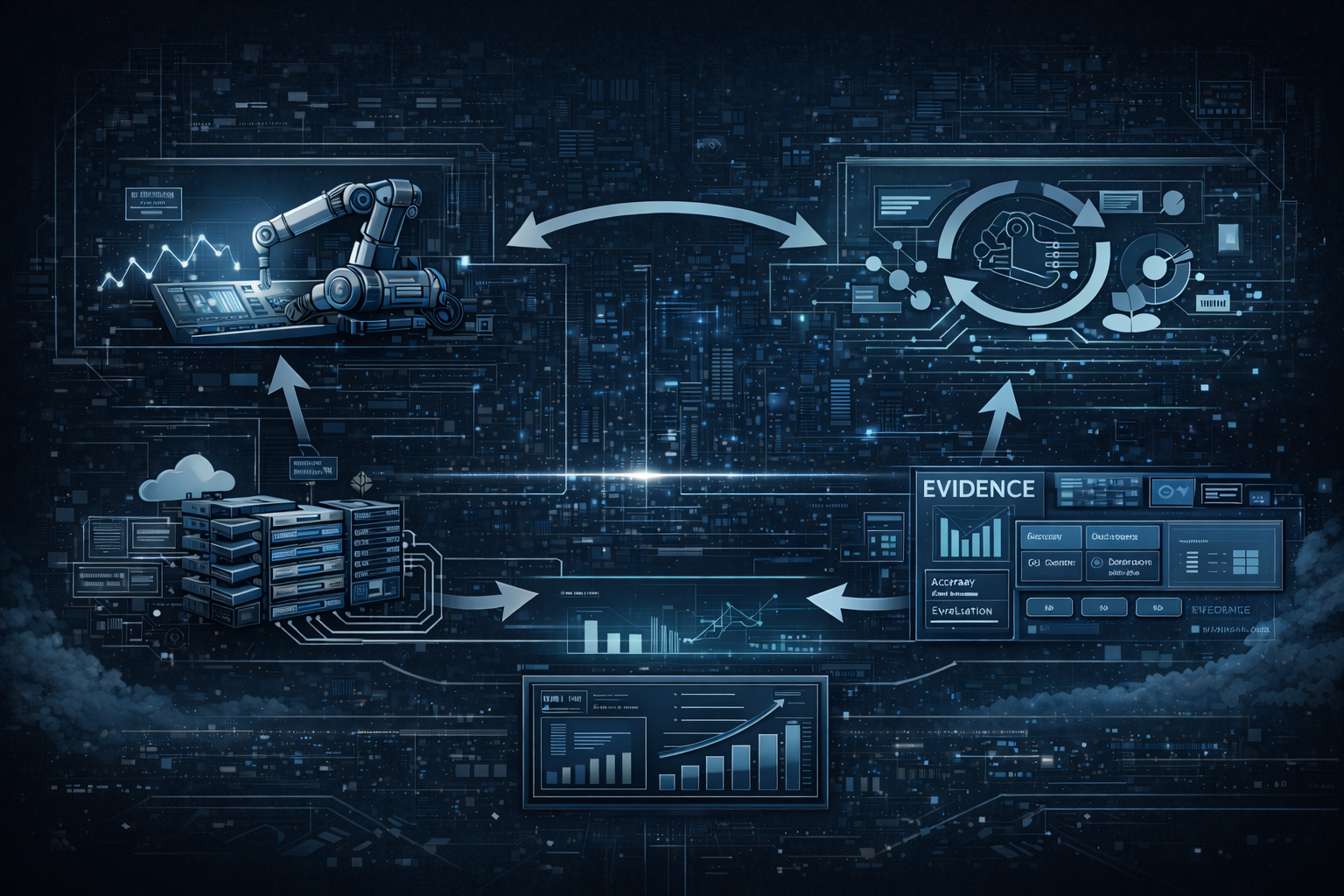
Five key shifts from deploying nearly 100 enterprise AI workflow solutions and the GTM changes required to win in 2026.
See how workflow automation reduces escalation rates and accelerates resolution for data center equipment support teams.
Schedule Demo