
Rising case volumes and network uptime expectations demand faster resolution without sacrificing quality.
Deploy AI in customer service by integrating case classification, knowledge retrieval, and response automation into existing ticketing systems. Start with high-volume case types where AI can route, summarize, and suggest resolutions to reduce handle time while maintaining quality.
Agents search across firmware release notes, CVE databases, SNMP trap documentation, and internal wikis to diagnose router and switch issues. Multiple knowledge sources create delays and inconsistent guidance.
Distinguishing hardware failures from firmware bugs or configuration errors requires deep network expertise. Misrouted cases bounce between teams, extending resolution time and frustrating customers managing critical infrastructure.
Different agents provide varying guidance on firmware patching, RMA qualification, or workaround configurations. Inconsistency erodes customer confidence when network uptime demands precision.
The platform integrates into existing CRM and ticketing systems to automate case classification, knowledge retrieval, and response drafting. When a customer reports a network outage or device failure, AI analyzes symptoms, correlates with SNMP traps and syslog data, and routes the case to hardware, firmware, or configuration specialists with diagnostic context already attached.
Agents receive instant access to relevant firmware release notes, known CVE workarounds, and similar case resolutions without manual searching. The system learns from historical case data to suggest resolutions, draft initial responses, and flag cases requiring escalation. This approach reduces average handle time while maintaining the consistency customers expect when managing mission-critical network infrastructure.
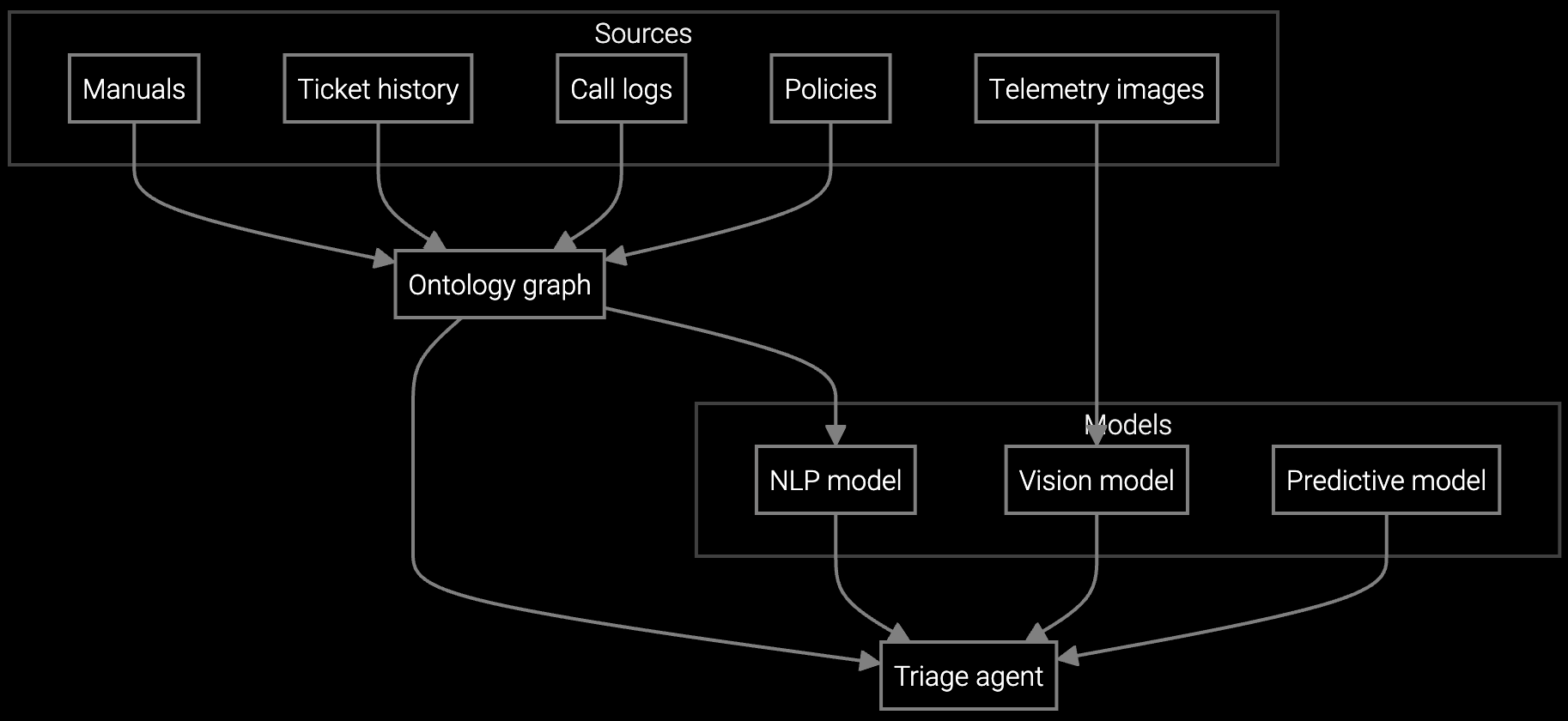
Autonomous classification analyzes network symptoms, correlates SNMP traps and syslogs, and routes cases to hardware, firmware, or configuration teams with diagnostic context attached.
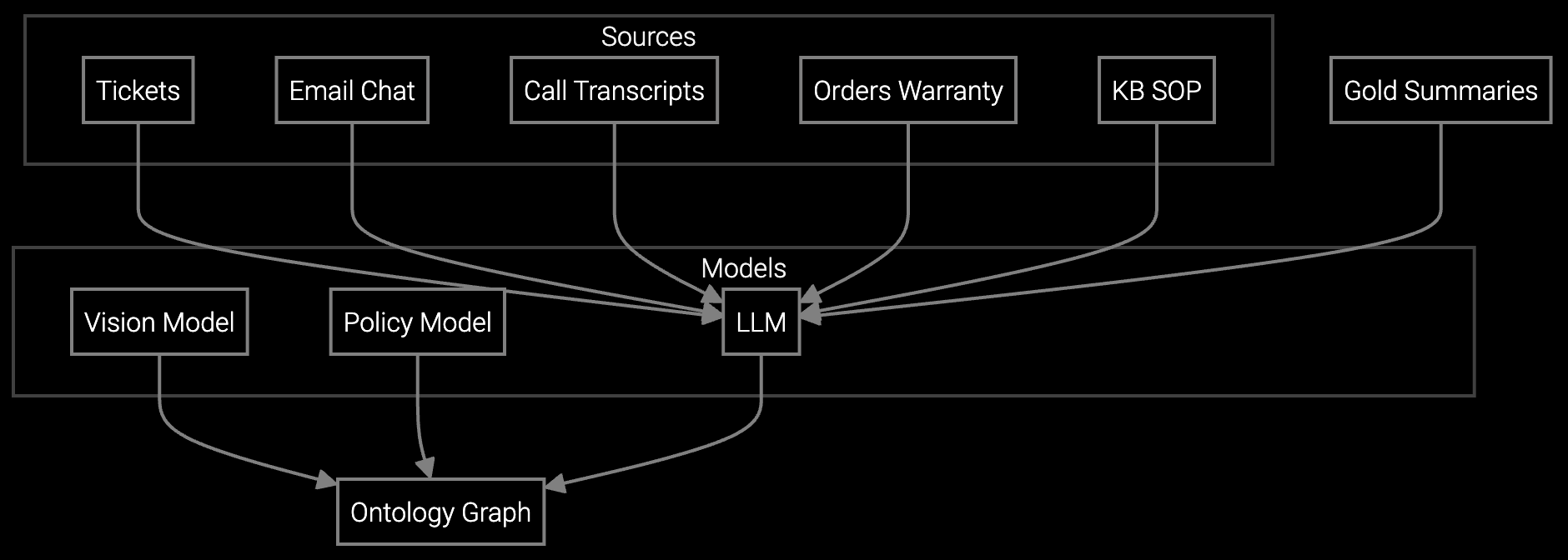
Instantly generates case summaries from customer emails, chat logs, and call transcripts so agents understand device history, firmware versions, and previous troubleshooting steps without reading everything.

AI reads, classifies, and routes customer emails reporting network issues, drafting responses using firmware documentation, CVE databases, and historical case resolutions to reduce agent workload.
Network equipment support presents unique complexity because agents must differentiate hardware failures from firmware bugs, security vulnerabilities, and configuration errors. The platform trains on historical case data including SNMP trap codes, syslog patterns, and firmware version correlations to automate initial triage.
Integration begins with read-only access to ticketing systems and knowledge bases to build context. The AI observes agent decisions on routing, applies pattern recognition to case attributes, and builds classification models specific to router, switch, and firewall product lines. Once accuracy thresholds are met, the system transitions to suggesting routes and resolutions, then to autonomous triage for defined case types.
Initial integration with ticketing systems and knowledge bases typically takes 4-6 weeks. The platform requires 60-90 days of supervised learning where it observes agent routing decisions before achieving autonomous triage accuracy above 85%. Most OEMs pilot with a single product line before expanding.
The system integrates with CRM and ticketing platforms to access case history, resolution notes, and routing decisions. It also ingests firmware release notes, CVE databases, SNMP trap documentation, and product manuals to build context. Access to device telemetry like syslogs and error logs significantly improves diagnostic accuracy.
The platform eliminates manual knowledge base searching by instantly surfacing relevant firmware notes, CVE workarounds, and similar case resolutions. Agents spend less time looking for information and more time applying it. Automated case summaries and pre-populated response drafts further reduce handle time while maintaining accuracy.
Yes. The platform analyzes symptom descriptions, error codes, firmware versions, and device telemetry to classify root causes. It learns from historical patterns where specific SNMP traps or syslog messages correlate with hardware RMAs versus firmware patches. Classification accuracy improves as the model observes more resolved cases.
Focus on average handle time reduction, first contact resolution improvement, and case reassignment rate. Also track agent adoption metrics like suggestion acceptance rate and time saved per case. Financial ROI combines labor cost savings from reduced handle time with margin protection from improved FCR and customer satisfaction.

Transforming appliance support with AI-powered resolution.

Understanding and optimizing the issue resolution curve.

Vision AI solutions for EV charging support.
See how network equipment OEMs reduce handle time and improve resolution quality with Bruviti.
Schedule Demo