
High-volume RMA operations demand platforms that scale without trapping your team in vendor dependency.
Data center OEMs need warranty platforms that handle scale and prevent vendor lock-in. APIs enable custom fraud detection and NFF reduction while pre-built models accelerate deployment. Hybrid approaches balance control with speed-to-value across high-volume RMA operations.
Building warranty AI in-house requires assembling datasets, training models, and maintaining infrastructure. For data center OEMs processing millions of claims annually, the development timeline delays value realization while warranty costs continue eroding margin.
Closed warranty systems trap proprietary claim rules and fraud detection logic behind non-standard APIs. When your data architecture evolves or you need to integrate new telemetry streams from BMC or IPMI sources, locked platforms force expensive workarounds or data silos.
Pre-built platforms handle standard RMA workflows but fail when data center OEMs need specialized NFF detection for RAID controllers or custom entitlement logic for hyperscale customers. The gap between generic tools and high-volume operational reality forces manual overrides that undermine automation ROI.
Bruviti's headless warranty platform delivers pre-trained models for fraud detection, NFF reduction, and entitlement verification while exposing Python and TypeScript SDKs for custom extension. Data center OEMs integrate warranty telemetry from SAP, Oracle, or custom data lakes without replacing existing systems. The platform ingests BMC logs, IPMI alerts, and hardware failure signatures to train claim validation models specific to server, storage, and cooling equipment failure patterns.
API endpoints enable your team to define custom claim rules, build product-specific NFF classifiers, or integrate refurbishment tracking workflows without modifying Bruviti's core infrastructure. Pre-built integrations accelerate deployment to production in weeks rather than quarters, while open architecture prevents lock-in as your data strategy evolves. When hyperscale customers demand specialized entitlement logic or you expand into new product lines, the same SDKs extend coverage without vendor dependency or re-platforming risk.
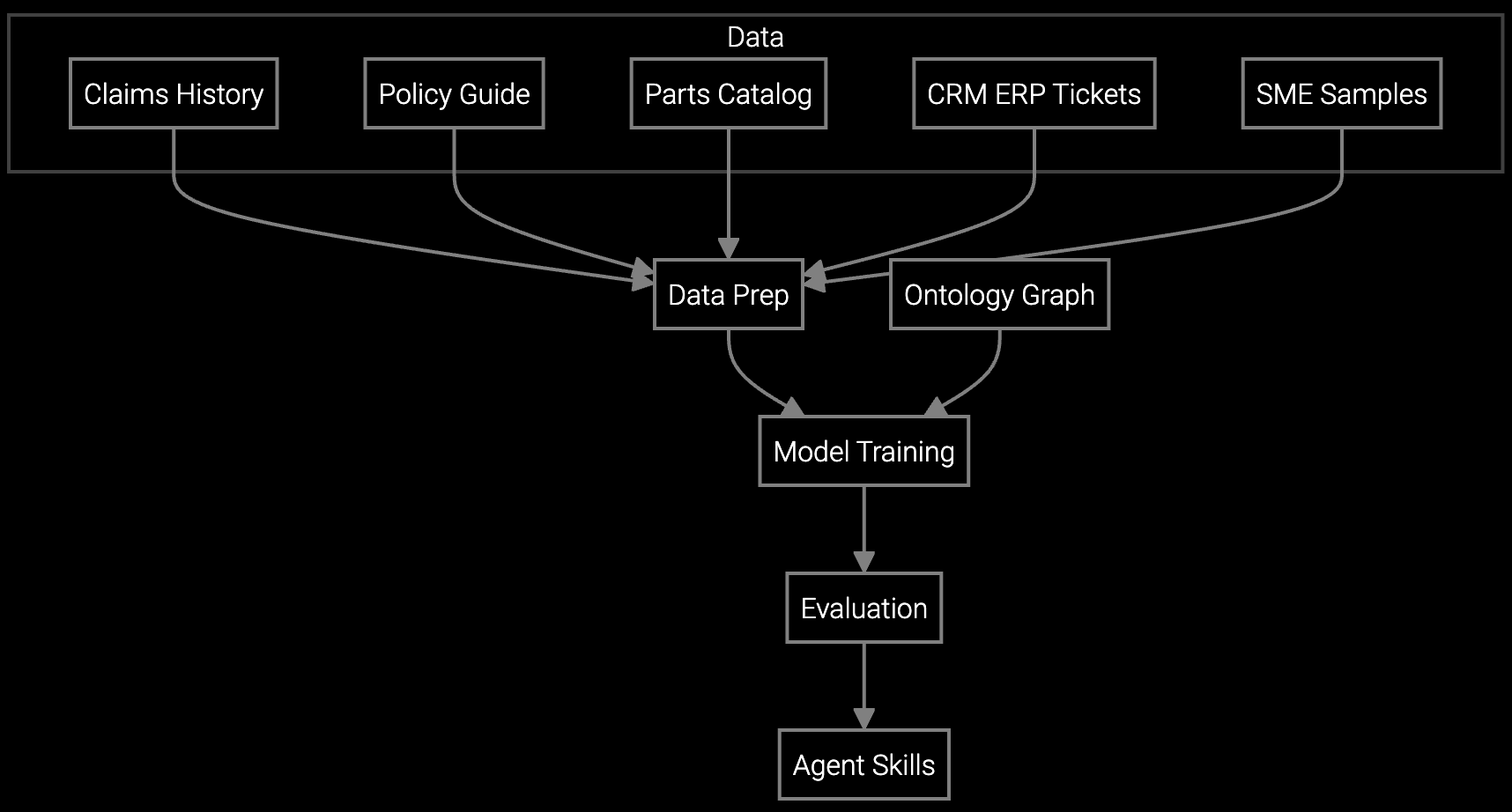
Automatically classify and code warranty claims for server, storage, and UPS failures, reducing manual processing time and improving accuracy across high-volume RMA operations.
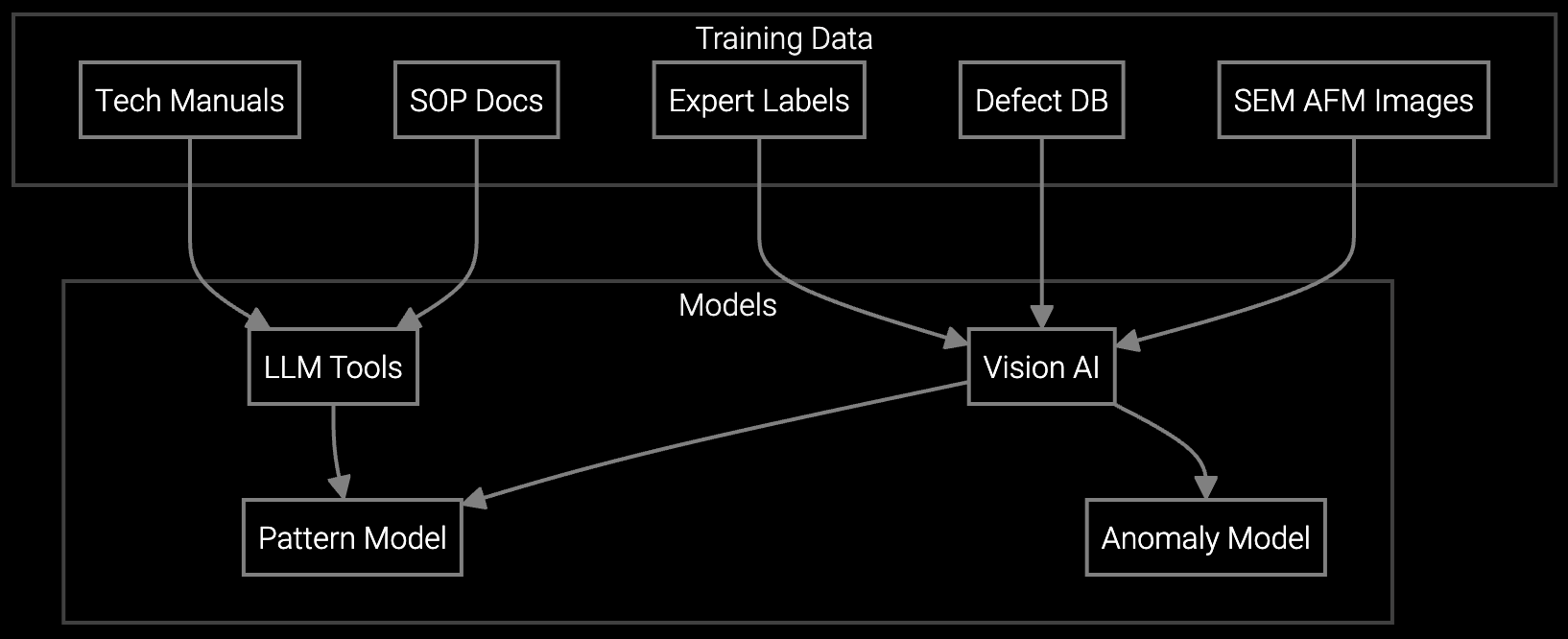
AI analyzes microscopic images of returned components to identify manufacturing defects, validate warranty claims, and classify failure modes in server hardware and storage devices.
Data center OEMs face warranty volumes orders of magnitude higher than other equipment categories. A single hyperscale deployment might generate thousands of RMAs monthly for drive failures, memory errors, or power supply issues. Traditional warranty systems collapse under this load or force crude batch processing that misses fraud patterns and inflates NFF rates.
API-first platforms ingest real-time telemetry from BMC controllers and IPMI interfaces to correlate warranty claims with actual hardware failure signatures. When a customer submits a drive RMA, the system cross-references SMART data, thermal logs, and power history to validate the claim before authorizing replacement. This telemetry integration prevents fraudulent returns while reducing manual investigation burden on your warranty operations team.
API-first platforms expose warranty logic through standard REST endpoints and provide SDKs in Python and TypeScript. Your team owns claim validation rules, fraud detection models, and entitlement logic as code that runs on the platform but remains portable. If you migrate platforms later, the same rules and models transfer without rewriting business logic in proprietary formats. Open integration standards also ensure telemetry from BMC, IPMI, or custom data lakes connects without vendor-specific adapters.
Hardware telemetry from BMC controllers and IPMI interfaces provides failure signatures that validate warranty claims. SMART data for drives, thermal logs for cooling systems, and power event histories for UPS units correlate claimed failures with actual hardware behavior. Environmental data like hot aisle temperatures or humidity levels also contextualize component failures. Integrating these sources enables AI models to distinguish legitimate claims from NFF returns or fraudulent submissions.
Pre-built platforms with existing warranty models deploy in 8-12 weeks for data center OEMs. Initial integration connects existing ERP systems and telemetry sources, followed by model training on historical claim data to learn product-specific failure patterns. Custom-built solutions require 18-24 months to assemble datasets, train models from scratch, and build infrastructure. The deployment timeline depends on data quality, system complexity, and whether you need custom entitlement logic for hyperscale customers.
No Fault Found rate reduction demonstrates the platform's ability to prevent unnecessary RMAs through better claim validation. Warranty reserve accuracy improvements show AI models correctly predict claim volumes and costs. Claim processing time reduction measures automation impact on operations throughput. Fraud detection rate quantifies the platform's ability to identify invalid returns. For data center OEMs, a 15-20% warranty cost reduction within 90 days typically justifies platform investment.
API-first platforms enable custom entitlement rules through configuration or code. Hyperscale customers often negotiate specialized warranty terms that differ from standard coverage. The platform exposes entitlement verification as an API endpoint where your team defines tier-specific logic in Python or TypeScript. Rules might check contract type, deployment scale, or failure history before authorizing RMAs. This flexibility ensures warranty processing adapts to complex commercial agreements without requiring vendor customization.
Software stocks lost nearly $1 trillion in value despite strong quarters. AI represents a paradigm shift, not an incremental software improvement.
Function-scoped AI improves local efficiency but workflow-native AI changes cost-to-serve. The P&L impact lives in the workflow itself.

Five key shifts from deploying nearly 100 enterprise AI workflow solutions and the GTM changes required to win in 2026.
Talk to our team about API-first warranty solutions that scale without vendor lock-in.
Schedule Demo