
Manual stockout checks and reactive ordering drive up emergency shipping costs and delay critical server repairs.
Connect parts inventory systems to real-time equipment telemetry via API integration. Deploy demand forecasting models using historical failure data and BMC logs. Configure auto-ordering thresholds to maintain target fill rates while reducing manual stockout checks.
Operations teams check parts availability across multiple warehouse locations by logging into separate systems. Critical power supply failures wait while staff search for PDU components across three regional depots.
Staff order parts only after service cases arrive, creating delays when high-failure components like DIMMs or drives run out. Seasonal demand spikes and new hardware rollouts catch teams unprepared.
BMC telemetry shows rising drive SMART errors and DIMM ECC warnings, but inventory systems remain blind to these signals. Parts get ordered only after hardware fails, not before degradation becomes critical.
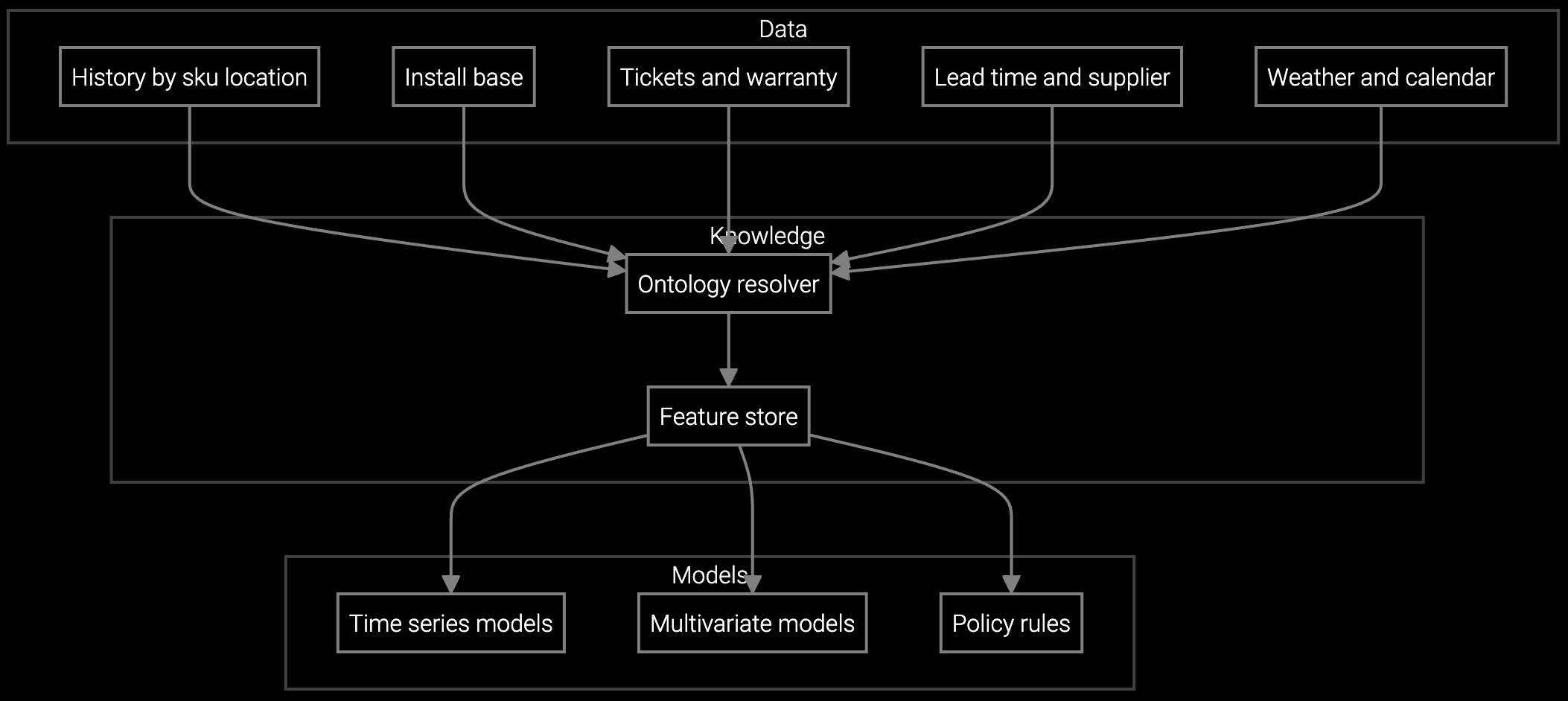
Deploy the platform by connecting your existing parts inventory system to equipment telemetry feeds through REST APIs. The integration pulls BMC health data, historical failure records, and current stock levels into a unified forecasting engine that runs automatically.
Configure ordering thresholds based on your target fill rate and acceptable carrying cost. The system monitors real-time equipment health signals and triggers replenishment orders when predictive models detect rising failure probability. Staff review and approve auto-generated orders in a single dashboard instead of manually checking stock across multiple systems.

Forecast demand for server components by analyzing BMC telemetry patterns, optimizing stock levels across regional data center hubs.
Project cooling system component needs based on installed base age and seasonal thermal load patterns at hyperscale facilities.

Snap a photo of a failed power supply or network card to get instant part number identification and cross-site availability.
Data center operations generate continuous health signals through BMC, IPMI, and environmental monitoring systems. The platform ingests these telemetry streams alongside your existing inventory management data from SAP, Oracle, or custom warehouse systems.
Deploy predictive models trained on your specific server configurations, storage arrays, and cooling infrastructure. The system learns failure patterns unique to your hardware mix, whether high-density compute nodes or legacy storage systems, and adjusts forecasting as you refresh equipment generations.
The platform connects via REST APIs to SAP, Oracle, NetSuite, and custom inventory management systems. Standard connectors handle authentication, data mapping, and real-time sync. Most integrations deploy in under two weeks using existing API credentials without requiring changes to your current warehouse software.
The system analyzes BMC telemetry for early failure indicators like rising SMART errors, DIMM ECC warnings, and power supply degradation. When equipment health signals cross thresholds, the platform automatically generates replenishment orders based on lead times and target stock levels. Operators review and approve suggested orders in a single dashboard.
Yes. Most data center operations start with high-volume consumables like server DIMMs or storage drives. This approach proves ROI within 60 days on a limited scope before expanding to cooling components, power supplies, or network cards. Pilot deployments typically cover a single server family or storage array type.
Manual workflows remain available as a fallback. The platform generates recommended orders that staff review and approve before submission. Over time, teams shift from reactive stockout checks to proactive threshold management. Operators configure when to auto-approve orders versus require manual review based on order value and part criticality.
Initial setup takes two to four weeks depending on inventory system complexity and number of warehouse locations. API integration and data mapping happen first, followed by forecasting model training using your historical failure data. Most multi-site operations see predictive ordering live within 30 days of starting integration work.

SPM systems optimize supply response but miss demand signals outside their inputs. An AI operating layer makes the full picture visible and actionable.

Advanced techniques for accurate parts forecasting.

AI-driven spare parts optimization for field service.
See how Bruviti connects to your inventory systems and equipment telemetry in a live demo.
Schedule Implementation Review