
Hyperscale SLAs demand instant claim resolution—manual systems can't keep pace with millions of server warranties.
Data center OEMs can build custom warranty systems for control, buy SaaS for speed, or adopt API-first platforms that combine pre-built claim validation with open integration—accelerating deployment while preserving customization.
Building warranty systems from scratch requires data science teams, integration engineering, and 12-18 months before claim validation works at scale.
Closed SaaS platforms trap warranty data in proprietary formats, making it impossible to switch vendors or integrate with evolving RMA workflows.
Off-the-shelf tools designed for low volume break under hyperscale claim loads, creating processing backlogs that erode customer trust.
Bruviti's API-first architecture eliminates the build-versus-buy dilemma for data center warranty operations. Pre-trained models for entitlement verification, fraud detection, and NFF analysis deploy in days—not months—while open APIs let you customize claim rules, integrate BMC telemetry feeds, and connect to existing ERP systems without vendor permission.
The platform automates repetitive RMA generation and credit processing tasks that consume operator time, while giving your team control over business logic. You're not locked into rigid workflows or proprietary data formats—every warranty record, claim decision, and refurbishment status exports in standard formats, so you can switch strategies as your business evolves.
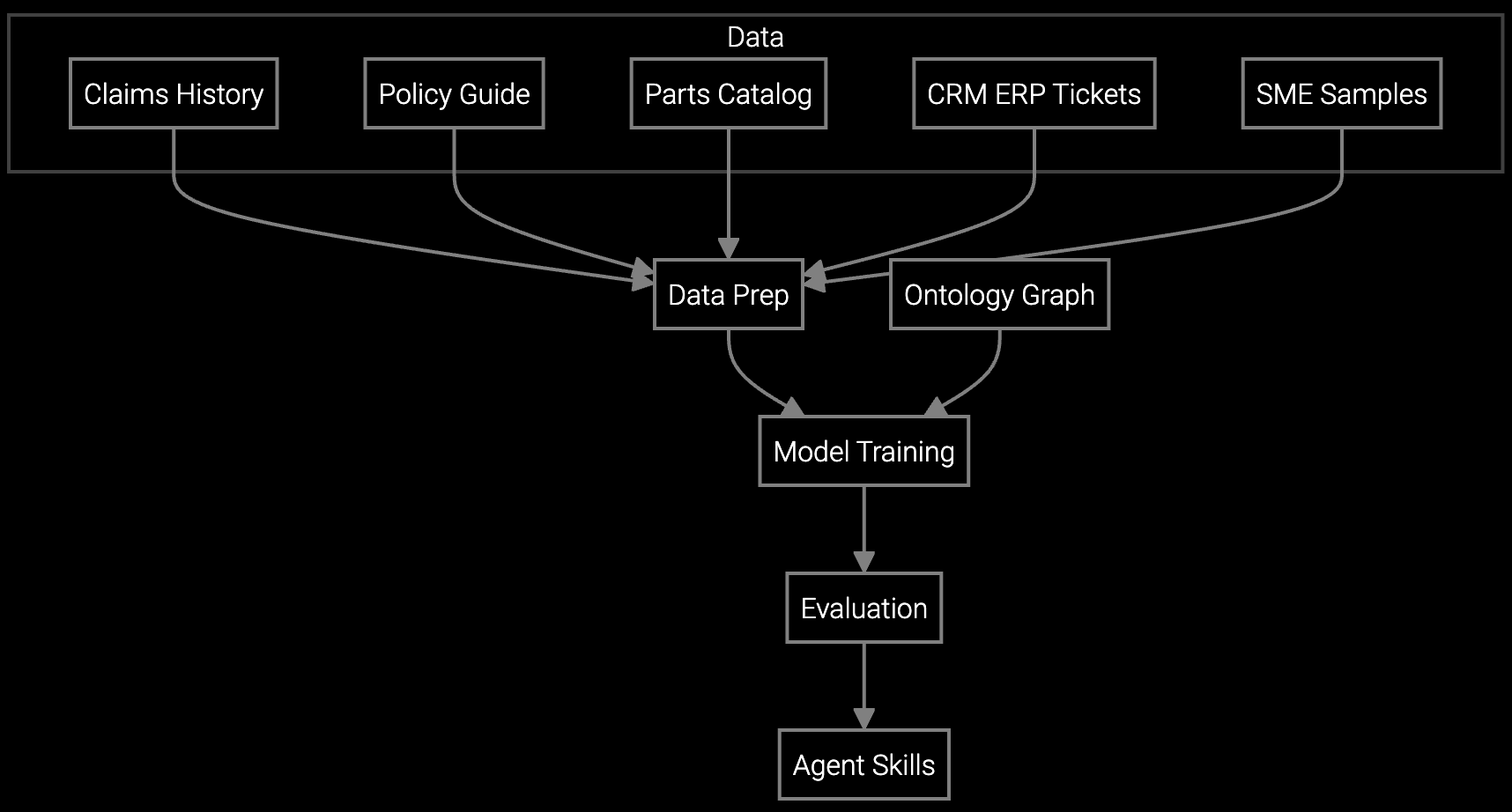
Automatically classify and code server, storage, and cooling system claims at hyperscale volume, reducing manual processing overhead.
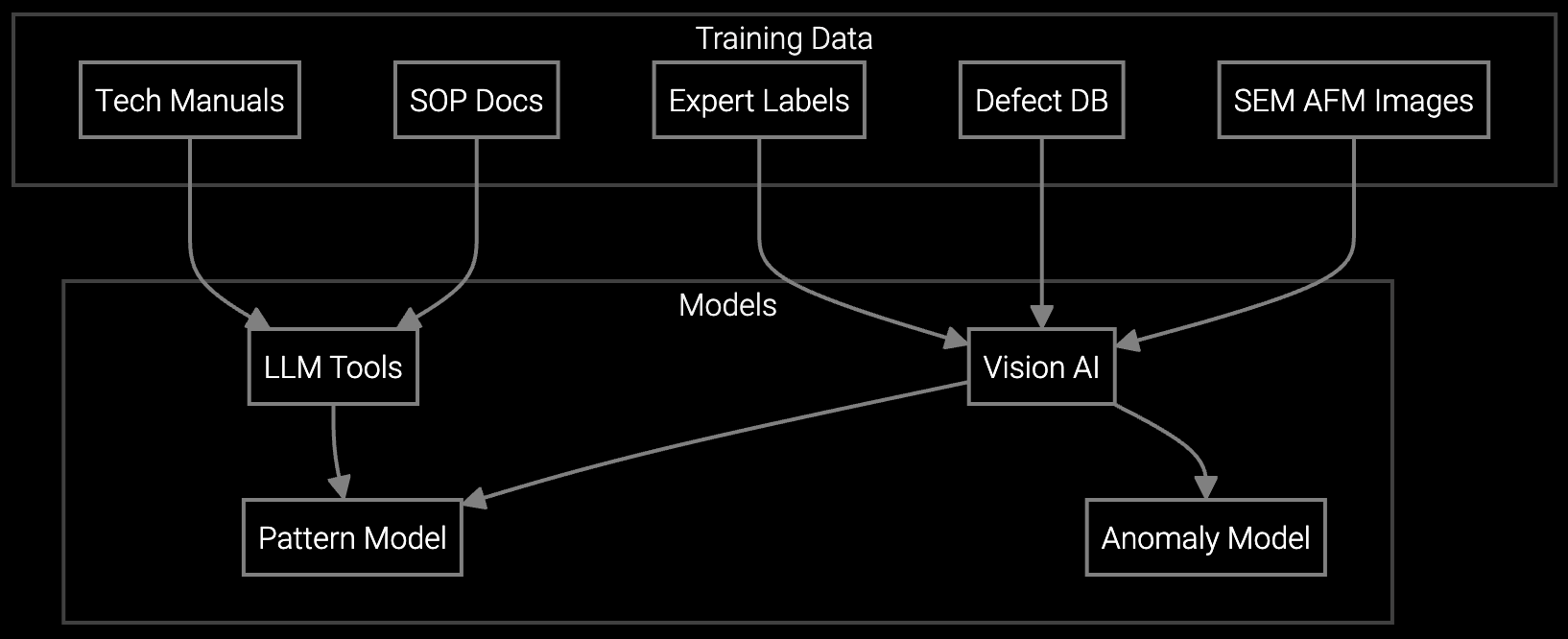
Analyze microscopic images of failed components to validate warranty claims and identify manufacturing defects across server generations.
Data center OEMs manage warranty claims across millions of active servers, storage arrays, and power distribution units operating under 99.99% SLA commitments. Every hour of claim processing delay costs customers uptime, making instant entitlement verification and automated RMA generation non-negotiable for competitive differentiation.
Traditional warranty systems designed for consumer electronics buckle under data center telemetry volume—BMC logs, IPMI sensor data, and RAID controller diagnostics generate gigabytes per incident. A strategic platform must ingest this telemetry in real time to distinguish legitimate hardware failures from configuration errors, reducing NFF rates that erode margins.
Initial deployment takes 3-4 weeks for basic claim validation and entitlement verification. Full integration with BMC telemetry, ERP systems, and refurbishment workflows typically completes within 8-12 weeks depending on existing system complexity.
Yes. API-first platforms let you define custom business rules per product family—servers, storage, cooling, power—while maintaining a unified interface. You control the logic for entitlement checks, fraud thresholds, and NFF triggers without vendor involvement.
All claim records, entitlement history, and refurbishment status export in standard JSON or CSV formats. Unlike closed SaaS systems, you retain full data ownership and can migrate to alternative platforms or in-house systems without conversion penalties.
Cloud-native architecture scales horizontally to process thousands of concurrent claims. BMC telemetry ingestion pipelines handle gigabytes per hour without manual queue management, automatically routing claims based on component type and failure signature.
Building gives you control but requires 12-18 months and dedicated data science teams. Buying SaaS accelerates deployment but risks vendor lock-in. API-first platforms deliver pre-built models for immediate value while preserving customization flexibility through open integration.

Software stocks lost nearly $1 trillion in value despite strong quarters. AI represents a paradigm shift, not an incremental software improvement.

Function-scoped AI improves local efficiency but workflow-native AI changes cost-to-serve. The P&L impact lives in the workflow itself.

Five key shifts from deploying nearly 100 enterprise AI workflow solutions and the GTM changes required to win in 2026.
See how Bruviti combines deployment speed with customization flexibility for data center warranty management.
Schedule Demo