Connected appliances generate telemetry you're not using. Remote resolution rates stay flat while escalation costs climb.
Specialized small models for appliance remote support reach over 90% accuracy and a working agent goes live in about six weeks, per Bruviti deployment data. Executives get a fast, bounded rollout: trained on a decade of service decisions, the model deflects calls without a multi-quarter build or a data-science hiring spree.
Support engineers switch between five systems per session—remote access software, log viewers, knowledge bases, CRM, and ticketing. Context loss at every handoff slows resolution and fragments customer history.
Connected refrigerators, HVAC systems, and washers stream error codes and sensor data, but support engineers lack tools to interpret it during live sessions. Telemetry sits unused while engineers ask customers to describe symptoms.
Support engineers escalate complex cases without structured handoff workflows. Specialists receive incomplete diagnostic history and start over. Long queues for escalation engineers extend resolution cycles.
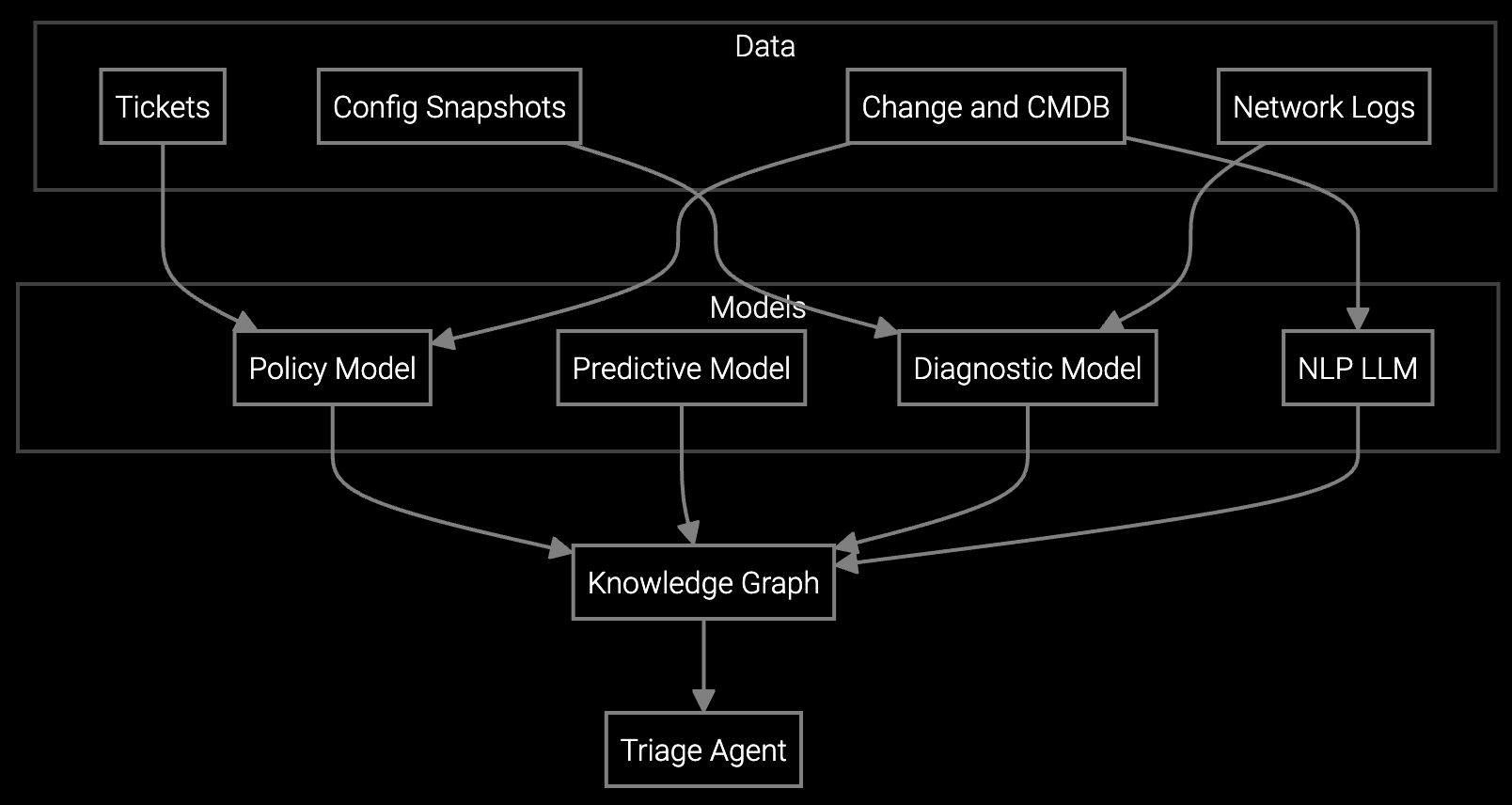
Bruviti's platform integrates with existing remote support infrastructure through API connectors that ingest telemetry from connected appliances in real time. Support engineers access AI-powered diagnostics directly within their workflow—no separate login, no context switching. The platform parses error codes, sensor anomalies, and usage patterns automatically, presenting root cause hypotheses ranked by probability.
Guided troubleshooting workflows adapt based on equipment type, failure mode, and live telemetry. Support engineers follow AI-generated decision trees that update dynamically as they collect new information during the session. The system auto-populates case notes, flags when escalation is needed, and transfers full diagnostic context to specialists—eliminating redundant questions and accelerating resolution.
Appliance manufacturers face unique implementation challenges due to high seasonal demand spikes and decades of legacy product models still under service contracts. Connected appliances—refrigerators with IoT sensors, HVAC systems with remote monitoring, smart washers with error code telemetry—generate diagnostic data that existing support tools cannot interpret during live sessions.
Implementation begins with API integration to your remote access platforms and telemetry streams from connected appliances. The AI platform ingests error codes, sensor readings, and usage patterns in real time. Support engineers see root cause analysis automatically during remote sessions—no manual log parsing. Guided troubleshooting workflows adapt to equipment type and failure mode, reducing reliance on tribal knowledge as senior support engineers retire.
The platform connects to IoT telemetry streams from connected appliances, error code logs from embedded controllers, sensor data from HVAC systems, and usage pattern databases from warranty systems. API connectors support standard protocols like MQTT, REST, and OPC-UA. Custom integrations handle proprietary formats from legacy equipment.
Initial deployment takes 8-12 weeks including API integration, workflow configuration, and support engineer training. The first 4 weeks focus on connecting telemetry sources and testing guided troubleshooting workflows on a pilot product line. Weeks 5-8 expand to additional equipment types. Weeks 9-12 cover full team onboarding and performance measurement setup.
Support engineers complete a 2-day training program covering AI diagnostic interpretation, guided workflow navigation, and escalation handoff procedures. The platform presents recommendations in natural language, not technical jargon. Most engineers reach proficiency within 3 weeks of daily use. Ongoing coaching focuses on edge cases and complex failure modes.
For non-connected appliances, the platform uses model number, purchase date, and symptom descriptions to generate diagnostic hypotheses based on historical failure patterns. Support engineers follow guided troubleshooting workflows adapted from similar equipment. The AI learns from each resolution, improving recommendations even for older products without telemetry.
Primary metrics are remote resolution rate, escalation rate, and average session duration. Track these weekly during the first 90 days. Secondary metrics include repeat contact rate, support engineer utilization, and time saved per session. Most appliance manufacturers see measurable improvement in remote resolution rate within 60 days of deployment.
Software stocks lost nearly $1 trillion in value despite strong quarters. AI represents a paradigm shift, not an incremental software improvement.
Function-scoped AI improves local efficiency but workflow-native AI changes cost-to-serve. The P&L impact lives in the workflow itself.
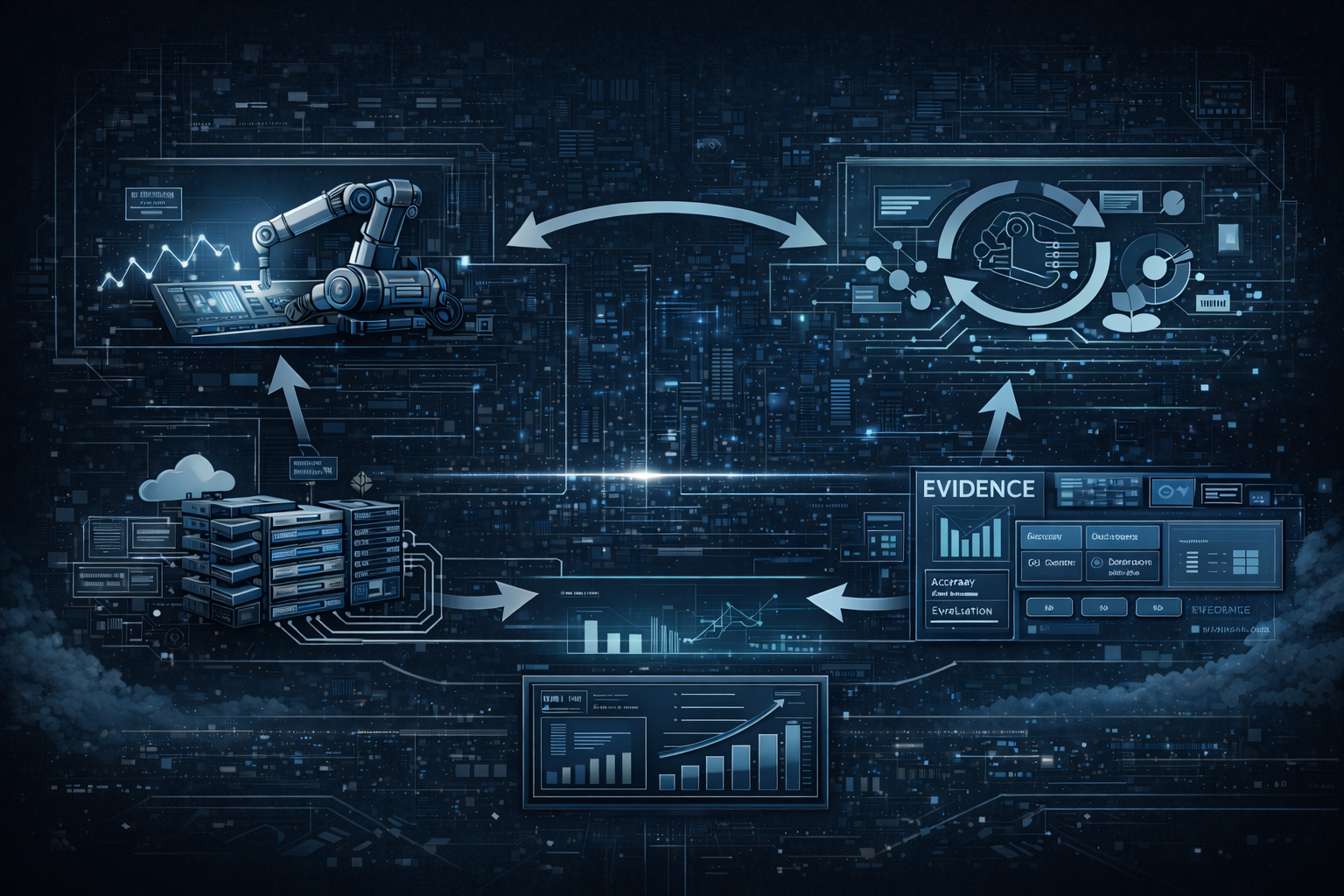
Five key shifts from deploying nearly 100 enterprise AI workflow solutions and the GTM changes required to win in 2026.
See how Bruviti integrates with your telemetry infrastructure and remote support workflows.
Schedule Implementation Review