
Seasonal demand spikes and thin margins make manual dispatch coordination unsustainable for appliance OEMs at scale.
Field service workflow automation for appliance OEMs orchestrates dispatch, parts prediction, and job completion through API-driven integrations with FSM systems, reducing truck rolls and improving first-time fix rates without vendor lock-in.
Technicians arrive at refrigeration or HVAC service calls without the correct compressor or control board. Manual inventory checks and depot calls delay repairs and frustrate customers facing disrupted home operations.
Legacy FSM systems route technicians by geography alone, ignoring skill match and equipment familiarity. A washer specialist gets sent to a commercial ice machine failure, extending resolution time and lowering first-time fix.
Technicians complete repairs but spend 20 minutes per job filling paperwork, uploading photos, and updating warranty systems. Delay between job completion and data entry creates blind spots in OEM analytics and slows warranty processing.
Bruviti's headless architecture connects to existing FSM platforms through REST APIs and webhooks, triggering automated workflows at each stage. When a work order enters the system, machine learning models analyze equipment type, symptom codes, and technician skill profiles to optimize dispatch. Parts prediction runs in parallel, checking depot inventory and pre-staging components based on failure history for that appliance model and serial range.
Job completion triggers automated documentation workflows. Technicians capture repair notes and photos through mobile SDKs, which feed directly into warranty claims systems and knowledge bases. Python-based event handlers process job data in real time, updating digital twins and feeding predictive maintenance models. The platform exposes all workflow state through GraphQL APIs, enabling custom dashboards and reporting without black-box dependencies.

API-driven parts prediction for refrigeration and HVAC service integrates with depot inventory systems to pre-stage compressors, control boards, and seals before dispatch.

Automated root cause workflows correlate appliance symptom codes with historical failure patterns across product lines, accelerating diagnosis for commercial kitchen equipment.
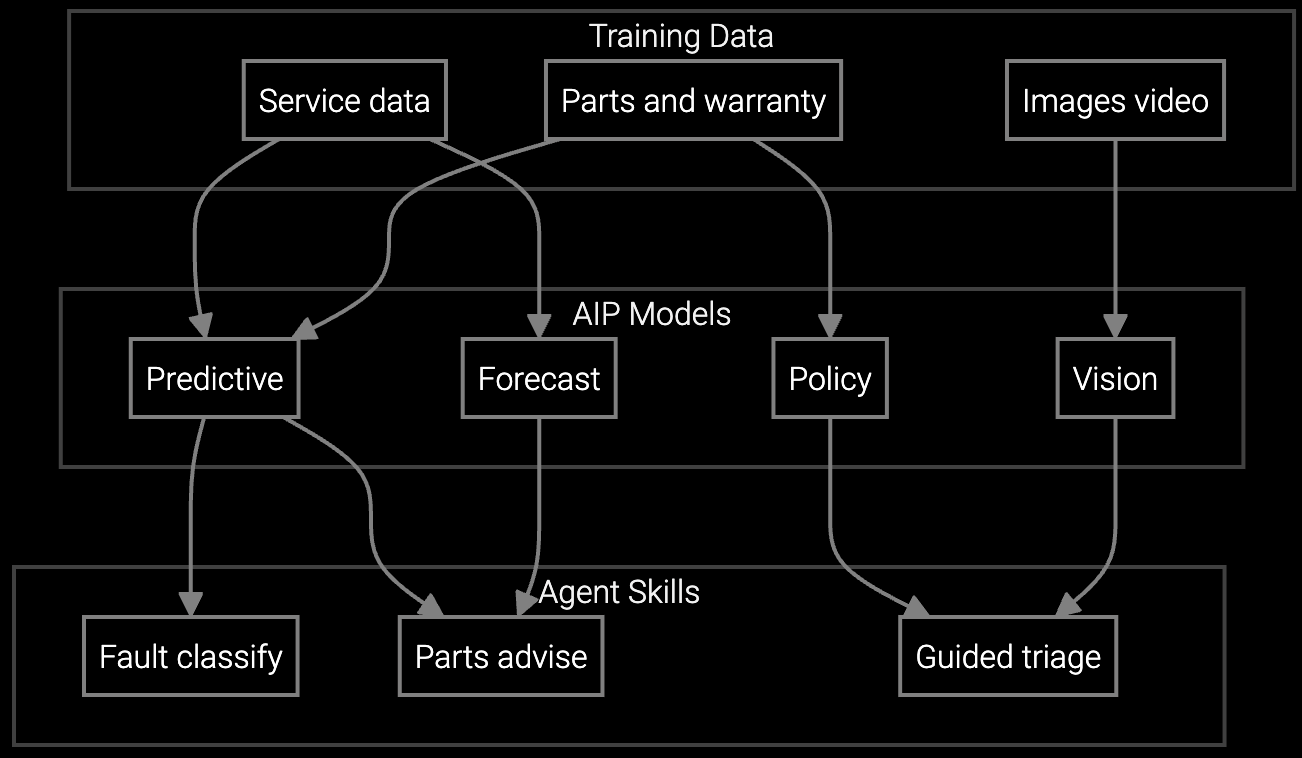
Mobile SDK embeds real-time decision support into technician workflows, delivering context-specific repair procedures and diagnostic recommendations for washer, dryer, and dishwasher calls.
Appliance OEMs face predictable demand spikes. Air conditioner failures surge during heat waves; heating system breakdowns cluster in winter cold snaps. Automated workflow orchestration must handle 3-4x baseline call volume during peak periods without manual dispatcher intervention.
API-driven routing considers technician proximity, equipment specialization, and real-time availability to dynamically rebalance workload. When HVAC call volume spikes in one region, the platform automatically extends service radius for qualified technicians or triggers contractor overflow workflows. Parts prediction models trained on seasonal failure patterns pre-position inventory at high-demand depots before the spike arrives, ensuring technicians have the right compressor or heat exchanger when they need it.
The platform exposes REST APIs and webhook listeners that connect to FSM work order systems. When a new work order is created, the FSM system triggers Bruviti workflows via webhook, which run parts prediction and dispatch optimization, then return recommendations through API callbacks. All workflow state is accessible through GraphQL queries for custom reporting. No data migration or platform replacement required.
Yes. The mobile SDK provides component libraries for building custom technician interfaces in React Native or native iOS/Android. Developers define workflow screens, data capture forms, and decision trees per appliance category. Configuration files specify which fields, checklists, and photo requirements apply to washers versus refrigeration versus HVAC calls. Changes deploy through standard app update channels without platform-level code changes.
The platform auto-scales API capacity based on incoming work order volume. During peak periods, dispatch optimization runs in parallel across available technician pools, including contracted overflow resources. Parts prediction models dynamically adjust inventory positioning based on current failure rates and regional weather patterns. Workflow orchestration handles 10x baseline volume without manual intervention or performance degradation.
The workflow engine includes fallback logic for incomplete data. If parts prediction confidence falls below threshold due to missing model information, the system flags the work order for human review and suggests similar historical cases. Technicians receive notification in the mobile app that parts data is uncertain, prompting depot check before dispatch. All fallback events log to analytics APIs for continuous model improvement.
Absolutely. The event-driven architecture supports custom triggers defined in Python or TypeScript. You can configure workflows that fire when connected appliances report specific error codes, warranty expiration dates approach, or failure patterns match known recall conditions. Trigger logic runs in your environment with access to OEM data lakes, maintaining full data sovereignty while leveraging platform orchestration capabilities.

How AI bridges the knowledge gap as experienced technicians retire.

Generative AI solutions for preserving institutional knowledge.

AI-powered parts prediction for higher FTFR.
Talk to our integration team about API access and SDK documentation for your FSM platform.
Schedule Technical Discussion