Every minute of network downtime costs customers revenue, making your remote diagnostics strategy a competitive differentiator.
Network OEMs face three paths: build custom remote diagnostics in-house, buy rigid point solutions, or adopt API-first platforms that deliver instant remote resolution while preserving flexibility to customize workflows as network complexity evolves.
Building custom remote diagnostics platforms requires specialized ML talent and months of development time. SNMP trap parsing, log correlation, and firmware anomaly detection each demand domain expertise that's scarce and expensive.
Off-the-shelf remote access tools offer quick deployment but lock you into their workflows. When your support engineers need to integrate proprietary telemetry or customize escalation logic, vendor roadmaps control your timeline.
Support engineers juggling separate tools for remote access, log analysis, and knowledge retrieval waste time switching contexts. Each additional system increases session duration and escalation likelihood.
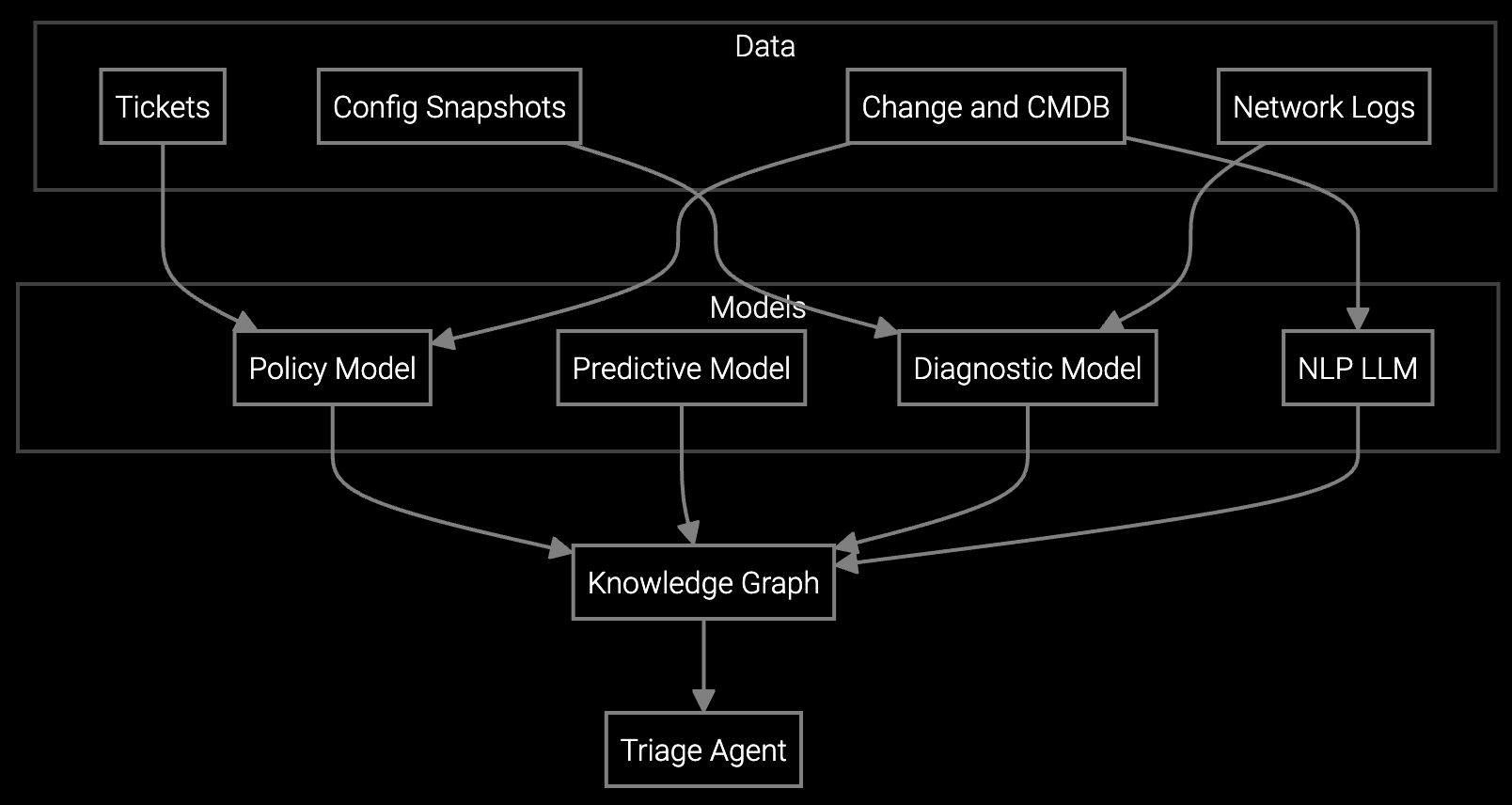
Bruviti's platform balances speed and flexibility through API-first architecture. Pre-trained models parse SNMP traps and syslog entries instantly, while open SDKs let your team customize escalation workflows and integrate proprietary telemetry feeds without waiting on vendor sprints.
Support engineers get single-pane visibility across log analysis, guided troubleshooting, and knowledge retrieval. The platform automates root cause analysis from network device telemetry, but your team controls which findings trigger auto-escalation versus manual review. Deploy core capabilities in weeks, then extend them as your network portfolio evolves.
Network equipment OEMs support carrier-grade routers and enterprise switches where five-nines availability is contractual. Support engineers diagnose firmware bugs, configuration drift, and hardware degradation remotely before dispatching expensive field visits to customer NOCs.
Telemetry from SNMP, NetFlow, and syslog generates gigabytes of diagnostic data daily. AI that parses these feeds in real-time identifies patterns invisible to manual review—optical signal degradation trends, memory leak signatures, or PoE power anomalies that predict failures hours before customer impact.
API-first platforms with pre-trained models typically reach production in 6-10 weeks for network equipment OEMs. Initial integration connects existing SNMP and syslog feeds, then custom workflows extend the baseline over time. Building equivalent capabilities in-house requires 12-18 months plus ongoing ML team maintenance.
Platforms with open SDKs let your team write custom parsers for proprietary telemetry without waiting on vendor roadmaps. You control how firmware logs, custom MIBs, or internal diagnostic protocols map to the AI's analysis engine. This flexibility prevents lock-in while preserving speed-to-value on standard protocols.
Track remote resolution rate, escalation rate, and mean session duration as primary KPIs. Network equipment OEMs typically see 25-40% improvement in remote resolution within 90 days, directly reducing field dispatch costs. Session duration drops 30-50% as support engineers get instant log insights instead of manual grep searches.
Yes. Effective platforms let you define escalation rules based on failure severity, device criticality, or customer SLA tier. Your support engineers control when AI findings require human validation versus auto-routing to field service with full diagnostic context. This customization ensures high-stakes issues get appropriate oversight while routine problems resolve faster.
Support engineers use the platform through familiar interfaces—no ML expertise required. They review AI-generated root cause summaries, validate recommended troubleshooting steps, and approve or modify escalations. The system learns from their decisions to improve future recommendations, but daily operation requires only existing network troubleshooting skills.
Software stocks lost nearly $1 trillion in value despite strong quarters. AI represents a paradigm shift, not an incremental software improvement.
Function-scoped AI improves local efficiency but workflow-native AI changes cost-to-serve. The P&L impact lives in the workflow itself.
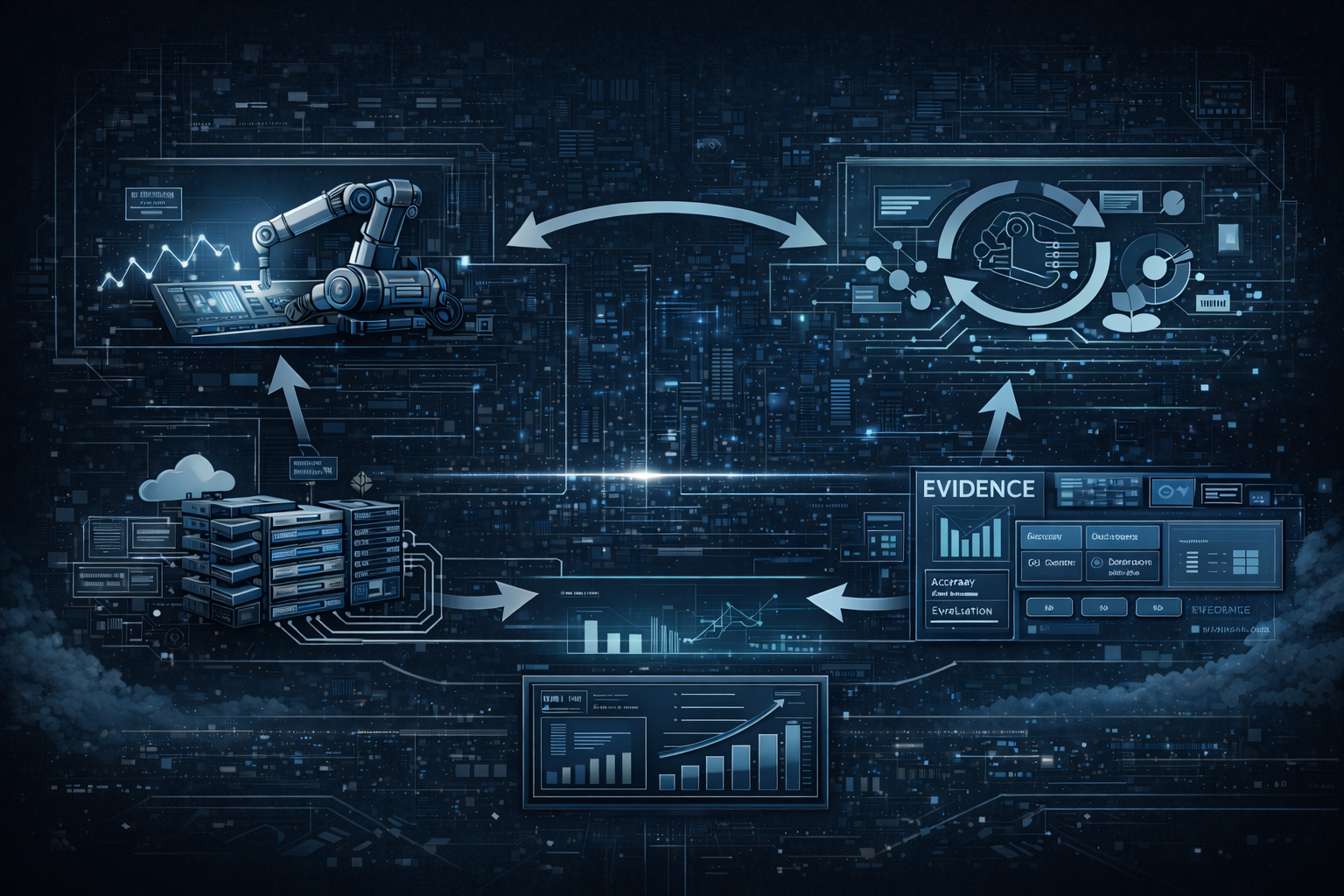
Five key shifts from deploying nearly 100 enterprise AI workflow solutions and the GTM changes required to win in 2026.
See how network equipment OEMs deploy AI-powered diagnostics in weeks, not months.
Schedule Demo