
Technician utilization drops 30% when dispatch, diagnostics, and job completion remain manual processes.
AI automates work order creation, technician dispatch with optimal routing, pre-stages parts based on predictive models, delivers on-site diagnostic guidance, and completes job documentation—transforming field service from manual coordination into streamlined execution that improves first-time fix rates and reduces truck roll costs.
Manual scheduling creates inefficient routes, sending technicians across regions when closer resources exist. Travel time consumes productive hours while customers wait for service.
Technicians arrive without necessary components because parts prediction relies on guesswork. Second truck rolls drive up service costs and extend downtime for data center operators.
Technicians spend hours filling out paperwork after each job instead of starting the next repair. Administrative burden reduces billable time and delays invoice processing.
Bruviti orchestrates the entire field service lifecycle from a single platform. When equipment telemetry signals a failure or a work order arrives, AI instantly analyzes fault patterns, predicts required parts based on similar historical repairs, identifies the nearest qualified technician, and generates optimal routing. The technician receives complete job context on their mobile device before leaving.
On-site, the platform delivers real-time diagnostic guidance using repair procedures matched to the specific equipment model and failure symptoms. After repair, AI auto-completes job documentation by extracting details from technician notes and telemetry data, generating service reports in seconds instead of hours. Every workflow step runs automatically with human validation only where judgment matters.

Predicts which power supplies, memory modules, and cooling components technicians will need for data center server repairs before dispatch, reducing repeat visits by 42%.
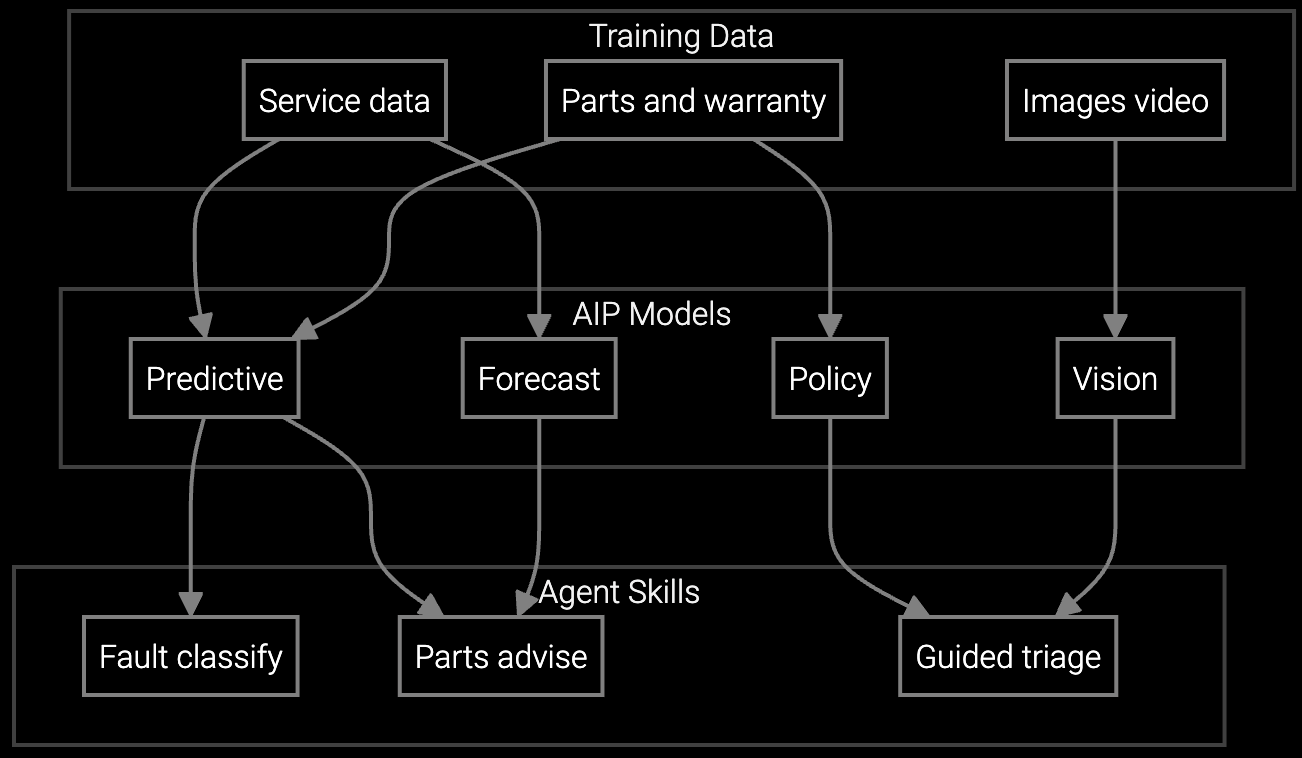
Mobile copilot delivers BMC diagnostic codes, RAID rebuild procedures, and thermal troubleshooting steps in real-time while technicians work on-site at hyperscale facilities.

Correlates storage system alerts with historical failure patterns across similar RAID configurations and firmware versions, identifying root cause in minutes instead of hours.
Data center equipment manufacturers serve customers managing thousands of servers where a single minute of downtime costs thousands of dollars. Service workflows must account for strict access protocols, hot aisle containment, and live production environments where technicians cannot experiment with fixes.
Automated dispatch considers customer SLA tiers, technician certifications for specific equipment types, and parts availability at regional depots. On-site guidance adapts to BMC telemetry in real-time, walking technicians through power supply replacement without disrupting adjacent servers or violating PUE monitoring requirements.
The platform analyzes failure symptoms, equipment model, age, and usage patterns against historical repairs of similar equipment. When a storage system reports RAID degradation, AI cross-references past cases with matching symptoms and identifies the most frequently replaced components—typically specific drive types or RAID controller modules—automatically adding them to the technician's inventory.
Yes. When high-priority work orders arrive, the system dynamically re-optimizes all active routes, reassigning jobs based on technician proximity, skill match, and current schedule. Technicians receive instant mobile notifications with updated routing and the system automatically reschedules lower-priority jobs to maintain SLA compliance across the entire queue.
The mobile interface allows technicians to describe new symptoms or request additional guidance. AI searches repair databases and connects the technician with remote experts via screen sharing if needed. The platform logs all interactions and updates the knowledge base so future similar cases receive immediate guidance without escalation.
Technicians capture photos of replaced components, BMC screens, or physical damage using their mobile device. AI extracts relevant details from images—serial numbers, error codes, equipment labels—and combines them with voice or text notes to generate complete service reports. The system populates warranty claims and parts usage records automatically.
Bruviti integrates with major FSM platforms via APIs, synchronizing work orders, technician schedules, and job completion data bidirectionally. The AI layer augments your existing system with predictive capabilities and automation without replacing workflows your team already relies on. Implementation typically requires less than 30 days to connect data sources and validate routing logic.

How AI bridges the knowledge gap as experienced technicians retire.

Generative AI solutions for preserving institutional knowledge.

AI-powered parts prediction for higher FTFR.
Schedule a demo to see how automated dispatch, parts prediction, and job documentation streamline your data center service operations.
Schedule Demo