
Technicians spend 40% of their day on paperwork and parts runs instead of fixing appliances.
Automate technician dispatch by pre-staging parts, auto-routing work orders, and eliminating paperwork. AI handles job prep, parts prediction, and documentation while technicians focus on repair execution and customer interaction.
Technicians spend 30 minutes per job reviewing work orders, researching appliance history, looking up parts, and planning the visit. This administrative overhead cuts productive repair time in half.
Technicians arrive without the right part on 35% of HVAC and refrigeration calls. Ordering from the truck adds 20 minutes. Returning for a second visit doubles truck roll costs.
Completing work orders, updating service history, and documenting parts used takes another 20 minutes per job. Technicians finish paperwork at night instead of moving to the next customer.
The platform executes the entire pre-dispatch workflow automatically. When a work order arrives, AI analyzes the appliance model, failure code, service history, and warranty status. It predicts which parts the technician will need, reserves them from inventory, and generates a complete job packet with repair procedures and customer context. The technician receives a mobile notification with everything ready.
During the repair, the mobile copilot provides step-by-step guidance, interprets error codes, and suggests troubleshooting paths based on symptoms. When the job completes, the platform auto-generates the service report, updates parts inventory, closes the work order, and schedules any follow-up visits. Technicians validate AI decisions rather than creating documentation from scratch.

Pre-stage compressor units, heating elements, and control boards before technicians leave the warehouse. Analyzes appliance model, failure symptoms, and historical parts consumption to predict exactly what each refrigerator or HVAC repair will need.
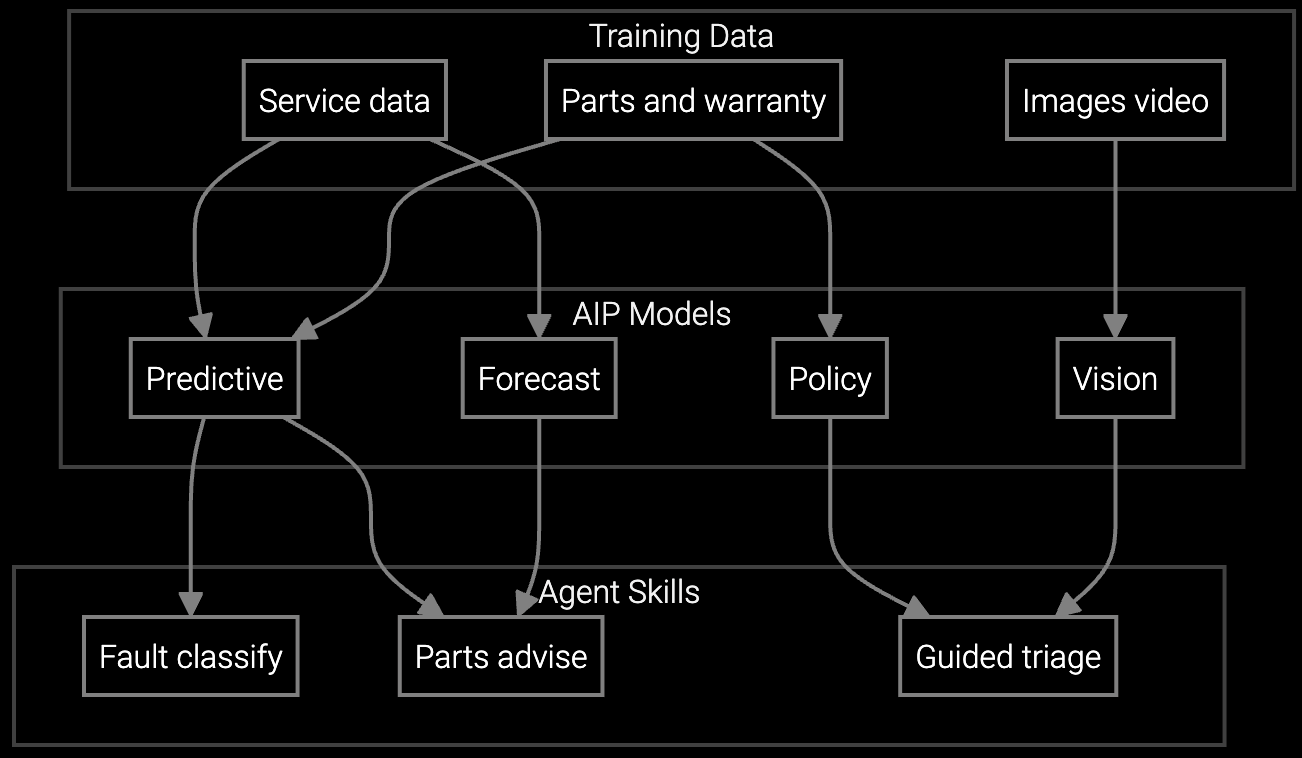
Mobile copilot walks technicians through dishwasher diagnostics, ice maker troubleshooting, and thermostat calibration step-by-step. Interprets appliance error codes in real-time and recommends repair procedures based on symptoms observed on-site.

Correlates washing machine vibration patterns with historical failure data to identify bearing wear versus load imbalance. Saves technicians 15 minutes of diagnostic trial-and-error by surfacing the most likely root cause first.
Appliance manufacturers face seasonal demand surges for HVAC and refrigeration repairs during summer heat waves and holiday cooking periods. Technicians juggle 8-12 service calls daily across refrigerators, washers, dryers, dishwashers, and HVAC systems. Each appliance category has distinct diagnostic paths, parts inventories, and repair procedures.
Connected appliances now generate error codes and usage telemetry before the customer calls. Workflow automation uses this data to predict failures, pre-authorize warranty service, and prepare technicians before dispatch. This prevents unnecessary in-home diagnostics and reduces the window between appliance failure and customer restoration.
The platform analyzes the appliance model, reported symptoms, error codes, service history, and historical parts consumption for similar failures. It cross-references parts availability and typical failure modes to recommend the most likely parts needed. Technicians can override predictions, but accuracy improves as the system learns from actual repairs.
Yes. The mobile copilot provides recommendations, not mandates. Technicians validate AI suggestions based on what they observe during the actual repair. If the predicted part doesn't match the failure, technicians can order the correct part and document why. This feedback trains the system for future jobs.
Technicians document the actual root cause and parts used. The platform captures this as a learning case and adjusts future predictions for similar symptoms. Over time, diagnostic accuracy improves because the system learns from every repair outcome across the entire technician workforce.
Technicians save 15-20 minutes per job by validating auto-generated service reports instead of writing them from scratch. The platform pre-fills work order details, parts consumed, labor time, and service notes based on what the technician documented during the repair. Technicians review, adjust if needed, and submit.
Yes. The platform checks warranty status during job prep and auto-authorizes covered repairs. For out-of-warranty service, it generates cost estimates and recommends repair versus replace based on appliance age, failure severity, and parts availability. This speeds up customer decision-making and reduces unnecessary service calls.

How AI bridges the knowledge gap as experienced technicians retire.

Generative AI solutions for preserving institutional knowledge.

AI-powered parts prediction for higher FTFR.
Watch how Bruviti eliminates technician paperwork and pre-stages parts before dispatch.
Schedule Demo