
Second trips wreck your dispatch efficiency, waste technician hours, and cost twice what you budgeted per job.
AI parts prediction reduces repeat truck rolls by 30% and adds 10 to 15 first-time-fix percentage points, per Bruviti deployment data. Repeat visits come from arriving without the right part, so Bruviti generates a confidence-scored picklist before dispatch and the technician carries what the job actually needs.
Technicians arrive with generic inventory based on model number alone. When the actual failure needs a different part, they leave empty-handed and schedule a return visit.
Prior service notes, error codes, and customer complaints sit in separate systems. Technicians troubleshoot from scratch, miss patterns, and solve symptoms instead of root causes.
HVAC, refrigeration, and connected appliances present failure modes junior technicians haven't seen. They escalate, reschedule, or guess—driving repeat visits and SLA misses.
Bruviti's platform analyzes customer symptoms, equipment telemetry, and service history to predict which parts technicians need before dispatch. The system correlates failure patterns across thousands of past repairs to surface the most likely root cause and the parts to fix it. Technicians see complete job context on their mobile device—prior visits, error logs, warranty status, and step-by-step repair guidance—eliminating guesswork and reducing calls back to the service desk.
For complex diagnostics, the platform provides real-time decision support on-site. When a technician encounters an unfamiliar error code or intermittent failure, the AI retrieves relevant repair procedures from the knowledge base, suggests diagnostic tests, and highlights red flags based on similar past cases. This levels up junior technicians and ensures consistent troubleshooting regardless of experience level.

Predict which refrigeration compressor, HVAC control board, or washer pump a technician will need before dispatch—matching symptoms to historical failure patterns for appliances.

Correlate customer-reported symptoms with past service records to identify whether a dishwasher leak stems from a door seal, pump failure, or water inlet valve issue.
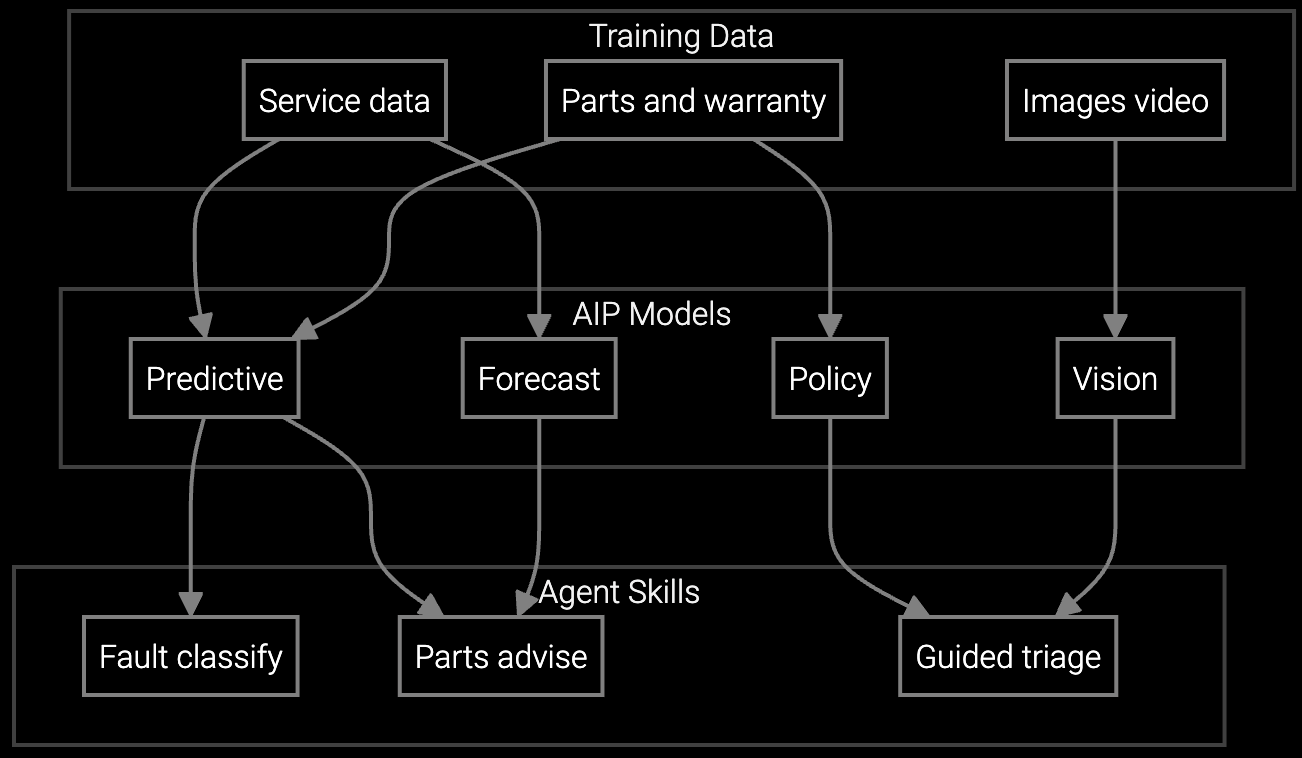
Deliver real-time troubleshooting guidance on mobile devices when technicians encounter unfamiliar error codes on connected appliances or HVAC systems.
Appliance OEMs face seasonal spikes—HVAC failures surge during summer heat waves, refrigeration issues peak during holidays. Every repeat visit during peak season compounds dispatch congestion and SLA risk. AI parts prediction adapts to these patterns, learning that July HVAC calls in the Southwest often require condenser coils while January calls involve heating elements.
Connected appliances add complexity. IoT-enabled refrigerators, washers, and HVAC systems generate telemetry streams that reveal failure warnings before customers call. The platform correlates this telemetry with symptom descriptions to pre-diagnose issues, guiding technicians to the exact failure point instead of starting with generic troubleshooting steps.
Missing parts account for 38% of repeat visits, followed by incomplete diagnostics and lack of repair history. Technicians arrive with generic inventory based on model number alone, miss root causes due to no visible service notes, or lack expertise for complex failures like refrigeration leaks or HVAC control board issues.
The platform analyzes customer symptom descriptions, error codes from connected appliances, and historical failure patterns to identify the most likely root cause. It matches the current case to thousands of past repairs with similar symptoms, learning that specific combinations—like a refrigerator not cooling plus an error code—predict compressor failure rather than thermostat issues.
Yes. The system uses customer symptom descriptions, model/serial numbers, and service history to predict failures even without IoT telemetry. For connected appliances, telemetry adds precision, but the core parts prediction logic works on symptom patterns and historical repair data alone.
Technicians can override recommendations and log the actual part used, which trains the system to improve future predictions. The platform tracks prediction accuracy per appliance type and adjusts its models based on real-world outcomes. Over time, accuracy improves as it learns from edge cases.
Most appliance OEMs see measurable improvement within 4-6 weeks as technicians start carrying predicted parts and using on-site guidance. First-time fix rates typically rise 15-25% within the first peak season as the system learns your specific failure patterns and parts inventory constraints.

How AI bridges the knowledge gap as experienced technicians retire.

Generative AI solutions for preserving institutional knowledge.

AI-powered parts prediction for higher FTFR.
See how AI parts prediction and on-site guidance raise first-time fix rates for your appliance field service operation.
Schedule Demo